Epoxy resin is a versatile material that might sound complex, but it’s really just a special type of adhesive that creates strong bonds. When you mix the two parts together—the resin and the hardener—a chemical reaction happens that turns the liquid into a solid plastic-like material. Epoxy resin is known for its incredible strength, durability, and resistance to heat and chemicals, making it perfect for repairs, crafts, and construction projects.
If you’re new to the material itself, this guide explains what resin is.
You’ve probably seen epoxy resin in action even if you didn’t realize it. That glossy river table with blue streaks running through it? That’s epoxy resin. The super strong glue that fixed your broken mug? Likely epoxy. It’s used in everything from jewelry making to sealing floors, and from boat repairs to creating stunning artwork. The wonderful thing about epoxy resin is how versatile it is—you can color it, shape it, and use it on almost any surface.
If you’re thinking about trying epoxy resin for your next project, you’ll be joining countless DIYers and professionals who love this material. It sticks to wood, metal, glass, and even some plastics. Plus, once it cures, it creates a clear, water-resistant finish that’s hard to beat. You can pour it thin for coating or thick for casting objects—the possibilities are almost endless!
What Is Epoxy Resin?
Epoxy resin is a versatile material widely used in construction, woodworking, and manufacturing due to its strong adhesion properties and durability. This special type of polymer contains epoxide groups that give it unique bonding capabilities.
Chemistry of Epoxy Resin
Epoxy resin belongs to a class of reactive polymers called polyepoxides. The key to its strength lies in those epoxide groups—rings made of one oxygen atom bonded to two carbon atoms. When you mix epoxy resin with a hardener, a chemical reaction occurs that transforms the liquid into a solid.
This process is called curing. During curing, the epoxide groups create cross-links between polymer chains, forming a rigid 3D network structure. This cross-linking gives epoxy its impressive mechanical properties.
Most epoxy resins start as clear liquids. You can add colorants or fillers to change their appearance or properties. The molecular structure makes epoxy resistant to many chemicals, moisture, and heat.
Epoxy vs. Other Resins
Epoxy differs from other common resins in several important ways:
Epoxy vs. Polyester Resins:
- Epoxy is stronger and more durable
- Epoxy has better adhesion to most materials
- Epoxy has less shrinkage during curing
- Polyester resins are typically less expensive
Epoxy vs. Phenolic Resins:
- Epoxy has better chemical resistance
- Epoxy is more flexible and less brittle
- Phenolic resins can withstand higher temperatures
Epoxy coating resin is thicker (more viscous) than casting resin and cures faster. When you need a clear, strong finish for wood tables or art, epoxy is often your best choice. For fiberglass work, polyester resins are commonly used, though epoxy provides a stronger bond.

Types of Epoxy Resin
Epoxy resins come in various forms to suit different applications. Each type has special properties that make it ideal for specific uses, from quick repairs to permanent bonding.
Epoxy Putty
Epoxy putty is a handy, moldable material that comes in stick form. You knead it to mix the hardener and resin together, activating the chemical reaction. It’s perfect for quick repairs around your home when you need to fix leaky pipes, fill holes, or repair broken items.
Most epoxy putties set within 5-10 minutes and fully cure in about an hour. This gives you just enough time to shape it before it hardens. Once cured, you can sand, drill, and even paint it!
What makes epoxy putty special is its versatility. It works on wood, metal, ceramic, and many plastics. It’s also waterproof when fully cured, making it great for both indoor and outdoor projects.
Two-Part Adhesive Epoxy
Two-part adhesive epoxy consists of separate resin and hardener components that you mix together right before use. This type creates incredibly strong bonds between surfaces and is often stronger than the materials it joins.
When you use two-part epoxy, timing matters. Most formulations give you a “working time” of 5-30 minutes before they begin to set. Full curing typically takes 24-48 hours.
These adhesives work well on:
- Wood
- Metal
- Glass
- Stone
- Many plastics
Two-part epoxies resist heat, chemicals, and moisture better than most other adhesives. Some formulas can withstand temperatures up to 300°F (149°C) without losing strength. This makes them ideal for projects that need durability in tough conditions.
Epoxy Glue for Plastic
Epoxy glue designed specifically for plastic offers specialized bonding properties. Not all plastics are the same, and this type of epoxy is formulated to adhere to difficult materials like polyethylene, polypropylene, and nylon.
You’ll find plastic epoxies in both quick-set and standard varieties. Quick-set formulas cure in minutes, while standard types take a few hours but often create stronger bonds.
Most plastic epoxy glues are clear when dry, making them great for repairs where appearance matters. They also resist water, making them suitable for outdoor plastic items like furniture and equipment.
When using plastic epoxy, surface preparation is crucial. Lightly sanding the bonding area creates a better surface for the adhesive to grip. Some plastic epoxies include a primer that helps the glue bond to slippery plastic surfaces.
Properties of Epoxy Resin
Epoxy resin stands out for its remarkable combination of properties that make it valuable in countless applications. These properties range from strong adhesion to excellent mechanical strength and resistance to chemicals.
Adhesion Capabilities
Epoxy resin is famous for its exceptional adhesion to many different materials. You’ll find it sticks extremely well to metals, glass, concrete, wood, and many plastics. This strong bonding power comes from the chemical reactions that happen during curing.
When you apply epoxy to a surface, it forms chemical bonds with that material. These bonds are much stronger than simple mechanical connections. This is why epoxy is often chosen for critical structural applications.
The adhesion strength of epoxy can reach up to 6,000 psi on properly prepared surfaces. For best results, you should always clean and sometimes roughen surfaces before applying epoxy.
Mechanical Properties
You’ll appreciate how epoxy provides an excellent balance of strength, toughness, and flexibility. Cured epoxy has high tensile strength, typically ranging from 3,000 to 10,000 psi, depending on the formulation.
The compressive strength of epoxy is even more impressive, often reaching 15,000 psi or more. This makes it perfect for applications that need to bear weight or resist crushing forces.
Epoxy also offers good impact resistance, helping items withstand sudden shocks without cracking. The hardness can be adjusted by changing the formula – some epoxies cure to a rigid finish while others remain slightly flexible.
Most epoxies have a high heat deflection temperature, allowing them to maintain their properties even when exposed to moderate heat.
Electrical Properties
Epoxy resin provides excellent electrical insulation, making it valuable in electronics and electrical applications. You’ll find it used to protect sensitive components from moisture and electrical shorts.
The dielectric strength of epoxy (its ability to resist electrical breakdown) typically ranges from 400 to 500 volts per mil. This means even thin layers provide good electrical isolation.
Epoxy maintains low conductivity across a wide range of temperatures and environments. This stability makes it reliable for long-term electrical applications.
Many formulations also offer good resistance to electrical tracking (the formation of conductive paths on the surface). This property is especially important in high-voltage applications where you need to prevent arcing.
Chemical Resistance
You can count on epoxy’s strong resistance to many chemicals, including water, alkalis, acids, and various solvents. This makes it ideal for protective coatings in harsh environments.
Most epoxies resist water extremely well, with very low moisture absorption rates. This waterproof quality helps prevent corrosion of underlying materials.
The chemical structure of cured epoxy creates a tight network that prevents many substances from penetrating or degrading the material. However, you should note that some strong acids and certain solvents can affect epoxy over time.
Different formulations offer varying levels of chemical resistance. For especially challenging environments, specialized epoxy systems are available with enhanced protection against specific chemicals.
Dimensional Stability
Epoxy resin maintains its shape and size remarkably well over time. You’ll find it has very low shrinkage during curing – typically just 1-2% compared to other resins that might shrink 5-8%.
Once cured, epoxy shows minimal expansion or contraction with temperature changes. This thermal stability makes it reliable in applications where precise dimensions must be maintained.
The material resists creep (slow deformation under stress) better than many other polymers. This means products made with epoxy keep their shape even under long-term loading.
Epoxy’s dimensional stability also extends to its resistance to warping or distortion from environmental factors like humidity. This reliable performance is why epoxy is trusted for precision applications in industries from aerospace to electronics.

Utilizing Epoxy in DIY Projects
Epoxy resin is a crafter’s best friend when it comes to DIY projects! You can use this versatile material in so many creative ways around your home.
One popular project is creating river tables. You mix the epoxy, add colorants, and pour it between wood pieces to create stunning furniture with a flowing water effect.
Jewelry making is another fun option. You can embed flowers, photos, or glitter in epoxy resin to make unique pendants and earrings that preserve special memories.
Common DIY Epoxy Projects:
- Coasters and trivets
- Countertop resurfacing
- Art pieces and wall hangings
- Furniture repair and restoration
- Custom keychain charms
- Photo preservation
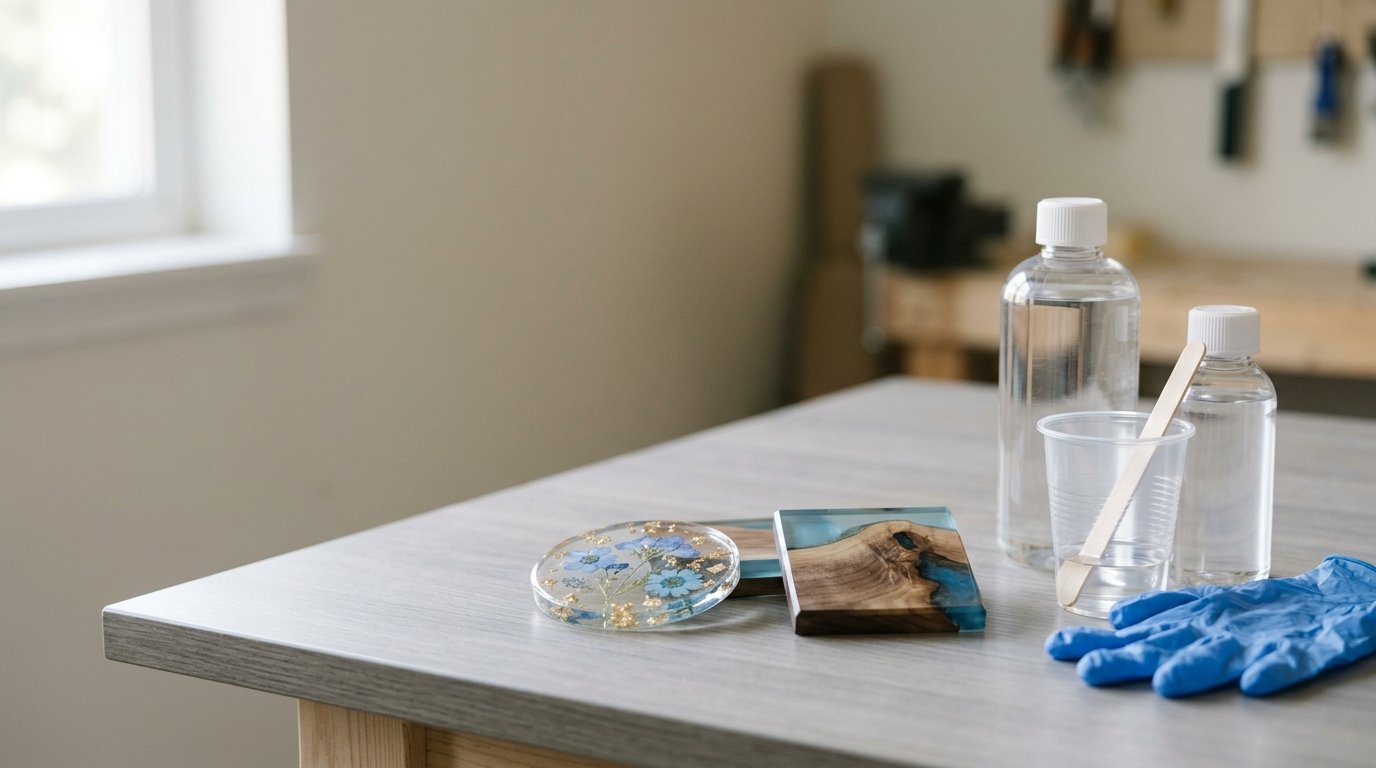
For beginners, start with simple projects like coasters. Mix a small batch of resin and hardener according to package directions, add colors if desired, and pour into silicone molds.
Remember to work in a well-ventilated area when using epoxy. The chemicals can release fumes that might cause irritation.
Protective gear is essential! Always wear gloves to keep the sticky resin off your skin. Safety glasses are also a good idea to protect your eyes from splashes.
The magic of epoxy is how it transforms from liquid to solid. You’ll be amazed at how professional your finished projects look once the resin cures completely!
Setting and Curing Processes
Understanding how epoxy sets and cures is key to getting good results with your projects. The transformation from liquid components to a solid, durable surface happens through a chemical reaction that follows specific stages and timelines.
Mixing Epoxy and Hardener
When you mix epoxy resin with hardener, you start a chemical reaction that cannot be reversed. This reaction is exothermic, which means it generates heat as the molecules bond together. The proper mixing ratio is crucial—usually specified by the manufacturer—and must be followed exactly for the epoxy to cure correctly.
Most epoxies need thorough mixing for 2-3 minutes. Scrape the sides and bottom of your container to ensure all material gets mixed. Inadequate mixing can result in soft spots that never fully harden.
Temperature affects how quickly your epoxy will work. In warmer conditions, the mixture will set faster, while cooler temperatures slow down the process. For best results, work in an environment between 72-74°F (22-24°C) with humidity levels of 40-60%.
Cure Time
Epoxy curing happens in stages. First comes the “set time” or “working time”—the period when you can still manipulate the epoxy before it starts to harden. This typically ranges from 20 minutes to several hours depending on the formula and temperature.
After the epoxy sets, it enters the curing phase. You can usually touch the surface after about 24 hours, but don’t be fooled! Full curing takes longer.
Most epoxies need about 72 hours to reach functional hardness. However, complete chemical curing can take up to 7 days. During this time, the epoxy continues to strengthen and develop its final properties.
The thickness of your pour affects cure time too. Thicker applications generate more heat during curing, which can actually speed up the process but might cause bubbles or cracking if too extreme.
Applications of Epoxy Resin
Epoxy resin is incredibly versatile and can be found in many industries due to its durability and adhesive properties. You’ll find it used in everything from art projects to industrial applications.
Casting and Molding
Epoxy resin works wonderfully for casting and molding projects. You can use it to create beautiful jewelry, decorative items, and even furniture pieces. When you pour it into molds, it captures incredible detail and cures into a hard, clear finish.
Many artists love using epoxy for river tables, where the resin mimics flowing water between wood pieces. The crystal-clear finish makes your projects look professional and polished.
You can add colorants to customize your creations. The resin accepts dyes, pigments, and even glitter to make unique items. For best results, work in a dust-free environment when casting epoxy.
Hobbyists appreciate how epoxy can preserve items like flowers, photos, or small memorabilia in clear castings. This gives you a way to display treasured items permanently.
Encapsulation
Epoxy resin excels at encapsulation – protecting components by completely surrounding them. You’ll find it in the electronics industry covering circuit boards and sensitive parts.
The electrical insulation properties make it perfect for protecting components from moisture, dust, and physical damage. Your electronic devices last longer because of this protection.
Manufacturers use epoxy to encapsulate LED lights, transformers, and motors. The resin forms a waterproof seal around these parts, preventing short circuits and corrosion.
You can also see epoxy encapsulation in decorative items like paperweights and keepsakes. Items suspended in clear resin seem to float magically.
Bonding Strength in Construction
You’ll be amazed at epoxy’s incredible bonding strength in construction applications. It creates permanent bonds between materials that might otherwise be incompatible.
Contractors use epoxy to repair concrete cracks and seal floors. The strong bond prevents water infiltration and further damage to your structures.
Epoxy adhesives join materials in boat building and repair. Your watercraft stays watertight thanks to these powerful bonds. Marine-grade epoxy withstands harsh conditions including saltwater exposure.
In home repairs, you can use epoxy to fix broken items, bond metal to wood, or create waterproof seals. The adhesive works on many surfaces including glass, metal, wood, and stone.
Construction professionals apply epoxy coatings to protect floors from chemicals, impacts, and heavy traffic. Your garage or workshop floor becomes more durable with this treatment.
Safety and Handling Guidelines
Working with epoxy resin can be fun and rewarding, but it’s important to stay safe! Here are some key precautions you should take when handling epoxy resin.
Ventilation is crucial. Always work in a well-ventilated area to avoid breathing in fumes. Open windows, use fans, or work outdoors when possible.
Protect your skin by wearing nitrile gloves whenever you handle epoxy. The resin can cause skin irritation or allergic reactions in some people.
Keep your eyes safe with proper protective eyewear. Accidents happen, and you don’t want epoxy anywhere near your eyes!
Respiratory protection is recommended, especially for larger projects. A mask rated for chemical vapors will help protect your lungs.
Clean up spills immediately with appropriate solvents. Don’t let uncured epoxy sit on surfaces where people might touch it.
Store your materials properly. Keep epoxy components in their original containers, away from heat sources, and out of reach of children and pets.
Read the safety data sheets that come with your epoxy products. They contain important information specific to the brand you’re using.
Remember that most health issues with epoxy are minor, but they can be avoided entirely with these simple precautions. Taking care while working with epoxy resin ensures your creative projects remain enjoyable experiences!
Customizing Epoxy for Different Uses
Epoxy resin offers endless ways to create unique projects through customization. The right additives and techniques can transform basic epoxy into something special that fits your exact needs.
Coloring Epoxy
Adding color to epoxy resin is one of the most popular customization methods. You can use special epoxy dyes, mica powders, or alcohol inks to create beautiful colors and effects.
Epoxy dyes blend seamlessly with the resin and won’t affect curing time. They’re perfect for clear, vibrant colors that allow light to pass through.
Mica powders add a pearlescent or metallic shimmer to your epoxy. They work great for creating ocean waves, geode effects, or cosmic galaxy looks in your projects.
Alcohol inks create fluid, watercolor-like patterns when dropped into epoxy. Try using multiple colors and a heat gun to create stunning marbled effects!
Pro tip: Always test your colorants in a small batch first to make sure they don’t affect cure time or clarity.
Texturizing Additives
Want to give your epoxy resin some texture? There are many additives that can transform its smooth surface into something unique.
Common texturizing options:
- Fine sand for a gritty, non-slip surface
- Glitter flakes for sparkle and dimension
- Crushed glass for reflective surfaces
- Wood chips for a natural look
When adding textured materials to epoxy, remember that timing matters. For items you want suspended throughout, mix them in before pouring. For texture on top, sprinkle them during the tacky stage.
You can also create texture after curing by sanding the finished surface with different grit sandpapers. This works well for furniture pieces where you want a matte or satin finish.
Adjusting Viscosity
The thickness (viscosity) of epoxy resin can be adjusted to suit different projects. Thinner epoxy flows better for coating, while thicker formulations work better for casting.
You can thin epoxy resin using specific thinners made for epoxy systems. These allow the resin to flow more easily without compromising its strength. This is perfect for river tables where you need the epoxy to flow into cracks.
For thicker applications, some brands offer thickening additives. These help when you need the epoxy to stay in place, like with vertical surfaces or dome effects.
Remember that temperature also affects viscosity. Warming your resin (in a water bath) before mixing makes it thinner and easier to work with. Cooling it slightly helps it stay thicker.
Maintenance and Repair of Epoxy Surfaces
Keeping your epoxy resin surfaces in top shape is pretty simple! Clean spills right away to prevent staining. For daily cleaning, just use mild soap and water with a soft cloth.
For tougher spots, you can use acetone in well-ventilated areas, but test it on a small area first. Avoid harsh chemicals like bleach that might damage your epoxy surface.
Small scratches can often be buffed out with fine-grit sandpaper (1000+ grit), followed by a polishing compound. This gentle approach helps restore the shine without damaging the surface.
For cracks in epoxy surfaces, you can apply a small amount of fresh epoxy resin as a repair. Clean the area first, then apply the new epoxy and let it cure fully.
Tips to protect your epoxy surfaces:
- Use coasters under hot items
- Clean spills promptly
- Avoid sliding rough objects across the surface
- Use cutting boards instead of cutting directly on epoxy
Remember that epoxy resin is durable but not indestructible. With proper care, your epoxy surfaces can last for many years and maintain their beautiful appearance!
Innovations in Epoxy Resin Technology
Epoxy resin technology has seen amazing advances in recent years! These improvements make this versatile material even more useful for your projects.
Smart technology is now being integrated with epoxy resins. These clever materials contain sensors that can monitor structural health and environmental conditions. You can now use epoxy that actually tells you when there might be a problem!
Fire safety has been a big focus for researchers. A team at Sichuan University created a new type of epoxy resin that offers better fire resistance. Even better, this new formula is both recyclable and degradable, addressing environmental concerns you might have.
Manufacturing processes have improved too. New reactor technology allows for more precise control during production. This means you’ll get more consistent quality in the epoxy products you buy.
The push for sustainability has led to bio-based epoxy resins. These use plant-derived components instead of petroleum-based ones. You can now choose greener options that perform just as well as traditional formulations.
3D printing with epoxy resins has expanded what’s possible for custom projects. You can create complex shapes and structures that weren’t possible before.
Self-healing epoxy formulations are perhaps the most exciting innovation. These special resins can repair minor damage automatically. This means your epoxy projects could last much longer with less maintenance!
Epoxy Resin in Art and Creativity
Epoxy resin has become a popular medium for artists and crafters who want to create stunning, glossy pieces. You can use this versatile material in so many creative ways!
When you work with epoxy resin in art, you’re essentially using it as a thick, durable varnish that adds depth and shine to your creations. Many artists combine it with paints to make beautiful abstract art pieces with amazing depth.
One of the most popular uses is creating “river tables” where you pour colored resin between wood pieces to mimic flowing water. You can also use epoxy resin to preserve flowers, keeping them in perfect bloom forever.
Ocean scenes and geode recreations are other popular projects. The transparent quality of epoxy resin makes it perfect for layering colors to create these natural-looking effects.
For beginners, you might want to start with simple coasters or small decorative items. As you gain confidence, you can move on to larger projects like artwork, tabletops, or jewelry.
The high-gloss finish and excellent clarity of epoxy resin make your art pop with vibrant colors. Your finished pieces will have a professional, polished look that’s sure to impress!
Remember to work in a well-ventilated area when using epoxy resin. You’ll need to mix it properly and allow adequate curing time for the best results.