
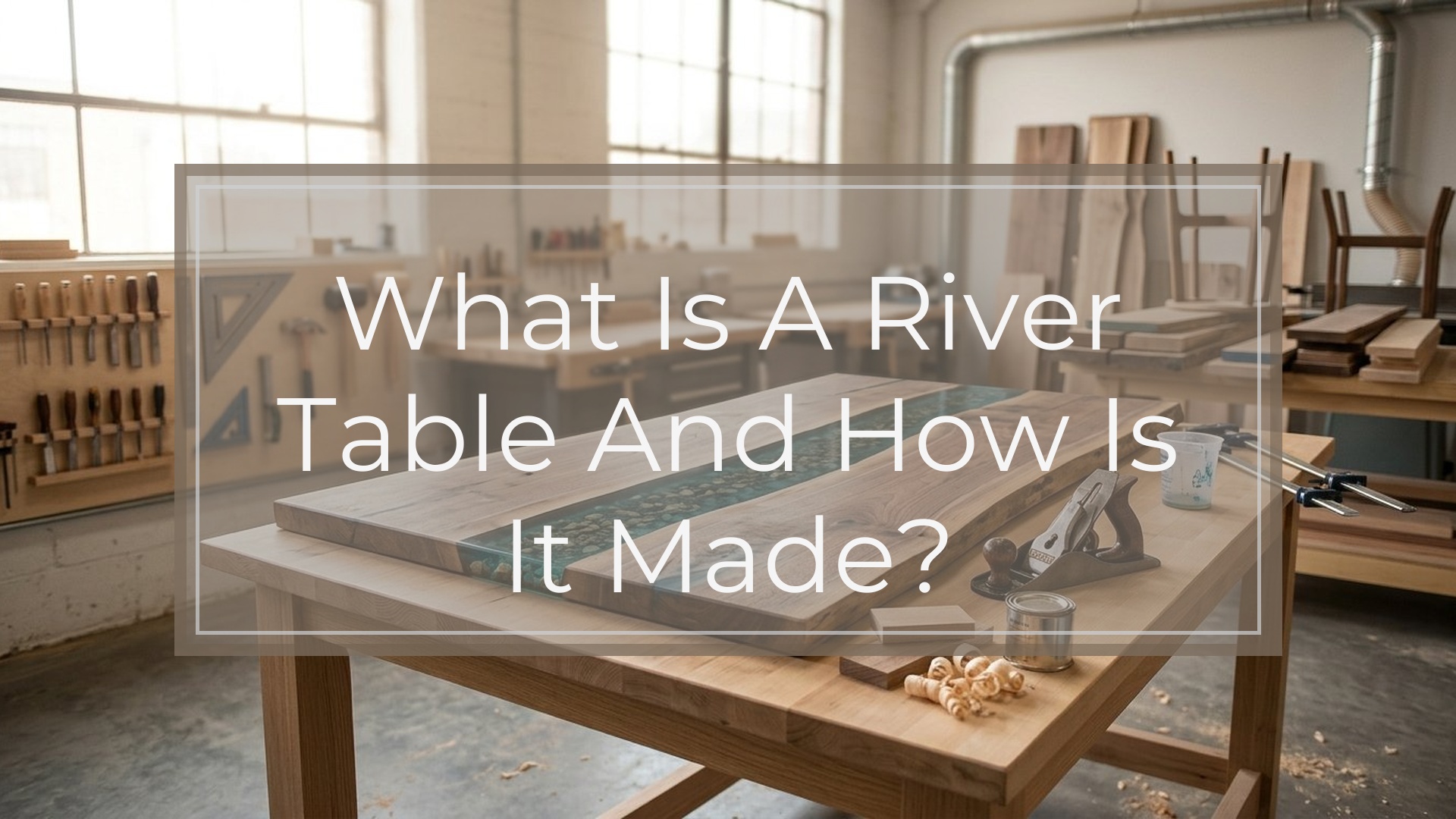
A river table is a wood-and-resin table where two pieces of wood are separated by a channel of epoxy resin that looks like a flowing river. The “river” can be clear, tinted, metallic, opaque, or filled with decorative elements, but the basic idea is the same: wood forms the banks, and resin fills the space between them. River tables are usually made by preparing slabs, building a sealed mold, pouring deep-casting epoxy in layers or one controlled pour, curing it fully, then flattening, sanding, polishing, and finishing the surface. They are popular because they combine natural wood grain with a custom resin design.
What Is a River Table?
A river table is a piece of furniture, most often a dining table, coffee table, desk, or console, made from wood slabs and epoxy resin. The defining feature is a resin section running through or between the wood, visually resembling water between riverbanks.
Live edge wood is common because its natural curves make the resin channel look organic, but it is not required. A river table can be rustic, modern, colorful, clear, minimal, or highly decorative. The core concept is not a specific color or species of wood; it is the combination of wood and resin arranged so the resin becomes a visible “river” in the design.
Why Are They Called River Tables?
They are called river tables because the resin often looks like a stream, river, or waterway flowing through the wood. The wood edges act like banks, while the resin creates the visual path between them.
Some makers use blue pigments, translucent dyes, or mica powders to strengthen the water-like effect. Others use black, white, smoky, or clear resin for a more abstract look. The name is mostly descriptive rather than symbolic, though individual makers may choose colors or materials with personal meaning.
What Materials Are Used to Make a River Table?
The main materials are wood, epoxy resin, pigments or dyes, mold materials, sealants, and finishing products. Wood slabs are the structural and visual base. Epoxy resin fills the river channel and bonds to the prepared wood. Deep-pour epoxy is usually preferred for thick pours because it cures more slowly and handles larger volumes better than coating resin.
Pigments, mica powder, alcohol inks, or transparent dyes can change the resin color. A mold is commonly made from melamine, HDPE, sealed plywood, or another nonstick or release-treated surface. Makers also use silicone caulk, sheathing tape, clamps, leveling tools, sandpaper, polish, and a protective finish such as oil, hardwax oil, polyurethane, or tabletop epoxy.
How Is a River Table Made?
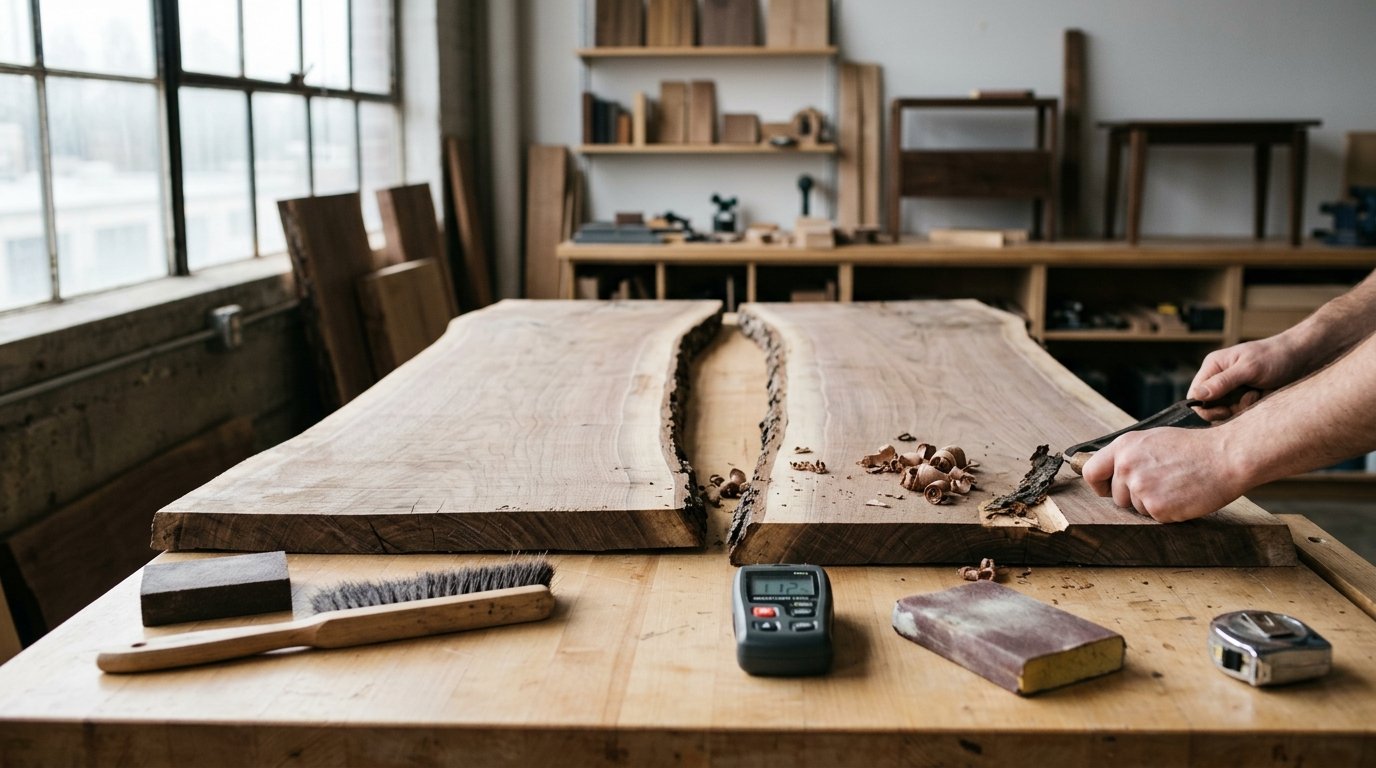
A river table starts with wood selection and preparation. The maker chooses slabs with a shape, thickness, and grain pattern that suit the final table. The wood must be dry enough for furniture work; overly wet wood can move, crack, or interfere with the resin bond. Loose bark, dust, soft punky areas, and unstable material are removed.
Next, the slabs are arranged in the desired layout. Many river tables place the live edges facing inward so the gap between them becomes the river. The maker then builds a leak-resistant mold slightly larger than the final table size. The mold is sealed carefully because epoxy can escape through very small gaps.
Before the main pour, many makers seal the wood edges with a thin coat of epoxy. This helps reduce bubbles released from the wood during the deep pour. The epoxy is then mixed according to the manufacturer’s ratio and instructions. Colorants are added carefully, since too much pigment can affect curing.
The resin is poured into the channel, either in one deep pour if the product allows it or in multiple layers. Bubbles are managed with careful mixing, suitable temperature, and sometimes a heat gun or torch used briefly. After curing, the slab is removed from the mold.
The table is then flattened with a router sled, CNC, planer, or professional wide-belt sander. Finally, it is trimmed, sanded through progressive grits, polished if needed, finished, and attached to legs or a base.
What Makes a Good River Table?
A good river table is stable, well-cured, flat, and cleanly finished. The wood should be dry, solid, and properly prepared. The resin should cure without sticky areas, major bubbles, cloudy patches, or cracks. The surface should feel smooth, with no sharp resin edges or uneven transitions between wood and epoxy.
Good design also matters. The resin color should suit the wood rather than fight it, and the table base should support the weight properly. Small handmade variations are normal, but structural movement, poor curing, and obvious leaks or voids are warning signs.
Common Misconceptions About River Tables
One common misconception is that any resin table is a river table. In practice, a resin table may have a coating, embedded objects, or a full resin top, while a river table specifically has a river-like resin section integrated with wood.
Another misconception is that river tables are easy because resin “just pours in.” The process is simple in concept, but details like moisture content, mold sealing, resin depth, temperature, and finishing can make or break the result.
It is also not guaranteed that a river table will last forever. A well-made one can be durable, but wood movement, UV exposure, heat, poor resin choice, or bad preparation can cause problems over time.
Examples of River Table Styles
A classic blue river table uses live edge slabs and translucent blue epoxy to suggest water. A clear resin table keeps stones, shells, or the natural wood edge visible. A black resin river creates a bold, modern contrast. White or smoky resin can look softer and more contemporary.
Some makers create ocean-inspired tables with layered blues and foamy white effects. Others use walnut with dark epoxy for a subtle dining table, or lighter woods with bright pigments for a statement coffee table.
Is a River Table a Good Diy Project?
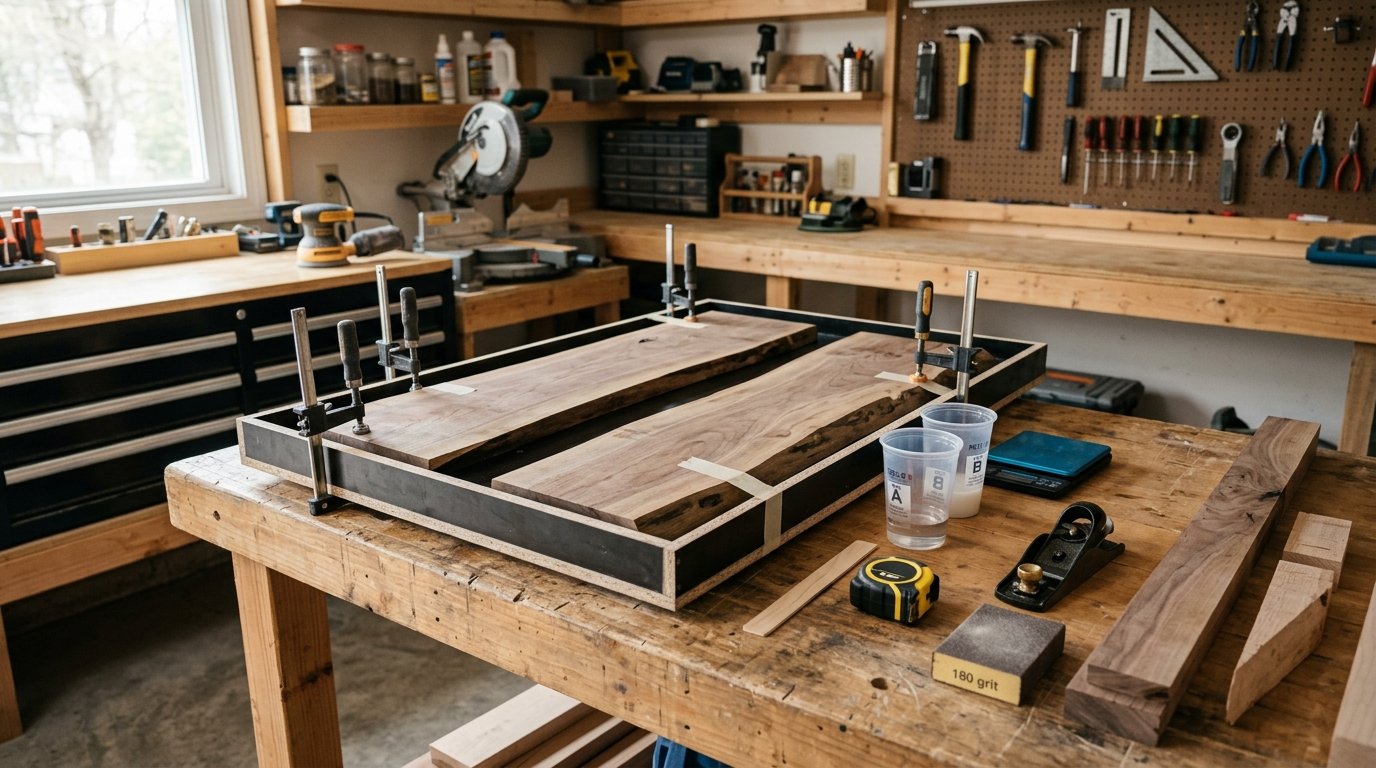
A river table can be a rewarding DIY project, but it is usually better for patient beginners or intermediate makers than for a first-ever resin pour. The cost of wood, resin, tools, and finishing supplies can be significant, and mistakes are not always easy to fix.
A small side table, serving board, or practice panel is often a better starting point. Once you understand mixing, sealing, bubbles, and sanding, a full-size river table becomes much more realistic.
Safety and Practical Considerations
Epoxy resin should be used with good ventilation, gloves, eye protection, and the safety guidance from the product manufacturer. Some resins have stronger odor or sensitivity risks than others, even when labeled low-VOC or low-odor.
Plan for weight, workspace, cure time, and dust control. A large river table is heavy, messy to flatten, and difficult to move alone. Also consider heat resistance: many epoxies tolerate normal use but can still be damaged by very hot pans, direct flame, or prolonged sunlight.
Quick Summary
A river table is a wood-and-epoxy table with a resin channel that resembles a river. The look can be natural, colorful, transparent, or abstract, but the defining idea is the visible resin path between wood sections.
Making one involves preparing dry wood, building and sealing a mold, pouring suitable epoxy, letting it cure fully, flattening the slab, sanding, finishing, and adding a base. The best results come from careful preparation rather than rushing the pour.
FAQ
What Is the Difference Between a Resin Table and a River Table?
A resin table is any table that uses resin as part of its surface or structure. A river table is a specific type of resin table where epoxy forms a river-like channel between wood pieces. So, all river tables are resin tables, but not all resin tables are river tables.
What Kind of Epoxy Is Used for River Tables?
Most river tables use deep-pour epoxy, especially when the resin section is thick. Deep-pour formulas cure more slowly and are designed for larger volumes. Thin coating epoxy is better for surface coats and may overheat, crack, or cure poorly if poured too deep.
Can You Make a River Table Without Live Edge Wood?
Yes. Live edge wood is popular because it creates a natural riverbank shape, but straight-cut boards can also be used. The result may look more geometric or modern. Some makers cut custom curves into regular boards to create a more flowing resin channel.
How Long Does It Take to Make a River Table?
The timeline varies, but a river table often takes several days to several weeks. Wood preparation, mold building, pouring, curing, flattening, sanding, finishing, and base installation all take time. Cure times depend on epoxy type, pour depth, temperature, and project size.
Are River Tables Durable?
A well-made river table can be durable for normal furniture use, but durability depends on the wood, epoxy, construction, finish, and care. It is best to avoid excessive heat, harsh sunlight, standing water, and abrasive cleaning. Like any wood furniture, it may need maintenance over time.
Why Do River Tables Cost so Much?
River tables can be expensive because they use large wood slabs, a significant volume of epoxy, mold supplies, abrasives, finishing products, and sturdy bases. Labor is also a major factor. Preparing, pouring, curing, flattening, sanding, and finishing require time, space, and careful work.