Understanding the science behind epoxy resin means knowing that epoxy is a two-part material: a resin and a hardener that chemically react to form a solid plastic-like material. For crafters, this matters because curing is not simply “drying.” The mix ratio, temperature, humidity, pour depth, and mixing technique all affect how well that reaction happens.
When resin cures properly, the molecules link together into a strong, clear, durable surface. When something interrupts that process, you may see bubbles, cloudiness, soft spots, tackiness, overheating, or uneven curing. You do not need to become a chemist to make better resin art, but understanding the basics helps you troubleshoot problems more calmly and make better project decisions.
Introduction: Why the Science Matters for Better Resin Results
Epoxy resin can feel mysterious when one batch cures beautifully and the next stays sticky, turns cloudy, or fills with bubbles. The science explains why those results happen. It turns resin crafting from guesswork into a more predictable process.
For beginners, the goal is not memorizing chemistry terms. It is understanding the few principles that affect every project: accurate measuring, thorough mixing, suitable temperature, controlled moisture, and choosing the right resin for the pour size.
What Is Epoxy Resin?
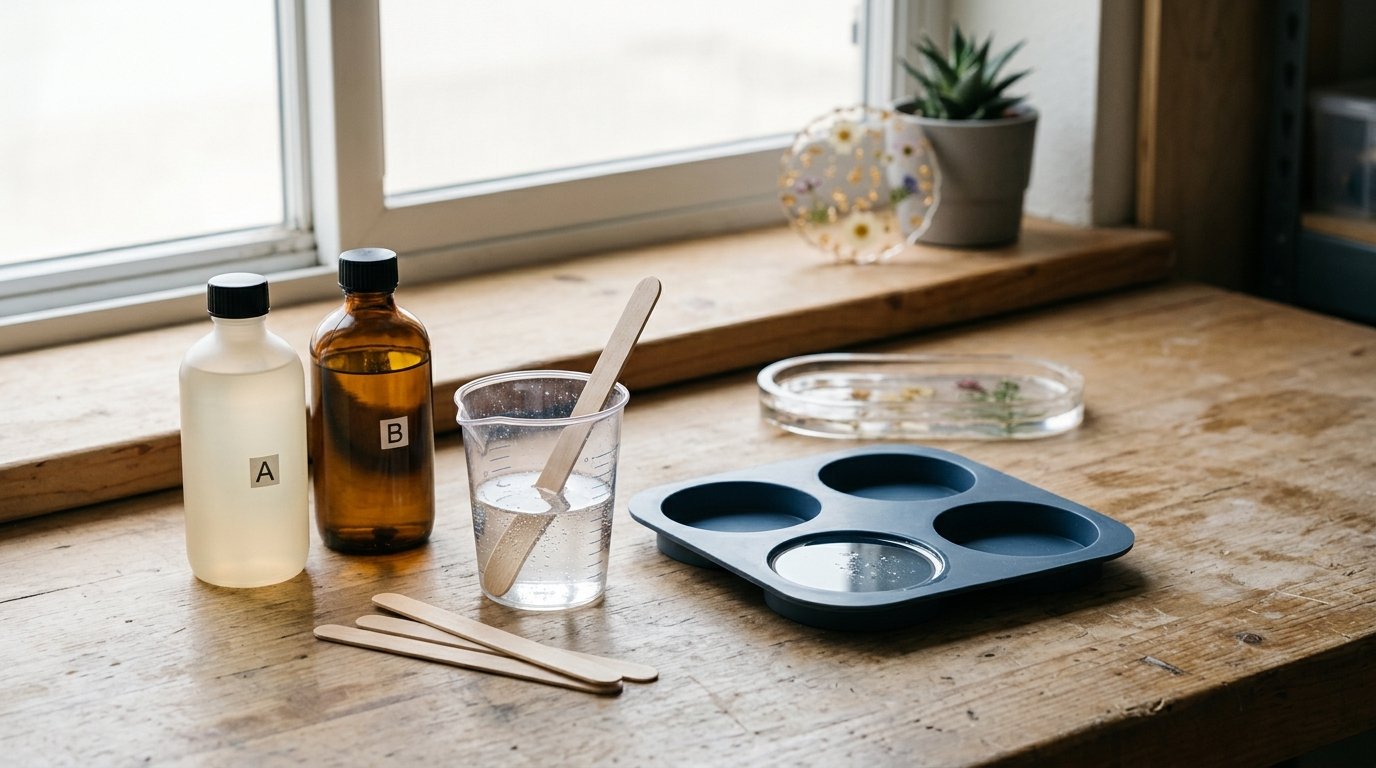
Epoxy resin is a synthetic material that starts as two liquid parts: resin and hardener. When mixed in the correct ratio, these parts react and gradually change into a solid.
In crafting, epoxy resin is used for coatings, jewelry, tumblers, trays, molds, artwork, tabletops, and decorative pieces. It is often valued for its glossy finish, clarity, and ability to hold pigments, glitter, dried flowers, and other inclusions.
Technically, cured epoxy is a thermoset polymer. That means once it has cured through its chemical reaction, it does not simply melt back into liquid form like some plastics.
The Basic Chemistry: Resin Plus Hardener Equals a Curing Reaction
Epoxy resin cures through a chemical reaction between the resin molecules and the hardener molecules. When they are mixed together, they begin linking into a larger network. This process is called curing or polymerization.
A helpful way to picture it is a chain-building process. The resin and hardener are like separate pieces that need to connect in the right proportions. As more connections form, the liquid thickens, gels, and eventually becomes solid.
This reaction also produces heat, called an exothermic reaction. Small, shallow pours usually release heat gently. Large or deep pours can trap more heat, which may cause rapid curing, cracking, yellowing, smoke, or distortion if the resin is not designed for that depth.
Epoxy Resin Science Terms Explained Simply
Resin instructions often use technical words, but most of them point to practical crafting choices. Learning these terms helps you understand why a product behaves the way it does and why the manufacturer’s instructions matter.
| Term | Simple Meaning | What It Means for Crafting |
|---|---|---|
| Cure | Chemical hardening process | Resin needs time to fully solidify |
| Pot life | Usable working time after mixing | You must pour before it thickens |
| Exotherm | Heat released during curing | Deep pours can overheat |
| Viscosity | Thickness of the liquid | Thin resin releases bubbles more easily |
| Demold time | When resin can leave the mold | It may not be fully cured yet |
| Full cure | Maximum cure point | Best time for heavy use or sanding |
Why Mix Ratio Is so Important
The mix ratio is the chemical recipe for the resin and hardener. Some products use a 1:1 ratio by volume, while others may use 2:1, 3:1, or weight-based measurements. These ratios are not interchangeable.
Adding extra hardener usually does not make epoxy cure “stronger” or faster in a reliable way. Instead, it can leave unreacted material in the mixture, causing sticky, rubbery, cloudy, or weak results.
Accurate measuring matters because the resin and hardener need enough matching molecules to complete the cure. After measuring, thorough mixing is just as important. Scrape the sides and bottom of the cup so no unmixed material remains.
How Temperature, Humidity, and Pour Size Affect Curing
Temperature affects how quickly epoxy molecules move and react. In a cooler room, resin often thickens slowly and may take longer to cure. In a warmer room, it usually flows better at first and cures faster, but too much heat can shorten working time or increase overheating risk.
Humidity can also matter, especially with some coating resins or when moisture settles on a surface. Excess moisture may contribute to cloudiness, blush, surface imperfections, or poor adhesion, depending on the product and conditions.
Pour size is another major factor. A thin coating releases heat into the air more easily. A deep mold traps heat, so it needs a resin formulated for deep pours and a slower cure.
Why Bubbles, Cloudiness, and Sticky Spots Happen
Common resin problems often have scientific explanations, although the exact cause can vary.
Bubbles may come from vigorous mixing, porous materials releasing air, cold resin being too thick, or trapped air in detailed molds. Warming the resin slightly, sealing porous items, and pouring slowly can help.
Cloudiness may be linked to moisture, cold temperatures, incompatible additives, or too much pigment. It can also happen when resin begins curing before bubbles or moisture escape.
Sticky spots often suggest an issue with measuring, mixing, scraping the cup, or curing conditions. If only certain areas are sticky, incomplete mixing is a common possibility, but it is not the only possible cause.
Common Misconceptions About Epoxy Resin Science
One common misconception is that epoxy resin dries like paint. It does not. Paint usually dries as solvents or water evaporate, while epoxy hardens through a chemical reaction.
Another misconception is that more hardener equals a better cure. In most epoxy systems, the opposite is more likely: the ratio becomes unbalanced.
Some beginners also believe all resin can be poured deeply. In reality, coating resin, art resin, casting resin, and deep-pour resin are formulated differently.
Finally, heat tools are not magic fixes. A torch or heat gun can pop surface bubbles, but too much heat may damage molds, burn resin, or create new problems.
Practical Examples: Applying the Science to Resin Projects

For a thin art coating, choose a resin designed for coating, mix accurately, and work in a room temperature range recommended by the manufacturer. Because the layer is shallow, heat buildup is usually less of a concern than dust, bubbles, and leveling.
For a deep flower preservation mold, use a deep-pour casting resin. Pouring too much standard tabletop epoxy into a thick mold may cause overheating or cracking.
For resin jewelry, small molds often need careful bubble control. Letting mixed resin sit briefly, pouring slowly, and using a toothpick around detailed areas can help air escape.
For tumblers, even curing and surface adhesion matter. Proper mixing, clean surfaces, and steady rotation support a smoother finish.
What This Science Can and Cannot Tell You
The science of epoxy resin can explain likely causes and help you prevent common mistakes. For example, sticky resin often points toward ratio, mixing, or temperature problems.
However, science cannot diagnose every failed project with certainty from appearance alone. Similar symptoms can have different causes. A cloudy piece might involve moisture, pigment load, temperature, or product incompatibility. Treat troubleshooting as informed investigation, not guaranteed proof.
Key Takeaways for Better Epoxy Resin Projects
Epoxy resin works best when you respect the chemical reaction. Measure accurately, mix thoroughly, follow the stated ratio, and use the right resin for the project depth.
Control your workspace as much as possible: moderate temperature, low moisture, clean tools, and enough working time. When problems happen, look for the scientific clue behind them. Bubbles, tackiness, heat, cloudiness, and soft spots are not random; they usually point to something in the process.
FAQ
Is Epoxy Resin the Same as Plastic?
Cured epoxy resin is a type of plastic-like thermoset polymer, but it is not the same as every plastic. Unlike many thermoplastics, cured epoxy does not simply melt and reshape when heated. It forms a crosslinked structure through a chemical reaction.
Does Epoxy Resin Cure Faster in Heat?
Usually, yes, moderate warmth can make epoxy cure faster because the chemical reaction speeds up. However, too much heat can shorten working time, increase bubbles, or cause overheating. Always follow the temperature range recommended for your specific resin.
Why Is My Epoxy Resin Still Sticky After Curing?
Sticky epoxy may be caused by inaccurate measuring, incomplete mixing, scraping unmixed material into the project, low temperatures, or too much pigment or additive. If only some areas are sticky, poor mixing is a common possibility, but several factors can overlap.
Can I Add Extra Hardener to Make Epoxy Resin Cure Better?
No, extra hardener is usually not a good fix. Epoxy needs the correct chemical balance between resin and hardener. Adding more hardener can leave unreacted material in the cured piece and may cause softness, stickiness, cloudiness, or weaker results.
How Do I Know When Epoxy Resin Is Fully Cured?
Check the product instructions for full cure time, not just demold time. Resin may feel firm enough to remove from a mold before it reaches full strength. Fully cured epoxy is typically hard, non-tacky, and ready for normal handling, sanding, or use as directed.