
Marine grade epoxy is an epoxy system designed for repairs, bonding, sealing, or coating in damp, wet, outdoor, or boat-related environments. It is not one single formula. The term usually means the epoxy has strong adhesion, good water resistance, low shrinkage, and enough durability for marine use when applied correctly.
Use marine epoxy for projects such as sealing plywood, bonding fiberglass, repairing small cracks, filling damaged wood, laminating cloth, or coating surfaces that may see moisture. Do not assume it is automatically UV-proof, safe for structural repairs without reinforcement, or able to cure underwater. The right product depends on the material, exposure, repair size, cure conditions, and whether the finished surface needs paint or varnish.
What Makes Epoxy “Marine Grade”?
“Marine grade” describes performance expectations more than a universal chemical standard. A good marine epoxy should bond strongly to common boatbuilding materials, resist water intrusion, and remain stable through normal moisture and temperature changes.
Most systems include a resin and hardener that cure into a hard plastic. Marine versions are often formulated for fiberglass, wood, metal, or composite bonding, and many can be thickened with fillers for gap filling or fairing.
The key mental model is this: marine epoxy is a moisture-resistant bonding and sealing system, not magic waterproof glue for every wet repair. Surface preparation, correct mixing, cure temperature, and topcoating often matter as much as the epoxy itself.
Marine Epoxy Vs. Regular Epoxy
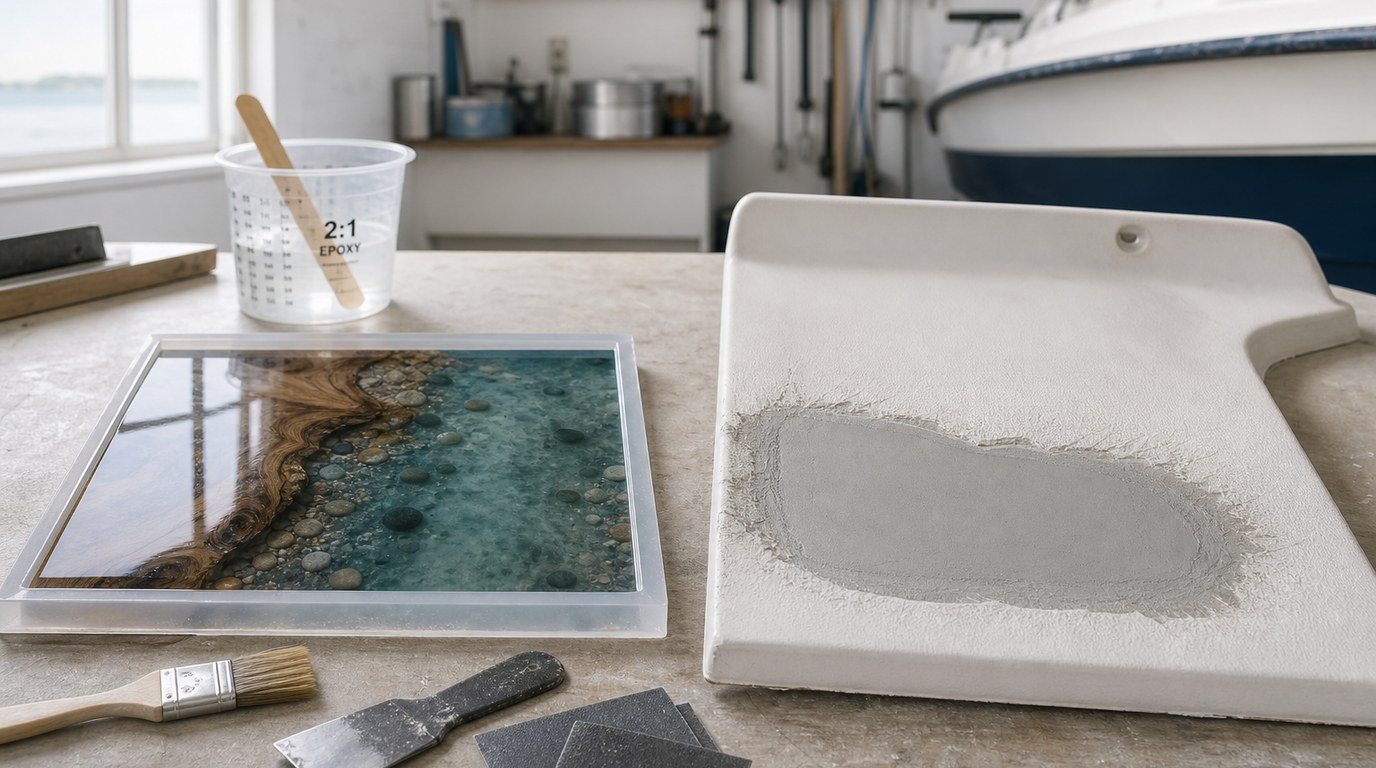
Regular craft, casting, or tabletop epoxy may look similar, but it is often designed for appearance, depth pours, or decorative coating rather than boat repair. Those products may cure too soft, blush heavily, yellow outdoors, or lack the adhesion needed for stressed repairs.
Marine epoxy is usually chosen for stronger bonding, better moisture resistance, and compatibility with reinforcing fabrics, fillers, paints, and varnishes. It is also commonly sold with different hardener speeds so you can match working time to temperature and project size.
That does not mean all “regular” epoxy is weak or all “marine” epoxy is suitable for every job. Always compare the technical data, intended use, and cure requirements before substituting one for the other.
Common Types of Marine Epoxy and When to Use Each
Marine epoxy systems are often adjusted with fillers, fabrics, or coatings rather than bought as completely separate products. Here are the most common practical categories:
| Type | Best use | Notes |
|---|---|---|
| Clear coating epoxy | Sealing wood, brightwork base coats | Usually needs UV-resistant varnish or paint |
| Laminating epoxy | Wetting fiberglass cloth or tape | Designed to soak fabric and build strength |
| Thickened bonding epoxy | Gluing joints, hardware backing, gap filling | Uses fillers such as silica or wood flour |
| Fairing compound | Smoothing hulls, dents, or surface irregularities | Easy to sand, not for high-strength bonding |
| Epoxy putty | Small repairs, chips, quick filling | Convenient, but check strength and water rating |
For example, sealing marine plywood usually calls for a low-viscosity coating epoxy. Repairing a fiberglass crack may require grinding, laminating cloth, and epoxy resin. Filling a small gouge might only need thickened epoxy or putty, followed by sanding and topcoat.
How to Choose the Right Marine Grade Epoxy
Start with the project, not the label. Ask what the epoxy must do: bond, seal, fill, laminate, fair, or coat. Then match the product to the surface and exposure.
Check these points before buying:
- Substrate: wood, fiberglass, metal, composite, or existing coating
- Exposure: occasional splash, full weather, bilge moisture, or immersion
- Strength need: cosmetic fill, secondary bond, or structural repair
- Working time: fast hardeners for cool weather, slow hardeners for heat or large areas
- Finish: paint, varnish, gelcoat compatibility, or hidden repair
- Additives: fillers, fiberglass cloth, pigment, or fairing powder
If the repair affects hull integrity, engine mounts, through-hulls, or load-bearing structures, choose a system with clear marine repair documentation and consider professional guidance.
Basic Marine Epoxy Application Steps
Most marine epoxy projects follow the same workflow, whether you are sealing wood or repairing fiberglass.
- Remove weak material. Cut, grind, sand, or scrape away rot, loose laminate, cracked gelcoat, wax, oil, and failed paint. Epoxy is only as strong as what it bonds to.
- Dry and clean the surface. Marine epoxy resists water after cure, but most systems do not bond well to wet, oily, or contaminated surfaces. Use the cleaner recommended by the manufacturer and let solvents evaporate fully.
- Sand for mechanical grip. Glossy surfaces need abrasion. Vacuum or wipe away dust before coating.
- Measure accurately. Follow the resin-to-hardener ratio exactly. Guessing can leave soft, sticky, or brittle spots.
- Mix thoroughly. Scrape the sides and bottom of the cup. For critical work, transfer to a second cup and mix again.
- Apply in the right form. Use neat epoxy to prime porous wood, add filler for bonding or fairing, or wet out fiberglass cloth for reinforcement.
- Control cure conditions. Temperature affects pot life and cure speed. Avoid applying in direct hot sun, heavy dew, or conditions outside the product range.
- Sand and topcoat. Wash amine blush if present, sand cured epoxy, then paint or varnish if the repair will face sunlight.
Safety, Ventilation, and Handling Tips
Uncured epoxy can irritate skin, eyes, and lungs, and repeated exposure may cause sensitization. Wear nitrile gloves, eye protection, and long sleeves. Avoid sanding uncured or partially cured epoxy.
Work with good ventilation, especially indoors or inside a hull. A respirator may be needed for sanding dust or solvent use; choose cartridges and filters appropriate to the task. Do not clean epoxy from skin with solvents. Use soap, water, and proper skin cleanser instead.
Mix small batches until you understand the pot life. Large masses of epoxy can heat rapidly and cure faster than expected.
Common Mistakes That Cause Marine Epoxy Failure
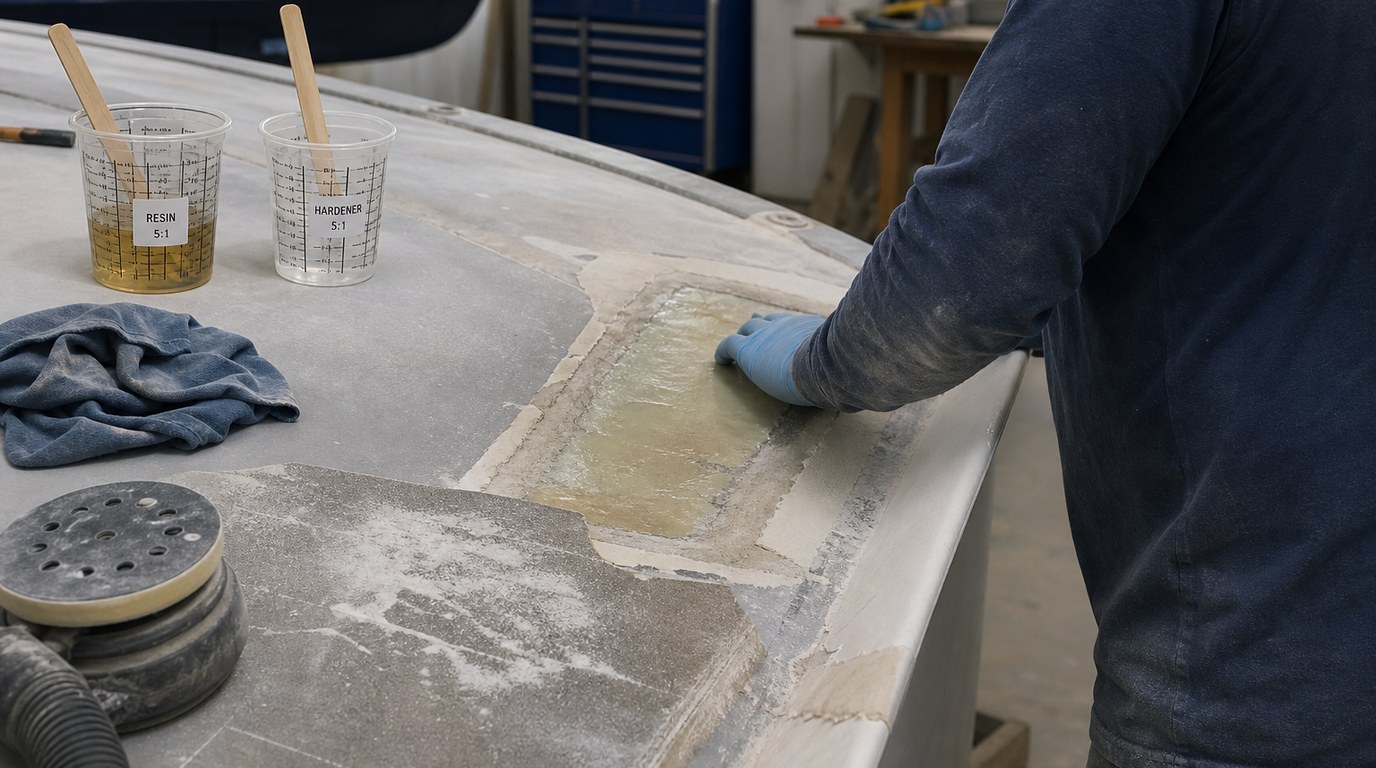
Many failures come from process errors rather than bad epoxy. The most common are applying epoxy over damp or contaminated surfaces, under-mixing resin and hardener, using the wrong ratio, or skipping sanding between cured layers.
Another frequent mistake is using coating epoxy as if it were structural filler. Thin epoxy can seal, but gaps and joints usually need the right thickener. Likewise, fairing compound sands easily because it is not meant to be a high-strength adhesive.
UV exposure is also a problem. Most epoxies chalk, yellow, or degrade in sunlight unless protected with paint or UV-resistant varnish.
When Marine Epoxy Is Not the Right Fix
Marine epoxy is not a shortcut for every boat problem. It should not be used to hide active rot, bond to dirty bilge surfaces, patch major structural damage without reinforcement, or seal leaks where the underlying movement continues.
It is also not always the best choice below the waterline unless the system is rated for that use and properly topcoated. For critical hull, keel, transom, or through-hull repairs, get expert advice before relying on epoxy alone.
FAQ
Is Marine Grade Epoxy Waterproof?
Cured marine epoxy is highly water-resistant and can create an excellent moisture barrier, but “waterproof” depends on the system, application thickness, surface prep, and exposure. Some epoxies are suitable for immersion only when fully cured and protected with the correct coating system.
Can I Use Marine Epoxy on Wood?
Yes. Marine epoxy is commonly used to seal, bond, and repair wood, especially plywood and boatbuilding lumber. The wood should be dry, clean, and sanded. For damaged wood, remove soft or rotten material first; epoxy should not simply cover decay.
Does Marine Epoxy Need a Uv Topcoat?
Usually, yes. Most epoxy is not naturally UV-stable. Sunlight can cause yellowing, chalking, and surface breakdown. If the epoxy will be exposed outdoors, protect it with marine paint, spar varnish, or another UV-resistant topcoat recommended for the system.
Can Marine Epoxy Cure Underwater?
Most standard marine epoxies are not meant to be mixed and cured underwater. Some specialty underwater repair putties exist, but they are different products with specific limitations. For reliable repairs, dry the area whenever possible and follow the manufacturer’s underwater-use rating.
How Long Does Marine Epoxy Take to Cure?
Cure time depends on the epoxy system, hardener speed, temperature, batch size, and film thickness. Some products become sandable in several hours, while full cure can take days. Cooler conditions slow curing, and rushing sanding or topcoating can weaken the final result.