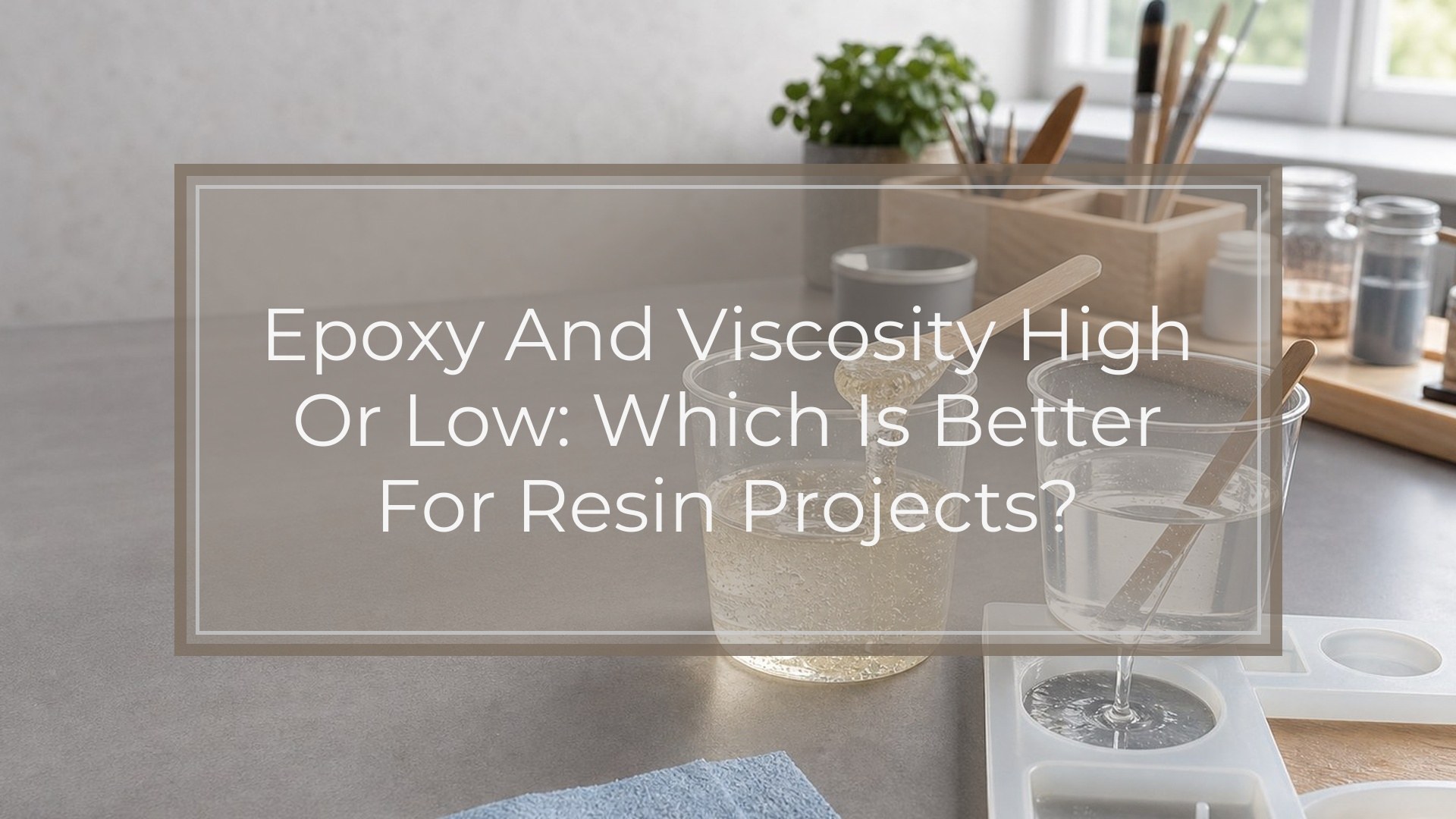
If you are comparing epoxy and viscosity high or low, the best choice depends on what you need the resin to do. Low viscosity epoxy is thinner, flows easily, releases bubbles more readily, and works well for deep pours, molds, cracks, and fine details. High viscosity epoxy is thicker, stays where you place it, builds a domed surface, suspends glitter better, and gives more control on jewelry, coatings, and resin art.
Viscosity is simply how thick or thin the mixed epoxy feels while it is workable. Think of low viscosity like warm syrup and high viscosity like honey or gel. Neither is automatically better. The right epoxy is the one that matches your project, pour depth, surface shape, and desired finish.
Quick Verdict: Is High or Low Viscosity Epoxy Better?
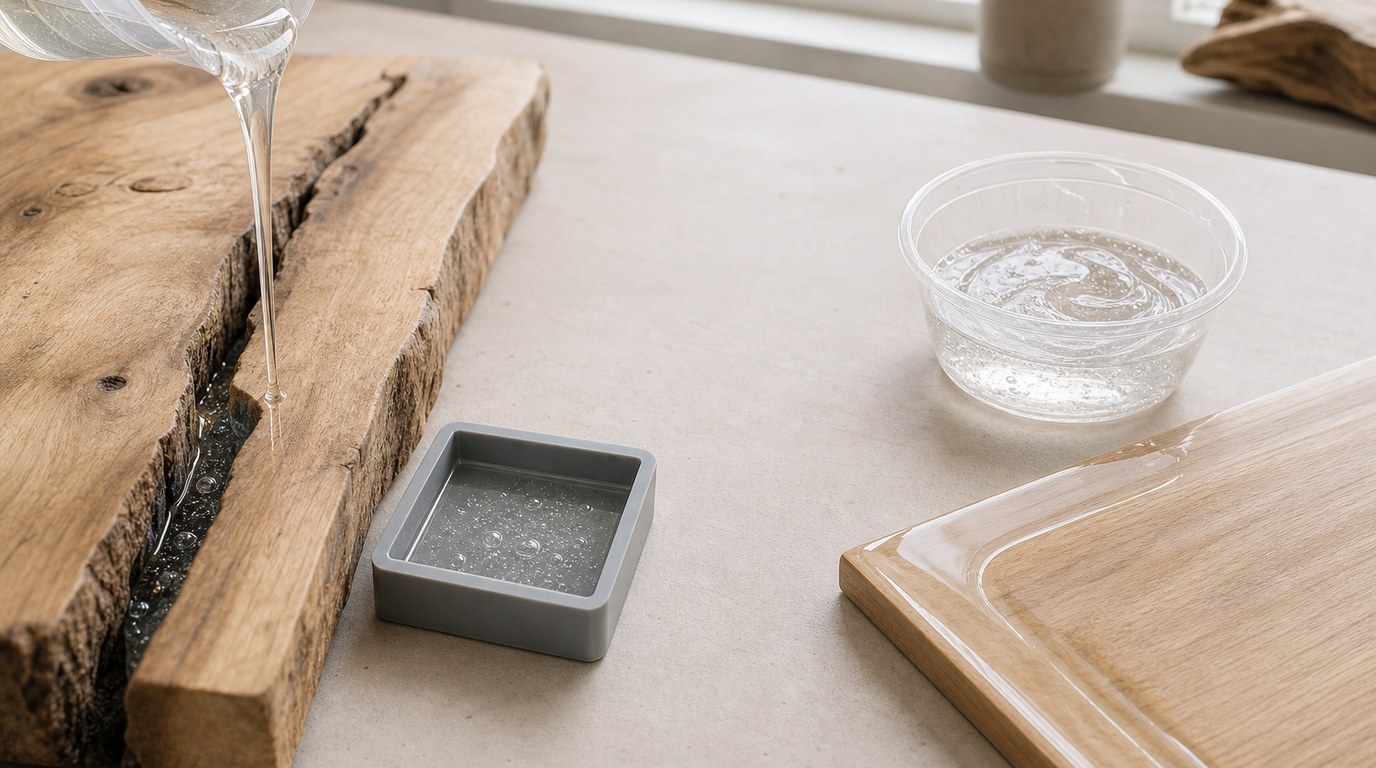
Low viscosity epoxy is better when you need easy flow, fewer trapped bubbles, mold filling, deep pours, or penetration into cracks and small spaces. It is usually the better choice for casting projects, river tables, wood voids, and detailed silicone molds.
High viscosity epoxy is better when you need control. Choose it for doming, coating small items, keeping resin on edges, building a glossy raised surface, or stopping pigments and glitter from sinking too quickly.
The short verdict: use low viscosity epoxy when you want movement and penetration. Use high viscosity epoxy when you want thickness, shape, and staying power.
What Does Epoxy Viscosity Mean?
Epoxy viscosity describes how easily mixed resin flows before it cures. A low viscosity epoxy is thin and runny, so it spreads quickly and slips into small details. A high viscosity epoxy is thicker and slower moving, so it is easier to keep in one place.
Viscosity is not the same as cure time, hardness, strength, or quality. A thin epoxy can still cure hard, and a thick epoxy can still have a long working time. Temperature also matters: warm resin flows thinner, while cold resin feels thicker.
For resin crafting, viscosity affects four big things: flow, bubbles, control, and how well the resin fills or coats your project.
High Vs Low Viscosity Epoxy Comparison Table
| Feature | Low Viscosity Epoxy | High Viscosity Epoxy |
|---|---|---|
| Texture | Thin, runny, fluid | Thick, syrupy, gel-like |
| Best for | Casting, deep pours, molds, cracks | Doming, coating, resin art, jewelry |
| Flow | Spreads and levels quickly | Moves slowly and stays controlled |
| Bubbles | Easier for bubbles to rise | Can trap bubbles more easily |
| Detail filling | Excellent for fine mold details | May miss tiny crevices if too thick |
| Edge control | More likely to run over edges | Better at staying on top |
| Add-ins | Heavy glitter may sink faster | Suspends glitter and pigments better |
| Beginner use | Forgiving for molds and pours | Forgiving for doming and small surfaces |
Flow and Self-leveling: Which Epoxy Spreads Better?
Low viscosity epoxy spreads better because it has less resistance. When you pour it onto a flat surface, it moves outward quickly and self-levels with less help from a stir stick or spreader. That makes it useful for large coatings, deep molds, and surfaces where you want the resin to settle smoothly.
High viscosity epoxy spreads more slowly. This can be helpful or frustrating, depending on the job. It may need more nudging to cover a surface, but it gives you more control over where the resin goes. For small projects, that slower movement can prevent messy overflow.
Bubbles: Which Epoxy Is Easier to De-bubble?
Low viscosity epoxy is usually easier to de-bubble. Because the resin is thinner, air bubbles can rise to the surface more easily after mixing and pouring. This makes low viscosity resin helpful for clear castings, molds with fine details, and projects where trapped bubbles would be obvious.
High viscosity epoxy can hold bubbles in place longer. If you stir aggressively, those bubbles may stay suspended instead of escaping. With thicker resin, mix slowly, scrape the cup carefully, and use a heat gun, torch, or alcohol mist only if the resin brand allows it. The thicker the epoxy, the more gentle handling matters.
Control, Doming, and Edge Coverage: Which Epoxy Stays Put?
High viscosity epoxy wins for control. Its thicker body helps it stay on pendants, coasters, badge reels, keychains, tumblers, and other surfaces where you do not want resin sliding off the edge. This is especially important for doming, where the goal is a raised, glossy surface that curves slightly without spilling.
Low viscosity epoxy can dome, but it is harder to manage. Because it flows so easily, it may run over the edge before it builds height. If you use thin resin for coating, work in smaller amounts, use barriers when needed, and expect more drips.
Casting, Molds, and Fine Details: Which Epoxy Fills Better?
Low viscosity epoxy is usually the better choice for casting and detailed molds. It flows into narrow corners, small lettering, sharp edges, and tiny cavities with less effort. It is also better at penetrating wood cracks, voids, and porous areas.
High viscosity epoxy can work in simple molds, but it may not settle into fine details as easily. You may need to push it into corners or pour slowly in layers. For shallow molds, thick epoxy can be fine. For deep molds, complex shapes, or crystal-clear casting, low viscosity is usually safer and cleaner.
Color Effects and Add-ins: Does Viscosity Change the Look?
Yes, viscosity can change how colorants and add-ins behave. Low viscosity epoxy lets pigments, alcohol inks, mica powders, and resin tints move more freely. That is useful for wispy effects, blooms, cells, and soft color blending, but heavy glitter or stones may sink faster.
High viscosity epoxy holds materials in suspension better. Glitter, flakes, dried flowers, and mica swirls are less likely to drop immediately. It also helps keep color lines more defined because the resin does not move as aggressively. For crisp, controlled designs, thicker epoxy often gives better results.
Choose Low Viscosity Epoxy If…
Choose low viscosity epoxy if you want resin that flows easily and fills spaces without much pushing. It is the better option when:
- You are pouring into molds.
- You need fine detail capture.
- You want bubbles to release more easily.
- You are filling cracks, knots, or voids.
- You are making deep or clear castings.
- You want soft color movement and blending.
Low viscosity is the “flow and fill” choice.
Choose High Viscosity Epoxy If…
Choose high viscosity epoxy if you want resin that stays where you put it. It is the better option when:
- You are doming jewelry or small pieces.
- You need edge control.
- You want a thick glossy coating.
- You are working on vertical or curved areas.
- You want glitter or mica suspended.
- You want controlled resin art effects.
High viscosity is the “build and control” choice.
Common Mistakes When Choosing Epoxy Viscosity
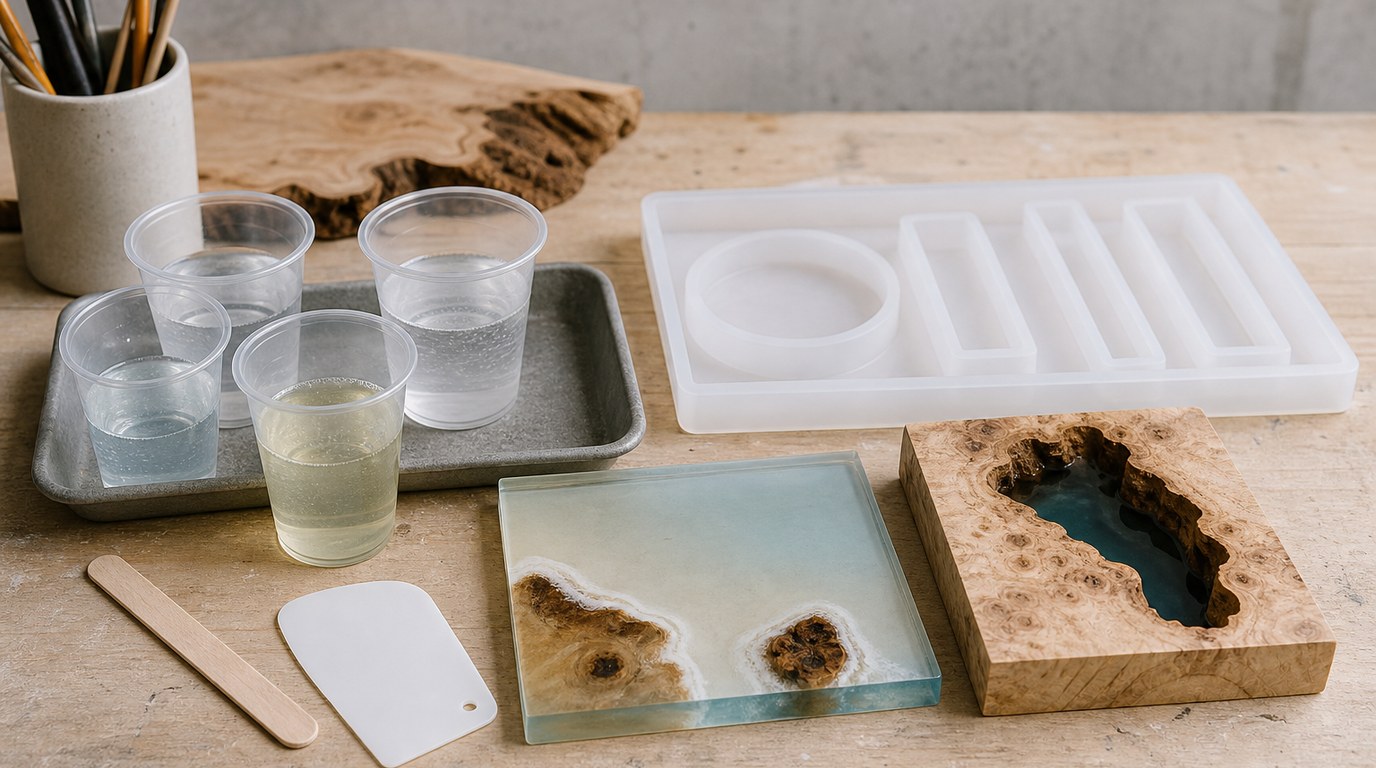
The biggest mistake is choosing epoxy by viscosity alone. Always check the product’s maximum pour depth, working time, cure time, heat resistance, and intended use. A thin coating epoxy may not be safe for a deep pour, even if it flows beautifully.
Another mistake is trying to force one epoxy to do every job. A low viscosity casting resin may be too runny for doming, while a thick doming resin may trap bubbles in a detailed mold.
Also avoid judging viscosity straight from the bottle. Resin changes after mixing and with temperature.
Final Verdict: Match the Viscosity to the Job
High viscosity epoxy is not better than low viscosity epoxy, and low viscosity epoxy is not better than high viscosity epoxy. They solve different problems.
Use low viscosity epoxy when the project needs flow, bubble release, penetration, and detail filling. Use high viscosity epoxy when the project needs height, control, edge coverage, and suspended effects.
If your project is a mold or deep pour, start low viscosity. If your project is a domed or coated surface, start high viscosity.
FAQ
Is High Viscosity Epoxy Stronger Than Low Viscosity Epoxy?
Not automatically. Strength depends on the resin formula, mix ratio, cure quality, and intended use, not viscosity alone. A low viscosity casting epoxy can cure very hard, while a high viscosity coating epoxy may be designed mainly for surface finish. Always check the manufacturer’s specifications.
Is Low Viscosity Epoxy Better for Beginners?
Low viscosity epoxy can be easier for beginners working with molds because it flows well and releases bubbles more easily. However, it can be messy on open surfaces because it runs quickly. For doming jewelry or coating small items, beginners may find high viscosity epoxy easier to control.
Can I Make High Viscosity Epoxy Thinner?
You can warm the resin bottles in a warm water bath before mixing to lower viscosity slightly, if the product instructions allow it. Do not add random solvents or thinners unless the manufacturer specifically approves them. Additives can weaken the cure, create cloudiness, or make the resin unsafe.
Can I Use Low Viscosity Epoxy for Doming?
Yes, but it is harder to control. Low viscosity epoxy tends to spread and run over edges before it builds a rounded dome. If you try it, use small amounts, work on a level surface, and add resin gradually. For reliable doming, high viscosity epoxy is usually better.
Does Temperature Affect Epoxy Viscosity?
Yes. Warm epoxy flows thinner, mixes easier, and releases bubbles better. Cold epoxy feels thicker, moves slowly, and may trap bubbles. Keep your resin and workspace within the brand’s recommended temperature range. Avoid overheating resin, because too much warmth can shorten working time and affect curing.