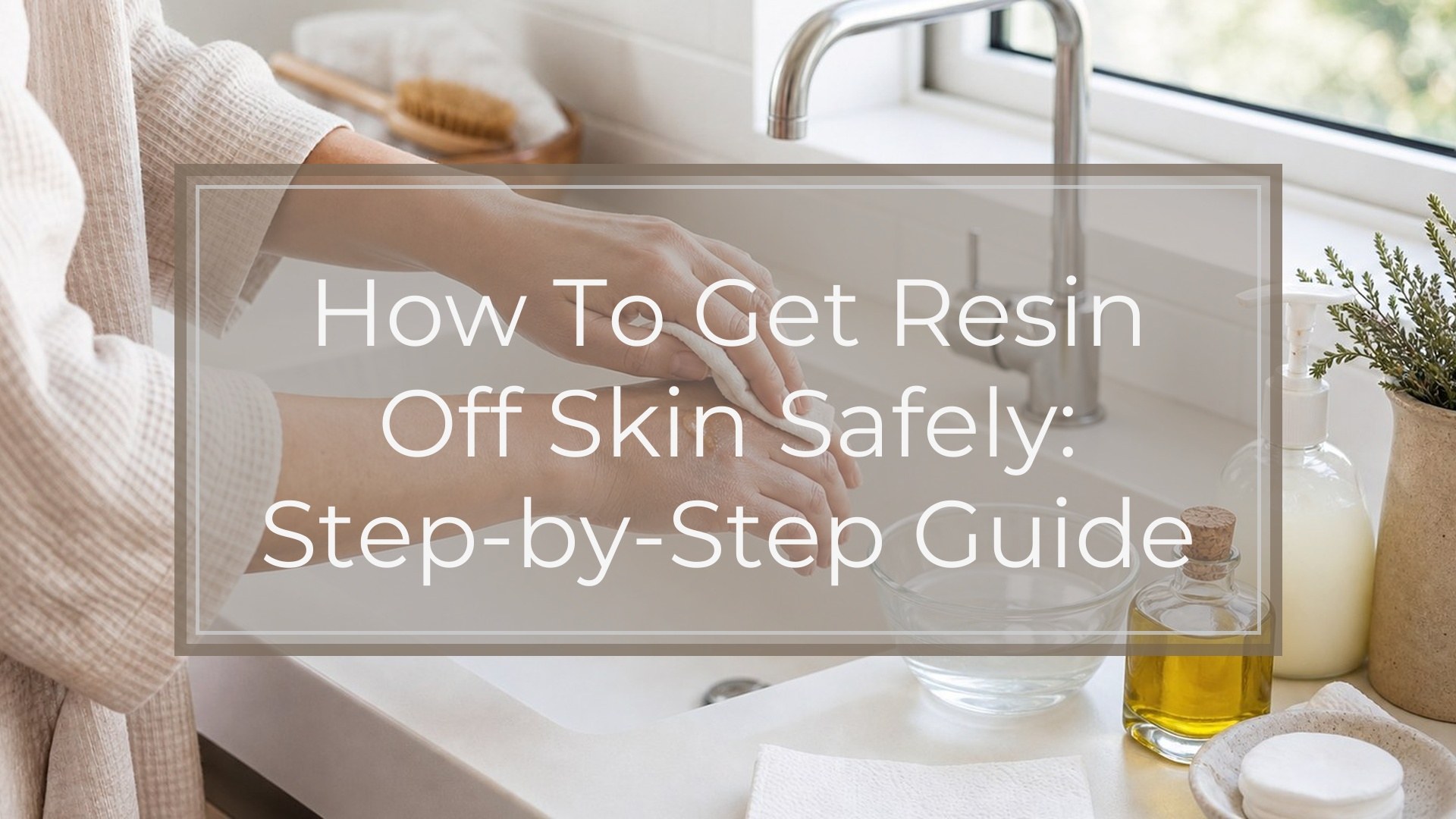
If you get epoxy resin, UV resin, or mixed resin on your skin, act quickly but gently. Wipe off as much resin as possible with a dry paper towel, then wash the area with plenty of warm water and soap. Use a skin-safe oil, such as cooking oil or baby oil, to loosen sticky residue, then wash again. Do not use acetone, harsh solvents, or scrubbing tools on your skin. If burning, swelling, a rash, or eye/mouth exposure occurs, stop crafting and get medical advice.
Before You Start: Quick Safety Check
Move away from your resin project first so you do not spread resin to tools, clothing, door handles, or your face. If you are wearing gloves, remove them carefully by peeling them off inside out.
Check where the resin landed. Skin on hands or arms can usually be cleaned at home if the exposure is small and you are not having a reaction. Resin near your eyes, mouth, nose, or on broken skin needs more caution.
Before cleaning, gather:
- Paper towels or disposable shop towels
- Warm running water
- Mild dish soap or hand soap
- Cooking oil, baby oil, or mineral oil
- A clean towel
- Moisturizer
Do not keep working while resin is on your skin. Uncured resin can irritate skin and may increase your chance of sensitization with repeated exposure.
What Not to Use on Resin-covered Skin
Do not reach for strong solvents just because they dissolve resin on tools. Skin is not a mixing cup.
Avoid using:
- Acetone or nail polish remover
- Denatured alcohol
- Paint thinner, mineral spirits, turpentine, or lacquer thinner
- Bleach or harsh household cleaners
- Abrasive scrub pads, pumice stones, or sandpaper
- Heat guns, hair dryers, or very hot water
These can strip or damage your skin, push resin around, or make irritation worse. Solvents may also help carry resin components deeper into irritated skin.
Rubbing alcohol is sometimes used to clean resin tools, but it is not the best first choice for skin. If you already used a little, stop, wash with soap and water, and switch to the gentler method below.
How to Get Resin Off Skin: Step-by-step
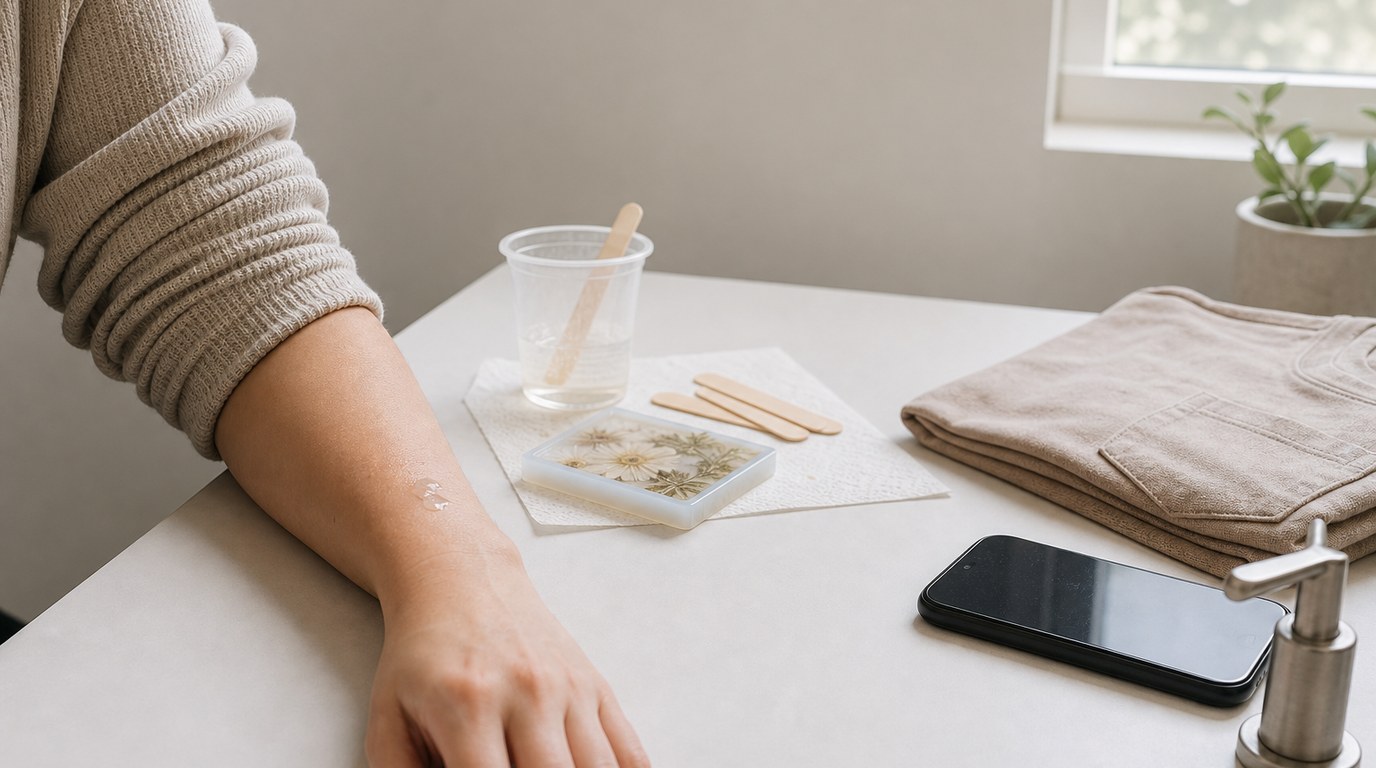
Follow these steps as soon as you notice resin on your skin.
- Stop touching anything else.
Put down your resin cup, tools, and project. Avoid touching your phone, faucet handles, face, clothing, or pets. Resin transfers easily before it cures.
- Remove contaminated gloves or jewelry.
If resin is on your gloves, peel them off from the wrist so the contaminated side turns inward. Remove rings, bracelets, or watches if resin may be under or around them. Do not force jewelry off swollen skin.
- Blot and lift off excess resin.
Use a dry paper towel to gently blot or wipe the resin away. Work from the outside of the sticky area toward the center so you do not spread it. Use fresh sections of towel often. Throw used towels away immediately.
- Wash with warm water and soap.
Hold the area under warm running water. Add mild soap and lather for at least 30 seconds. Rinse well. Repeat once if the resin still feels slippery or tacky. Keep the water warm, not hot, because heat can irritate skin.
- Use oil for sticky residue.
If the area still feels sticky, rub a small amount of cooking oil, baby oil, or mineral oil onto the skin. Massage gently with your fingertips for one to two minutes. The oil can help loosen resin without using harsh solvents.
- Wipe, then wash again.
Wipe the oily residue away with a clean paper towel. Wash the area again with soap and warm water to remove both oil and loosened resin. Rinse thoroughly.
- Pat dry and inspect.
Dry the skin with a clean towel. Look closely for shiny, sticky, or tacky spots. If you find residue, repeat the oil-and-soap cycle rather than scrubbing hard.
- Moisturize the cleaned skin.
Apply a gentle, fragrance-free moisturizer. Resin cleanup can dry out your skin, and healthy skin is a better barrier the next time you craft.
- Change contaminated clothing.
If resin touched sleeves, cuffs, or an apron, remove the clothing so it does not re-expose your skin. Wash contaminated fabric separately if it can be saved; discard items with heavy uncured resin.
- Clean your work area safely.
Once your skin is clean, put on fresh nitrile gloves before returning to cleanup. Wipe spills according to your resin manufacturer’s instructions.
Result Check: How to Know the Resin Is Off
Your skin should feel clean, not sticky, tacky, slippery, or coated. When you press a clean paper towel to the area, it should not pick up shiny residue. The skin may look slightly pink from washing, but it should not burn, swell, blister, or continue itching.
Smell alone is not a reliable test. Some resin odor can linger nearby on gloves, towels, clothing, or your workspace. Check the actual skin surface under good light. If you still see glossy patches or feel drag when you touch the area, repeat the gentle oil-and-wash steps.
If the Resin Has Started to Cure on Your Skin
If resin has become rubbery or partly hardened, do not peel it aggressively. Pulling at curing resin can tear skin or remove hair painfully.
First, wash the area with warm water and soap. Then massage oil around the edges to loosen any uncured residue. If a thin cured film remains but the skin underneath feels normal, leave it alone. It will usually wear off as the outer skin naturally sheds.
Do not sand, scrape, cut, or dissolve hardened resin off your skin with solvents. If cured resin is trapping skin, hair, a ring, or causing pain, contact a medical professional for advice.
Common Mistakes That Make Resin Skin Exposure Worse
The biggest mistake is delaying cleanup. The longer uncured resin stays on skin, the more time it has to irritate.
Other common mistakes include:
- Using acetone first. It can dry and irritate skin while spreading resin residue.
- Scrubbing hard. Damaged skin is more vulnerable to irritation.
- Washing with hot water. Hot water can worsen discomfort and dryness.
- Touching everything on the way to the sink. This spreads resin to surfaces you may touch later.
- Ignoring small exposures. Repeated tiny contacts can still become a problem over time.
- Putting the same gloves back on. Contaminated gloves can reapply resin to clean skin.
If your skin remains sticky after washing, slow down and repeat the oil step instead of escalating to harsh cleaners.
When to Get Medical Help
Get medical advice promptly if resin gets in your eyes, mouth, nose, or on broken skin. For eye exposure, rinse with clean running water for at least 15 minutes and seek urgent medical care.
Also contact a medical professional if you notice:
- Burning that does not improve after washing
- Swelling, blistering, or spreading redness
- A rash, hives, or intense itching
- Dizziness, trouble breathing, or facial swelling
- Resin stuck to a ring or causing circulation problems
Bring the resin product label or safety data sheet if you seek care. Different products have different ingredients, and that information helps clinicians choose the right treatment.
How to Prevent Resin from Getting on Your Skin Next Time
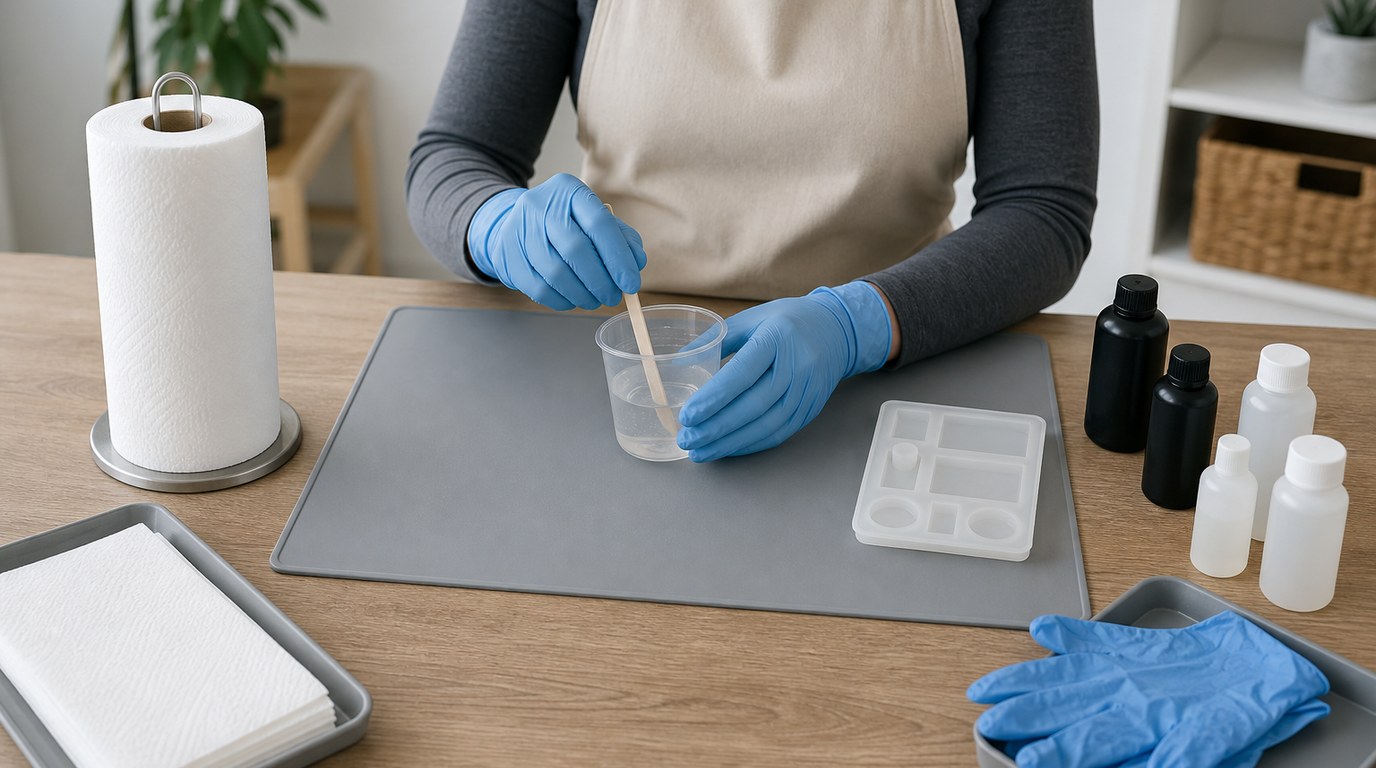
The safest resin cleanup is the one you never need. Set up your workspace before opening bottles or mixing.
Use nitrile gloves, not latex or thin food-service gloves. Choose gloves that fit well and cover your wrists. If you are working for a long session, change gloves whenever they become sticky or contaminated.
Wear long sleeves, an apron, and eye protection. Tie back hair and remove rings or bracelets before you begin. Keep paper towels, soap, and a trash bag within reach so small spills do not turn into a messy search for supplies.
Pour slowly, avoid overfilling molds, and use tools that give you control. If you frequently get resin on your hands, reassess your setup rather than accepting skin contact as normal.
FAQ
Can I Use Acetone to Get Resin Off My Skin?
No. Acetone can remove resin from some tools, but it is too harsh for routine skin cleanup. It strips oils from your skin and can worsen irritation. Use dry wiping, soap and warm water, then a skin-safe oil for sticky residue.
Will Rubbing Alcohol Remove Resin from Skin?
Rubbing alcohol may loosen some resin, but it can dry and irritate skin and is not the safest first choice. For skin, use soap, warm water, and cooking oil or baby oil. Save alcohol for appropriate tool cleanup, following the resin manufacturer’s instructions.
What If My Skin Is Still Sticky After Washing?
Do not scrub harder. Massage a small amount of cooking oil, baby oil, or mineral oil into the sticky area, wipe it off, then wash again with soap and warm water. Repeat gently. If irritation develops or residue will not come off, seek medical advice.
Is Cured Resin on Skin Dangerous?
A small thin spot of fully cured resin on intact skin is usually less concerning than uncured resin, but you still should not pick, scrape, or sand it off. Wash the area, remove any uncured residue, and let the cured film wear away naturally.
What Should I Do If Resin Causes a Rash?
Wash the area thoroughly with soap and warm water and stop using resin until you get advice. Do not apply more solvents. If the rash spreads, blisters, burns, or keeps itching, contact a healthcare professional. You may be developing a resin sensitivity.