
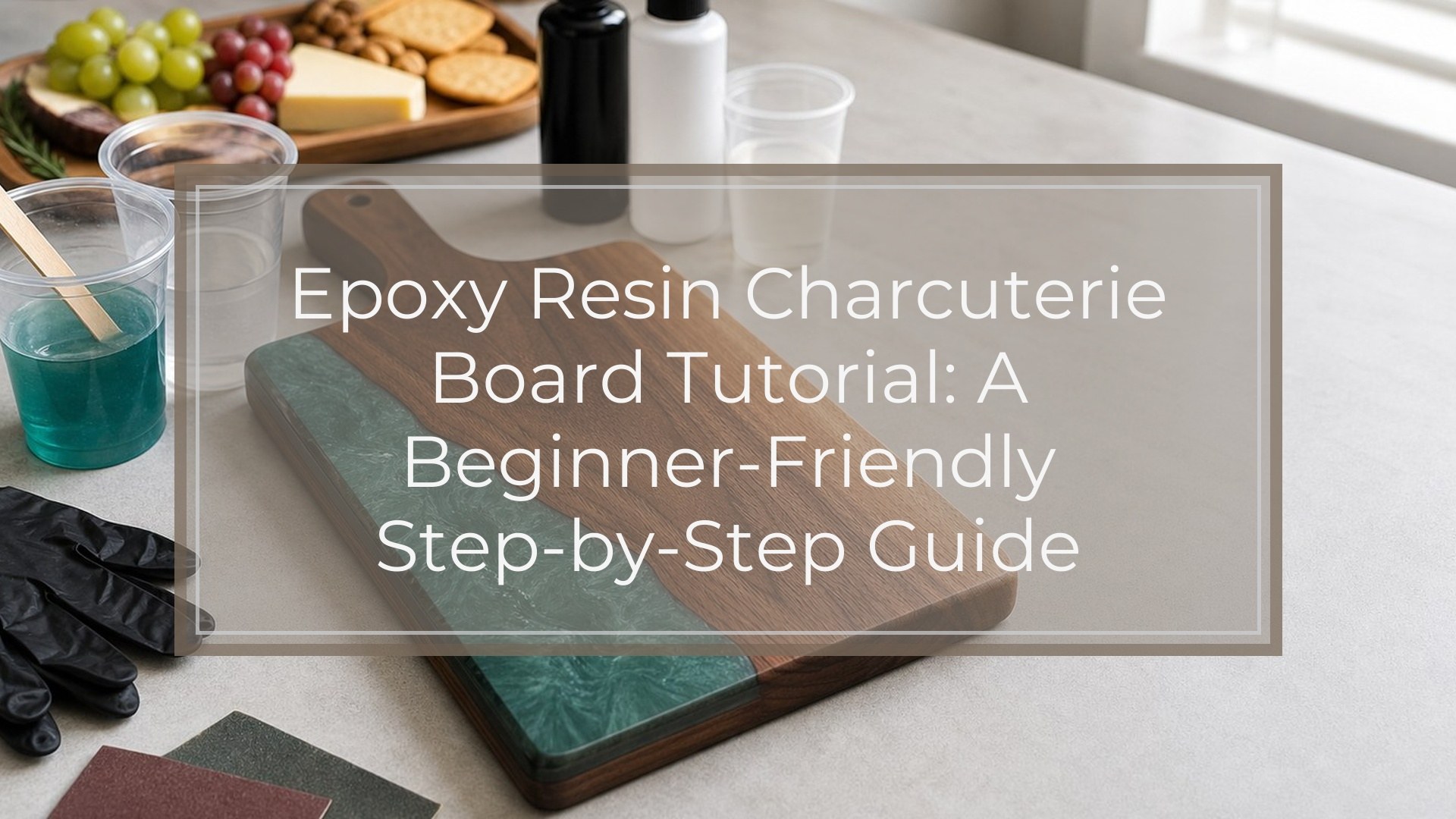
Make an epoxy resin charcuterie board by sanding a hardwood board, masking the areas that must stay clean, mixing resin accurately, pouring a decorative accent, curing fully, then sanding and finishing the wood. Use the finished board for serving, not cutting. Food should touch the wood side or a fully cured resin surface rated food safe after cure. Work slowly: most failures come from leaks, dust, inaccurate measuring, overheating, or using the board before the resin has fully cured.
What You Need Before You Start
Choose a dry hardwood board such as walnut, maple, cherry, or olive wood. Avoid soft, oily, damp, cracked, or unstable wood because resin may not bond well. A paddle board, rectangular serving board, live-edge slab, or board with a small missing-edge area works well.
Gather these supplies before opening the resin:
- Hardwood charcuterie board blank
- Two-part epoxy resin, preferably labeled food safe after full cure
- Resin pigment, mica powder, alcohol ink, or opaque resin dye
- Measuring cups, mixing cups, and stir sticks
- Nitrile gloves, safety glasses, and a respirator if required by the resin label
- Plastic drop cloth, silicone mat, or covered work surface
- Painter’s tape, sheathing tape, or resin barrier tape
- Hot glue, silicone, clamps, or acrylic pieces for a dam if needed
- Level, craft sticks, paper towels, and a small torch or heat gun
- Sandpaper from 120 to 400 grit, plus optional finer grits for polishing
- Random orbital sander or sanding block
- Mineral oil, board butter, or another food-safe wood finish
- Lint-free cloths
Set up in a dust-controlled, well-ventilated room within the resin manufacturer’s temperature range, often around 70°F to 75°F. Cold resin cures slowly and holds bubbles. Hot resin can cure too fast, thicken early, or overheat.
Read the resin instructions carefully. Confirm the mix ratio by volume or weight, working time, maximum pour depth, demold time, and full cure time. “Food safe” usually means the resin is safe only after complete cure and only when mixed correctly. Do not use resin that remains soft, smells strongly after curing, or is not intended for serving surfaces.
Decide how the board will be used. Resin charcuterie boards are best for cheese, crackers, fruit, wrapped meats, nuts, and small bowls. Do not cut directly on the resin. Knife marks can damage the surface and create grooves that are hard to clean.
Step 1
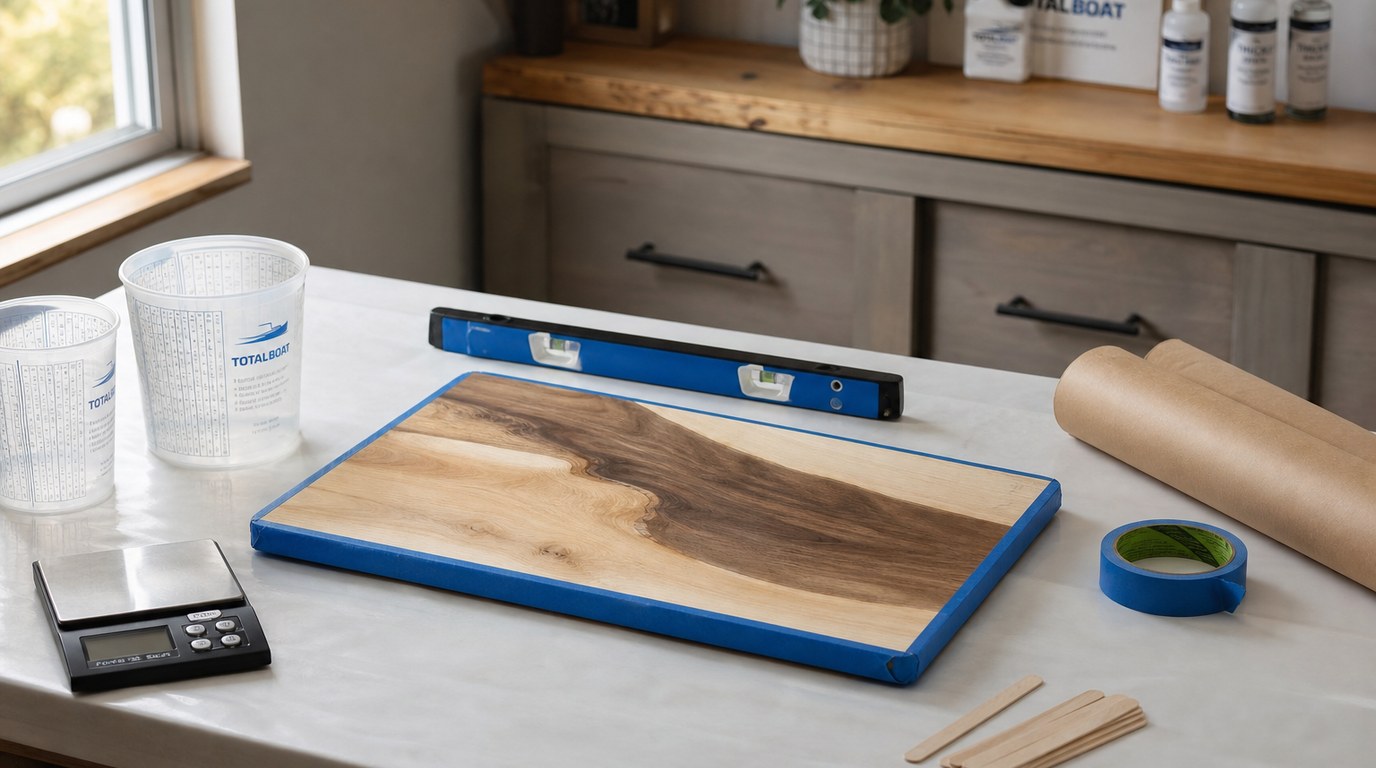
Prepare the wood, design, and pour area before you mix the resin. Once resin is mixed, the clock starts, so finish all layout, taping, and leveling first.
- Sand the board. Sand the wood smooth, starting around 120 or 150 grit and moving to 220 grit. Remove scratches, raised grain, and rough live-edge fibers. Wipe away dust with a dry cloth or tack cloth. Do not apply oil before resin; oil can weaken adhesion.
- Plan the resin placement. Choose a resin handle accent, colored corner, ocean-style edge, or live-edge river. Keep the resin decorative rather than covering the entire board if you want easier cleaning and care. Mark your design lightly with pencil if needed.
- Tape the underside and edges. Apply strong tape to the bottom of the board, especially under any area where resin may drip. Press the tape firmly along edges and corners. Resin finds tiny gaps, so burnish the tape with a craft stick.
- Build a dam if needed. For a river, missing-edge fill, or deep accent, create a sealed barrier with tape, acrylic, silicone, or hot glue. Check that the dam sits tight against the wood. Seal cracks, knots, and the underside so resin does not escape.
- Level the board. Place the board on cups, blocks, or a raised rack. Use a level front to back and side to side. Adjust the supports until the surface is flat. An unlevel board causes resin to pool to one side.
- Seal porous areas. Brush a thin coat of mixed clear resin onto live edges, cracks, knots, and end grain if your design includes them. This seal coat reduces bubbles during the main pour. Let it become tacky or cure as directed by your resin instructions.
- Dry-run your tools. Put pigments, cups, stir sticks, torch, gloves, and paper towels within reach. Cover the work surface. Keep pets, kids, loose hair, and dust away from the area.
Mix only when the board is ready. Measure Part A and Part B exactly according to the label. Scrape the sides and bottom of the cup while stirring slowly for the recommended time. Pour the resin into a second clean cup and stir again. This double-cup method helps prevent sticky unmixed streaks.
Add pigment gradually. Too much mica, dye, or alcohol ink can interfere with curing. If you want a marble effect, divide resin into two or three cups and tint each one separately. Keep a small amount clear for blending or sealing edges.
Step 2
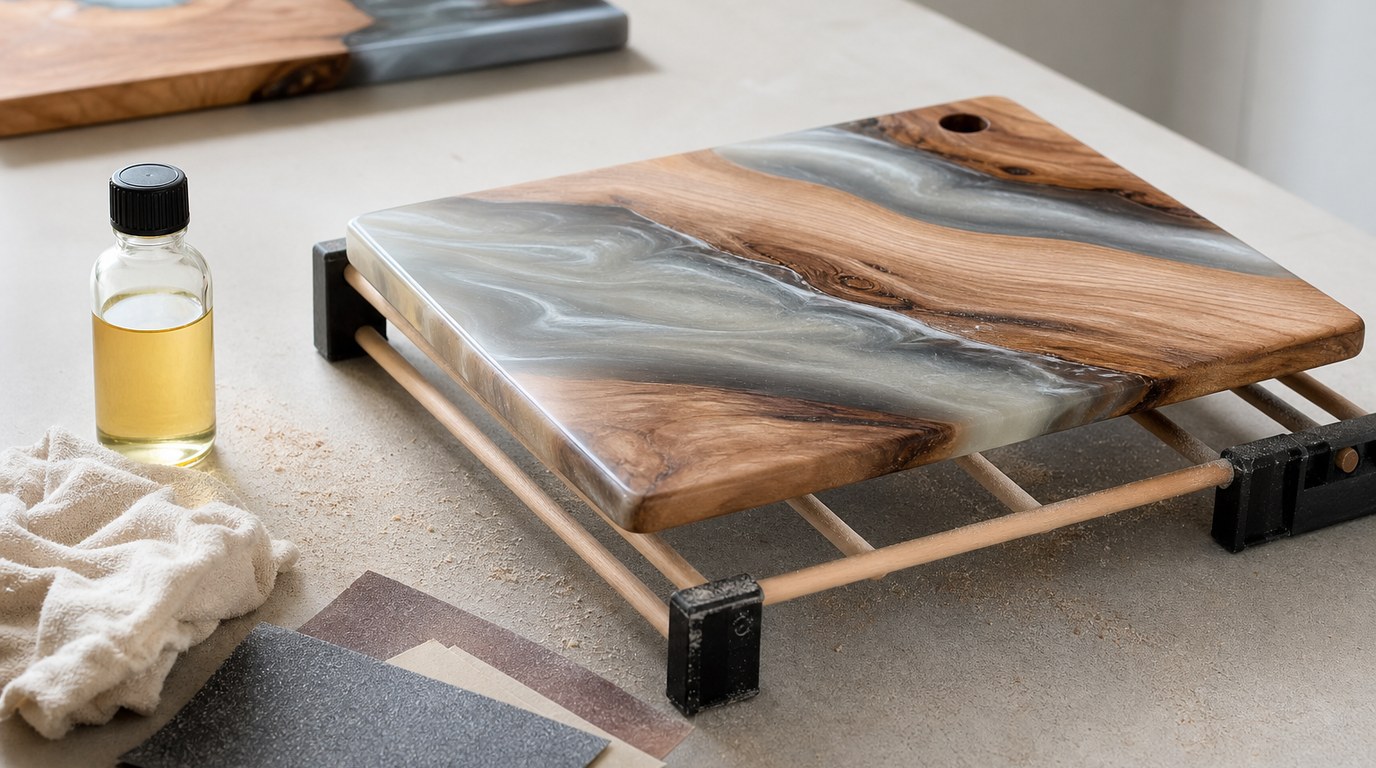
Pour, cure, sand, and finish the board in sequence. Do not rush these stages; many failed resin boards happen because the surface is touched, sanded, or oiled too soon.
- Pour the resin slowly. Start at the lowest point of the design and guide the resin with a stir stick. For an edge accent, pour a thin line and let it flow. For a river, pour into the center channel and nudge resin into corners. Stay within the resin’s maximum pour depth.
- Create the design. Drag a clean stick through colors to make soft swirls. Add a thin line of white for an ocean wave or metallic mica for a stone effect. Stop before the colors become muddy. Resin continues to move after you stop touching it.
- Remove bubbles carefully. Pass a torch or heat gun quickly over the surface, keeping it moving. Use short passes, not long blasts. Caution: too much heat can scorch wood, warp tape, create ripples, or make resin cure too fast. Never hold flame close to the board.
- Watch for leaks. Stay near the project for the first 30 to 60 minutes. If resin leaks, plug the gap from the outside with tape, hot glue, or silicone. Scrape drips from the underside while they are soft, or leave the tape in place until the resin gels.
- Cover and cure. Place a clean box, plastic bin, or dust cover over the board without touching the resin. Let it cure for the full time listed by the manufacturer. The surface may feel hard before the resin has reached full cure, so do not assume it is ready for food use.
- Remove tape and trim edges. Once cured enough to handle, peel away the tape. If resin drips remain, shave them carefully with a sharp blade or sand them off. Wear eye protection and a dust mask when sanding cured resin.
- Sand the board. Sand wood and resin flush if needed. Start with the lowest grit required to level the surface, often 120 or 180, then move through 220, 320, and 400 grit. Keep the sander flat. If the resin looks scratched, continue with finer grits or polish it according to your finish plan.
- Clean the dust. Vacuum the board and wipe it with a slightly damp cloth or denatured alcohol if compatible with your finish. Let it dry completely. Dust trapped under oil or board butter creates a gritty surface.
- Finish the wood. Apply mineral oil, board oil, or board butter to the wood areas only, unless the product is also suitable for resin. Let it soak in, wipe off excess, and buff with a clean cloth. Repeat until the wood looks even and conditioned.
Troubleshoot before using the board. Sticky resin usually means inaccurate measuring, poor mixing, too much pigment, or low temperature; scrape it off and repour only after fixing the cause. Bubbles often come from porous wood or aggressive stirring; seal the wood and mix slowly next time. Uneven pours come from an unlevel board. Dusty finishes come from curing uncovered or failing to clean between sanding grits.
How to Check the Result
Check the board before serving food on it. A finished epoxy resin charcuterie board should pass these tests:
- The resin is hard, not rubbery. Press a fingernail into an inconspicuous spot. It should not dent easily.
- There is no tackiness. Touch the surface lightly with a gloved finger. It should feel smooth and dry, not sticky or waxy.
- There is no strong chemical smell. Lingering odor can mean the resin has not fully cured or was mixed incorrectly.
- The board sits flat. Place it on a table and press each corner. It should not rock.
- Edges are smooth. Run your hand carefully around the sides. Sand away sharp resin lips or rough wood.
- The finish is clean. Look across the surface under angled light. Remove sanding dust, cloudy patches, or tape residue.
- The wood is sealed. The wood should look evenly conditioned, not dry in patches or greasy from excess oil.
If the resin is still soft after the full cure window, move the board to a warmer room and wait longer. If it remains sticky, do not use it for food. Uncured resin cannot be made food safe by adding oil, wax, or polish on top.
Use the board as a serving piece, not as a chopping board. Wash by hand with mild soap and a damp cloth. Do not soak it, put it in the dishwasher, microwave it, or leave it in direct sun or high heat. Re-oil the wood when it looks dry.
FAQ
What Is the First Step Someone Should Take with Epoxy Resin Charcuterie Board Tutorial?
Start by choosing a dry hardwood board and reading the resin label. Confirm the mix ratio, working time, cure time, maximum pour depth, and food-safe-after-cure claim. Then sand the board, plan the resin area, tape the underside, and level the surface before mixing.
What Can Go Wrong When Following Epoxy Resin Charcuterie Board Tutorial Advice?
Common problems include leaks, bubbles, sticky resin, uneven pours, scorch marks from too much heat, and dusty finishes. Most come from poor sealing, inaccurate measuring, over-pigmenting, working in the wrong temperature, or touching the board before the resin has fully cured.
How Long Does It Usually Take to Work Through Epoxy Resin Charcuterie Board Tutorial?
Hands-on time is usually two to four hours, including sanding, taping, pouring, and finishing. Total project time is longer because resin needs to cure. Plan for at least one to three days, depending on the resin system, pour depth, temperature, and finishing schedule.
How Can a Beginner Tell Whether Epoxy Resin Charcuterie Board Tutorial Worked?
The board worked if the resin is hard, smooth, non-sticky, odor-free, and level, with no sharp edges or cloudy dust trapped in the finish. The wood should be evenly oiled, and the board should be attractive, stable, and ready for serving, not cutting.