Non-blushing epoxy is an epoxy resin system formulated to greatly reduce the chance of amine blush, a waxy, cloudy, or greasy-looking film that can sometimes appear on cured epoxy. In resin crafting, the term usually means the cured surface is less likely to develop that surface residue, especially when used under reasonable temperature and humidity conditions.
It does not mean the epoxy can never have surface problems, cure issues, bubbles, cloudiness, or contamination. “Non-blushing” is best understood as a practical formulation feature, not a guarantee. For resin artists, makers, and coating projects, it matters most when you plan to add layers, sand, polish, paint, or apply a topcoat.
What Non-blushing Epoxy Means
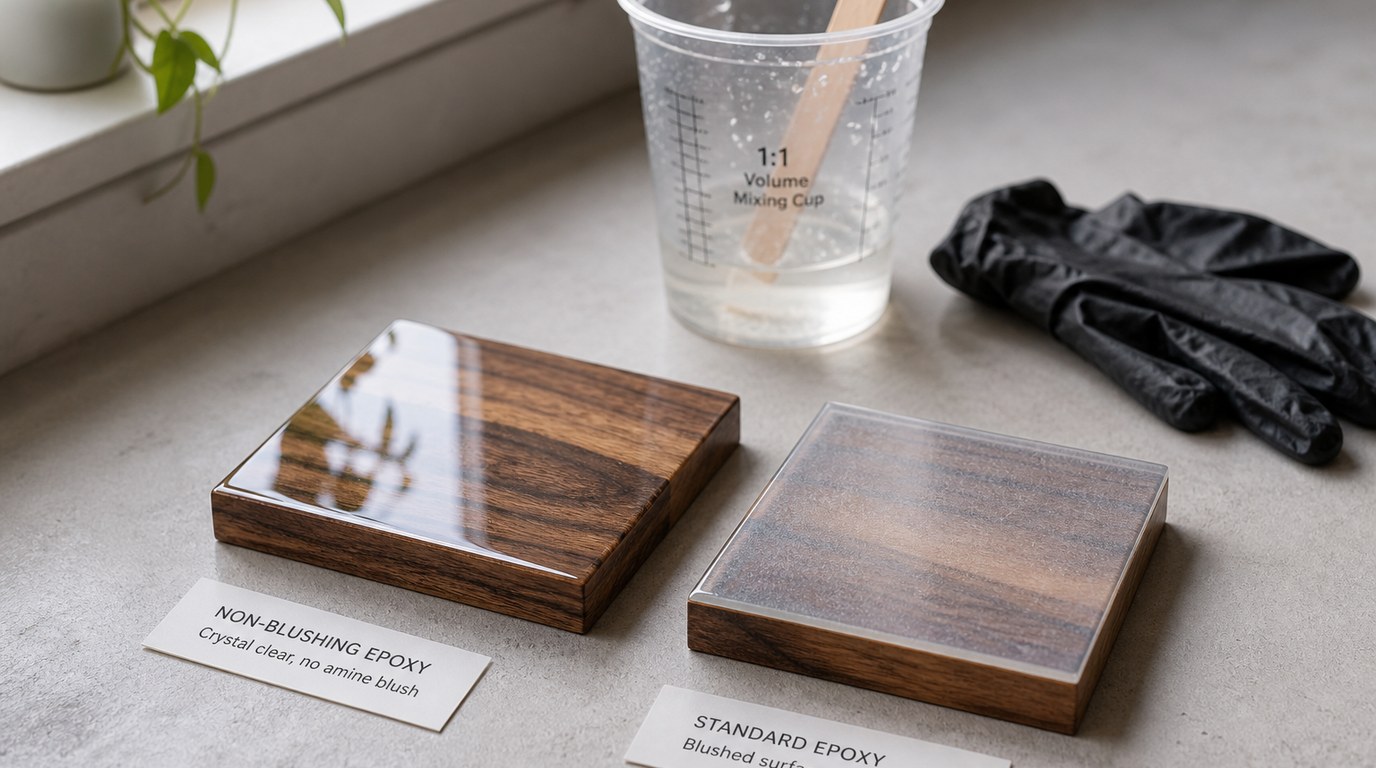
Non-blushing epoxy is epoxy designed so the cured surface is less likely to form amine blush. In plain terms, it helps prevent that sticky, dull, or cloudy film that can interfere with the next step of a project.
For resin crafts, this can make layering and finishing easier. A non-blushing epoxy may be useful for clear art coatings, tabletops, trays, jewelry layers, and projects where the surface needs to stay clean-looking between pours. The key word is less likely. The label describes how the resin system is formulated, but your workspace conditions and mixing habits still matter.
What Is Amine Blush?
Amine blush is a surface film that can form when certain epoxy hardeners cure. It is generally linked to amines in the hardener reacting with moisture and carbon dioxide in the air. The result may look waxy, cloudy, milky, greasy, or slightly sticky.
Blush is usually a surface issue, not necessarily proof that the whole pour failed. However, it can prevent good adhesion if you pour another layer over it without cleaning first. It may also dull a glossy finish or make sanding and polishing less predictable. Cool temperatures, high humidity, and poor ventilation can make blush more likely with some epoxy systems.
Non-blushing Epoxy Vs. Regular Epoxy
The practical difference is not that one epoxy works and the other does not. Many regular epoxies perform beautifully when used correctly. The difference is mainly the likelihood of surface blush under typical curing conditions.
| Feature | Non-blushing epoxy | Regular epoxy |
|---|---|---|
| Blush risk | Lower, depending on conditions | May be higher with some formulas |
| Surface after cure | More likely to stay clean and glossy | May need washing before recoating |
| Best use | Layering, clear coats, finishing workflows | General casting, coating, repairs, crafts |
| Guarantee? | No | No |
Always read the product directions, because manufacturers use these terms differently.
Why Resin Crafters Care About Blushing
Blushing matters because resin projects often depend on a clean, glossy, bond-ready surface. If blush forms, your next layer of resin may not grip well. Paint, mica, alcohol ink, varnish, or topcoat may also behave strangely on the surface.
For example, a coaster may look hazy instead of glassy. A layered ocean art piece may develop separation between coats. A tabletop coating may feel slick or waxy before sanding. These problems are frustrating because the resin underneath may be cured, but the surface is not ready for the next step. Non-blushing epoxy can reduce that risk.
What Non-blushing Epoxy Does Not Mean
Non-blushing epoxy does not mean “problem-proof epoxy.” It does not guarantee a perfectly clear finish, a bubble-free pour, a fast cure, or automatic adhesion between layers. It also does not mean you can ignore temperature, humidity, mixing ratios, cure time, or surface preparation.
Cloudiness can come from many causes besides blush, including moisture contamination, overheating, under-mixing, cold resin, incompatible pigments, or dust. A tacky surface can also come from inaccurate measuring or poor mixing, not blush.
So, “non-blushing” is a useful clue about the formula, but it is not the same as “no prep required” or “safe for every project.”
Examples of When Non-blushing Epoxy Helps
Non-blushing epoxy can be helpful in resin art when you plan several clear layers and want to reduce cleaning between pours. It can also help with topcoats over wood, painted panels, trays, or tabletops where a glossy surface is part of the final look.
For layered pours, such as beach scenes or embedded flowers, a cleaner cured surface can make the next layer easier to apply. In finishing workflows, it may reduce the chance that sanding dust sticks to a waxy film or that polish behaves unevenly. It is also useful when your workspace is sometimes humid, although humidity control still matters.
How to Tell Whether Epoxy Has Blushed
Look for signs on the cured surface, especially after the resin has had its full cure time. Amine blush may appear as:
- A cloudy, milky, or dull film
- A waxy or greasy feel
- Slight surface stickiness, even when the resin below feels hard
- White residue after light sanding
- Poor wetting when applying another coat
Blush is usually on the surface. If the whole piece is soft, bendy, or liquid underneath, the issue is more likely an incomplete cure rather than blush alone.
What to Do If Epoxy Blush Appears
If you suspect blush, do not simply pour more resin over it. First, wash the surface with warm water and a mild dish soap, using a non-scratch pad or clean cloth. Rinse well and dry completely.
After washing, lightly sand if the next step requires mechanical grip, then remove sanding dust. Avoid using only solvents at the beginning, because some solvents can smear blush instead of removing it. Once the surface is clean, dry, and properly scuffed if needed, you can usually recoat, paint, or continue finishing according to the resin manufacturer’s instructions.
How to Reduce the Chance of Blush
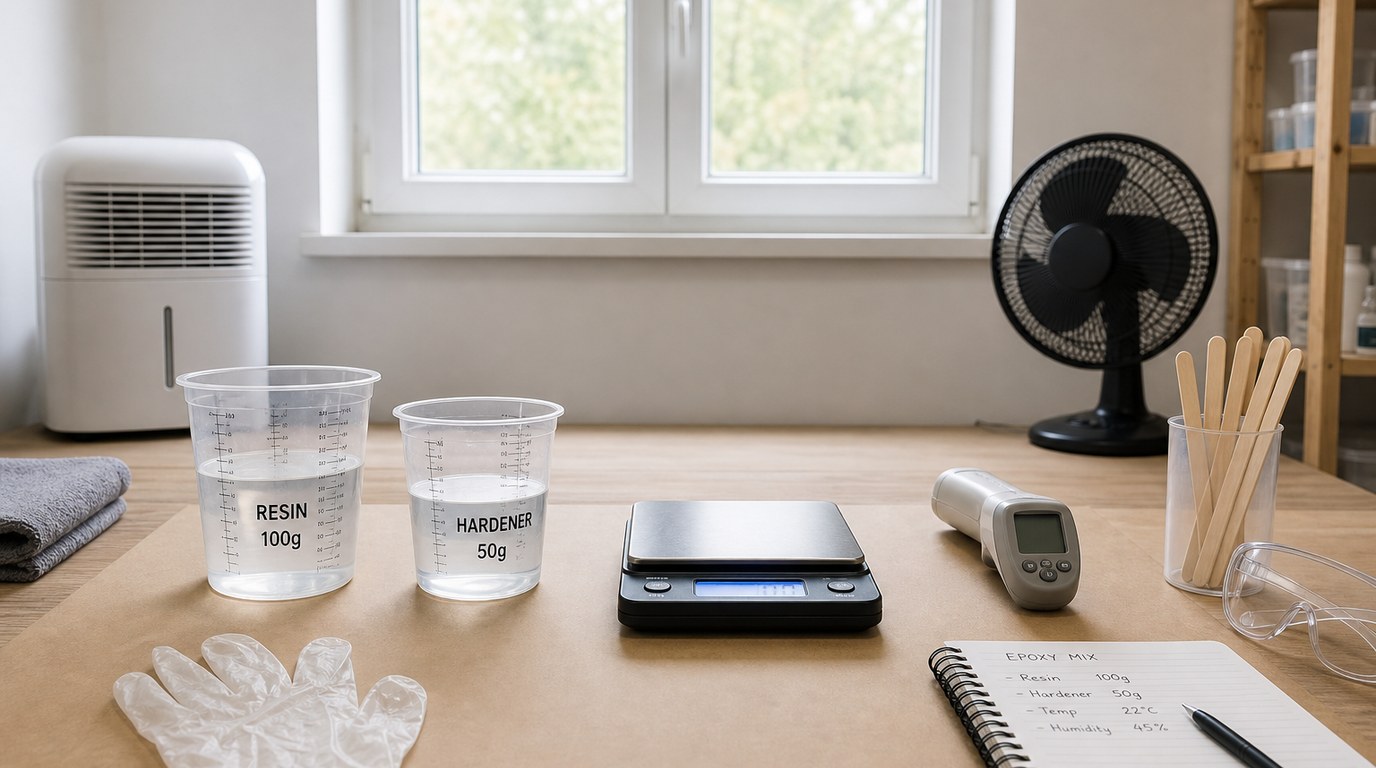
You can lower the chance of blush by controlling the curing environment and following the epoxy directions closely. Work within the recommended temperature range, and avoid pouring during very humid conditions if possible.
Measure resin and hardener accurately, then mix thoroughly, scraping the sides and bottom of the cup. Use clean tools and dry pigments or inclusions. Keep the curing piece covered from dust but not sealed in a way that traps moisture. If your project needs multiple coats, stay within the recommended recoat window or clean and sand before adding the next layer.
Is Non-blushing Epoxy Always the Best Choice?
Not always. Non-blushing epoxy can be a good choice for clear coatings, layered resin art, and finishing steps, but it is only one feature. You still need to consider working time, cure time, UV resistance, viscosity, heat resistance, food-contact claims if relevant, and project depth. Choose based on the whole project, not the label alone.
FAQ
Is Non-blushing Epoxy the Same as No-blush Epoxy?
Usually, yes. “Non-blushing” and “no-blush” are often used to describe epoxy formulas designed to reduce amine blush. However, wording varies by brand. It is safer to read the technical notes or instructions than to assume the term means blush is impossible.
Can Non-blushing Epoxy Still Turn Cloudy?
Yes. Non-blushing epoxy can still turn cloudy for reasons unrelated to amine blush. Moisture, cold temperatures, bubbles, incompatible colorants, dust, or curing problems can all affect clarity. Non-blushing mainly refers to reduced blush formation on the cured surface.
Do I Need to Wash Non-blushing Epoxy Before Recoating?
Sometimes. If the surface looks clean and you are within the manufacturer’s recoat window, washing may not be required. If the surface feels waxy, looks cloudy, has been sitting for a while, or will be sanded, cleaning first is a safer approach.
Is Amine Blush Dangerous?
Amine blush is usually treated as a surface residue and handling concern rather than a dramatic hazard, but you should still avoid skin contact and dust inhalation. Wear gloves when cleaning it, wash the surface well, and follow the safety instructions for your specific epoxy.
Does Non-blushing Epoxy Mean It Is Beginner-friendly?
Not necessarily. A non-blushing formula may make surface finishing easier, but beginner-friendly epoxy also depends on simple ratios, long working time, clear instructions, low bubble tendency, and forgiving cure conditions. Non-blushing is helpful, but it is not the only feature beginners need.