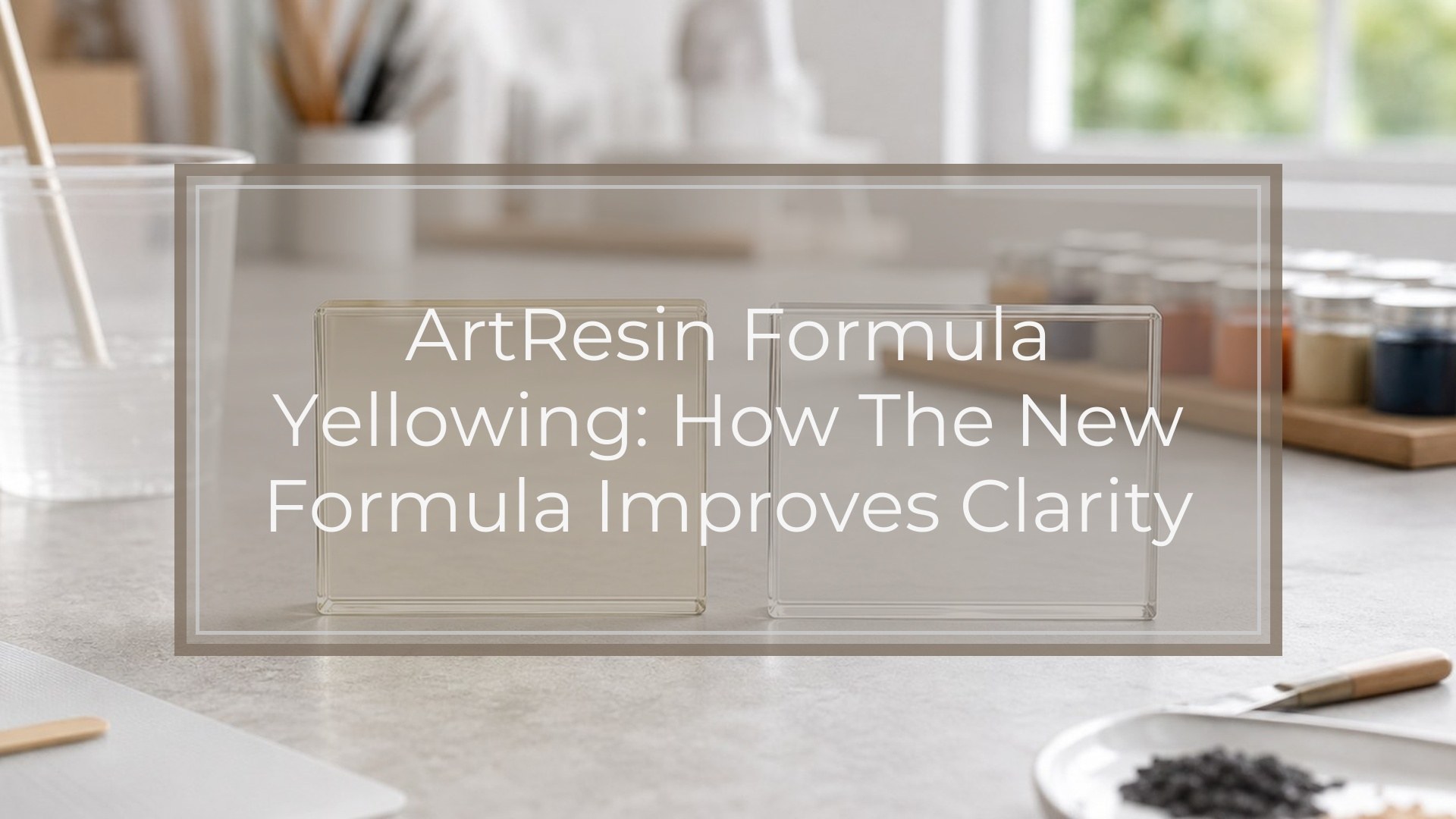
If you are comparing clear epoxy resins, choose the formula that gives you the longest clarity window for your actual project conditions. No epoxy resin is permanently immune to yellowing, but better art resin formulas resist discoloration longer through stronger UV stabilization, clearer raw materials, and a balanced hardener system.
For buying decisions, do not look only at “crystal clear” on the label. Check whether the resin is made for artwork, coatings, jewelry, or deep pours; whether it includes UV inhibitors or HALS light stabilizers; and whether the brand gives realistic guidance about sunlight, heat, cure thickness, and storage. The better buy is the resin that matches your project, cures reliably, and gives transparent expectations about yellowing instead of promising impossible permanence.
Why Yellowing Should Be a Buying Decision, Not an Afterthought
Yellowing affects the final value of resin art. A slightly amber cast may not matter on dark wood, alcohol ink, or warm-toned paintings, but it can ruin white backgrounds, wedding flowers, jewelry, petri dishes, coasters, and display pieces.
That means yellowing should influence what you buy before you pour. A cheaper general-purpose epoxy may look clear in the bottle but shift faster after UV exposure, heat, or months on display. If your work is decorative, sellable, sentimental, or placed near windows, clarity is not a bonus feature. It is a buying criterion.
What Makes One Art Resin Formula Better Against Yellowing?
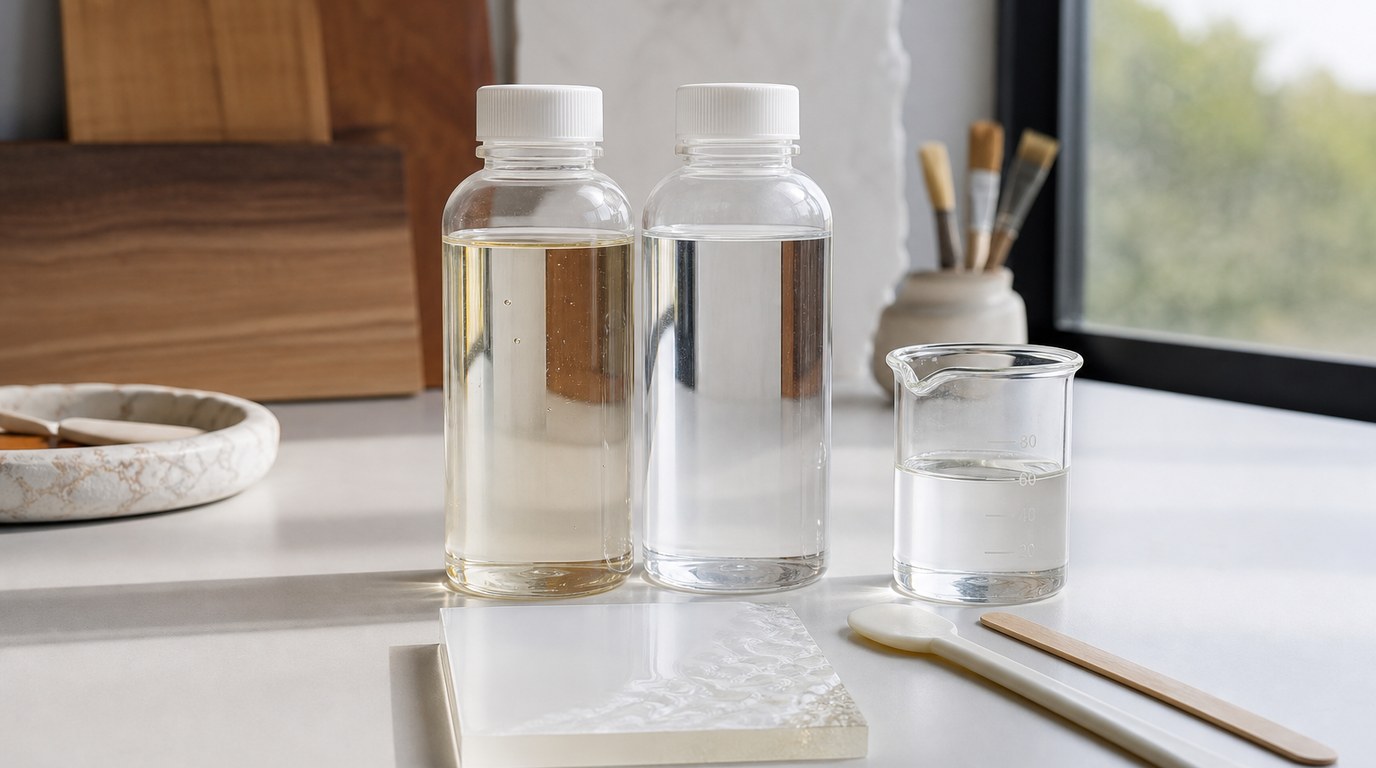
A better anti-yellowing resin formula usually starts with higher-grade raw materials. Clearer resin and hardener components give the mix less color from the beginning, which matters most over white or pale artwork.
The next difference is stabilization. Many art-focused formulas use UV absorbers and hindered amine light stabilizers, often called HALS, to slow the chain reactions that cause discoloration. These additives do not make resin sun-proof, but they can help it resist yellowing longer than an unstabilized craft or coating epoxy.
The hardener also matters. Some curing agents naturally amber faster than others, especially under heat or UV exposure. A well-balanced art resin formula is designed for clarity, cure reliability, and surface finish together. Buyers should look for that full package, not only the strongest “non-yellowing” claim.
The Buying Criteria That Matter Most
When choosing epoxy resin for clear art, evaluate the product against these practical criteria:
- Project type: Coating resins are best for thin art layers, tabletops, trays, and sealed surfaces. Casting resins are better for molds, jewelry, and thicker pours. Using the wrong type can cause overheating, bubbles, cloudiness, or premature discoloration.
- UV resistance: Look for specific language about UV inhibitors, UV absorbers, or HALS. Vague phrases like “ultra clear” are less useful than formula-level clarity claims.
- Initial color: If possible, compare the resin and hardener in clear bottles or sample cups. A hardener that is already amber may show warmth in pale projects.
- Cure depth and heat tolerance: Resin poured too thick can generate extra heat, which may worsen yellowing and surface defects.
- Working time: Longer working time helps beginners reduce bubbles and avoid rushed mixing, but the resin must still cure hard and clear.
- Food-contact or safety claims: For trays, coasters, or serving surfaces, read the cured-use guidance carefully. Do not assume all clear resins are equal.
- Brand transparency: A trustworthy seller explains limits, ideal uses, and care instructions instead of promising that yellowing will never happen.
Quality Signals That a Resin Formula Is Built for Clarity
Good buying signals are specific and practical. The product should clearly state its intended use: artwork coating, casting, jewelry, countertops, or doming. It should provide a mix ratio, cure time, maximum pour depth, temperature range, and storage instructions.
Another strong signal is realistic language. A quality brand will say its formula resists yellowing, slows UV damage, or is designed for long-term clarity. It will not pretend epoxy can stay perfectly water-clear forever in full sun.
Look for customer photos of white, clear, or pale pieces after time has passed, not only fresh pours. Reviews mentioning clarity after months are more useful than reviews praising the first 24 hours.
Red Flags: What to Avoid When Buying Epoxy Resin for Clear Art
Avoid any resin that makes absolute claims such as “never yellows” or “100% UV proof.” Those promises are not realistic for epoxy. Strong resistance is possible; total immunity is not.
Be careful with bargain resins that do not list intended use, pour depth, UV resistance, or cure conditions. They may be fine for dark crafts but risky for white artwork or keepsakes.
Also avoid buying only by bottle size or price per ounce. A low-cost resin that yellows quickly can waste pigments, molds, dried flowers, canvases, and time.
Other warning signs include already-yellow hardener, unclear mix ratios, no safety data, inconsistent reviews about soft cures, and formulas described as suitable for every possible project. Resin that tries to be everything often performs poorly in demanding clear work.
Best Resin Choice by Buyer Profile
Beginner resin artists: Choose an art coating resin with a simple 1:1 mix ratio, moderate working time, and clear instructions. Forgiveness matters more than maximum technical performance.
Artists working over white paintings or photographs: Prioritize the strongest yellowing resistance you can find, plus low initial color. Even a slight amber shift is visible on white backgrounds.
Jewelry and small mold makers: Choose a casting resin made for small molds, not a tabletop coating resin. Look for bubble control, low viscosity, and clarity in thicker sections.
Pressed flower and memorial piece makers: Buy a formula designed for casting and UV resistance, then plan display away from direct sunlight. Botanicals can discolor too, so resin clarity is only part of the result.
Functional tray or coaster makers: Balance clarity with heat resistance, hardness, and cured-use guidance. A beautiful clear resin is not the best buy if it dents easily or is unsuitable for the intended surface.
Budget buyers: Spend more on resin for pale, sellable, or sentimental pieces. Save budget formulas for practice boards, dark pigments, or test pours.
How to Evaluate Options Before You Buy
Use a quick comparison process before adding resin to your cart.
First, define the project: coating, casting, doming, jewelry, or functional surface. Second, check whether the product is actually designed for that use. Third, read the yellowing language and look for specific stabilizer or UV-resistance claims.
Next, scan reviews for your project type. Search within reviews for words like “yellow,” “amber,” “white,” “sun,” “bubbles,” and “soft.” Finally, buy the smallest practical kit first. Test it over white paper, clear film, or a sample piece before committing it to expensive artwork.
How to Keep Even a Good Resin Formula from Yellowing Faster
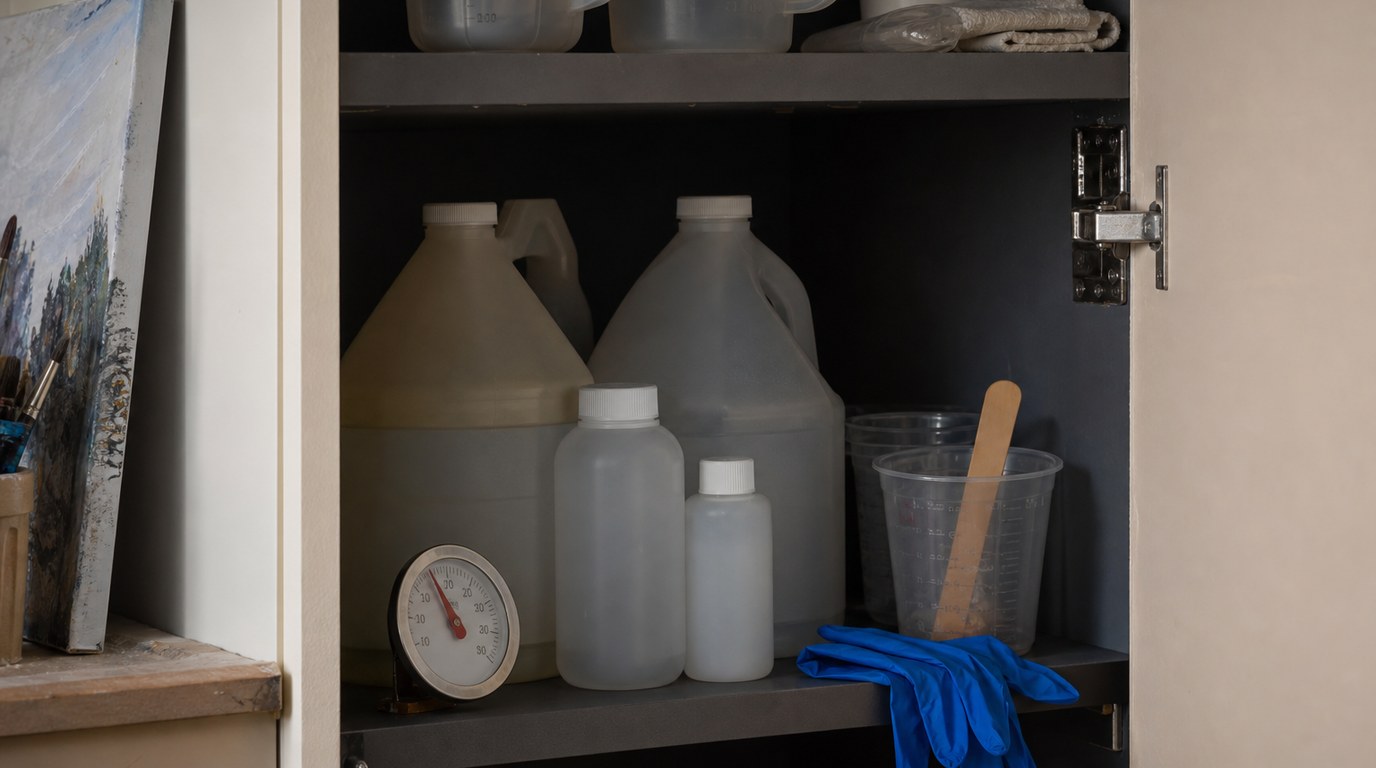
Your buying choice matters, but handling and display matter too. Store resin bottles tightly closed in a cool, dark place. Do not leave the hardener in heat or sunlight, and avoid using old resin that has already changed color.
Measure accurately, mix thoroughly, and stay within the recommended pour depth. Excess heat during cure can affect clarity. Once the piece is finished, display it away from direct sun, hot windows, fireplaces, and high-UV environments. Better resin buys you more resistance; good care helps preserve it.
Bottom Line: What Makes the Better Buy?
The better buy is not simply the resin with the boldest “non-yellowing” label. It is the formula that fits your project type, starts clear, includes credible UV-stabilizing technology, cures reliably, and gives honest limits.
For clear, white, sentimental, or sellable work, choose an art-focused resin with proven clarity performance. For practice or dark-colored crafts, you can be more flexible.
FAQ
What Should a Beginner Know First About 17753001 You Asked How Is Our New Artresin Formula Better in Terms of Yellowing?
A beginner should know that “better against yellowing” usually means the formula resists discoloration longer, not that it will never yellow. Compare resins by project fit, UV resistance, initial clarity, cure instructions, and realistic claims before buying.
What Matters Most When Evaluating 17753001 You Asked How Is Our New Artresin Formula Better in Terms of Yellowing?
The most important factors are UV stabilization, clear raw materials, intended use, and honest performance guidance. A resin made for art coatings may be excellent on canvases but wrong for deep molds, so match the formula to the project.
What Mistakes Should Readers Avoid with 17753001 You Asked How Is Our New Artresin Formula Better in Terms of Yellowing?
Avoid buying only by price, trusting “never yellows” claims, or using a coating resin for thick casting. Also avoid storing resin in heat or sunlight, because poor storage can make even a quality formula yellow faster.
What Is the Next Logical Step After Learning About 17753001 You Asked How Is Our New Artresin Formula Better in Terms of Yellowing?
Choose two or three resins that match your project, then test small samples over white or clear backgrounds. Label each sample, expose them to normal display conditions, and compare clarity before using the resin on important artwork.