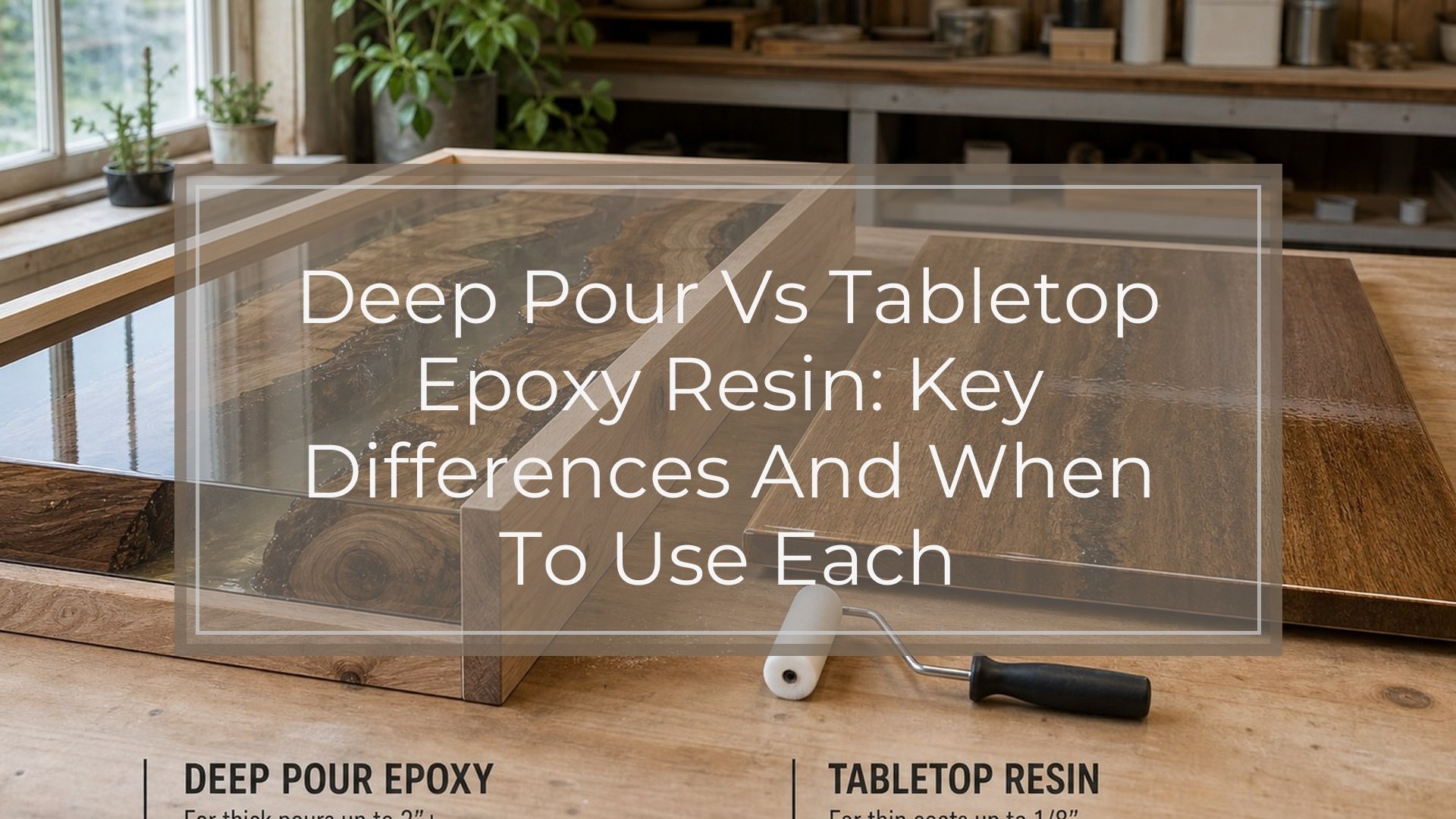
If you are choosing between deep pour vs tabletop epoxy resin, the fastest answer is this: use deep pour epoxy for thick, cast-style projects and tabletop epoxy for thin, protective surface coatings. They are not interchangeable just because both are clear two-part epoxy systems.
Deep pour resin is designed to cure slowly so it can be poured in thicker layers without overheating, cracking, or trapping excessive bubbles. Tabletop epoxy is designed to cure harder and faster in thin coats, usually over wood, counters, trays, art panels, and finished resin pieces. Pick based on pour thickness first, then finish, cure speed, and durability.
Quick Verdict: the Difference Comes Down to Thickness
The main difference between deep pour and tabletop epoxy is how thick each resin can be poured at one time. Deep pour epoxy is for depth: river tables, molds, embedded objects, and large voids. Tabletop epoxy is for surfaces: glossy coatings, bar tops, countertops, trays, coasters, and sealing layers.
If your project needs a thick clear fill, choose deep pour. If your project needs a hard, glossy, scratch-resistant top layer, choose tabletop epoxy. When in doubt, check the manufacturer’s maximum pour depth before mixing, because that limit matters more than the project name.
What Is Deep Pour Epoxy Resin?
Deep pour epoxy resin is formulated for thick pours, often from about 1/2 inch to several inches per layer, depending on the brand. It has a slower curing reaction, which helps control heat buildup. That slower cure gives bubbles more time to rise and escape, making it useful for river tables, casting blanks, large molds, and filling cracks or voids in wood.
The tradeoff is time. Deep pour epoxy usually takes longer to cure, may stay softer for longer, and may not be the best final wear surface without a harder topcoat.
What Is Tabletop Epoxy Resin?
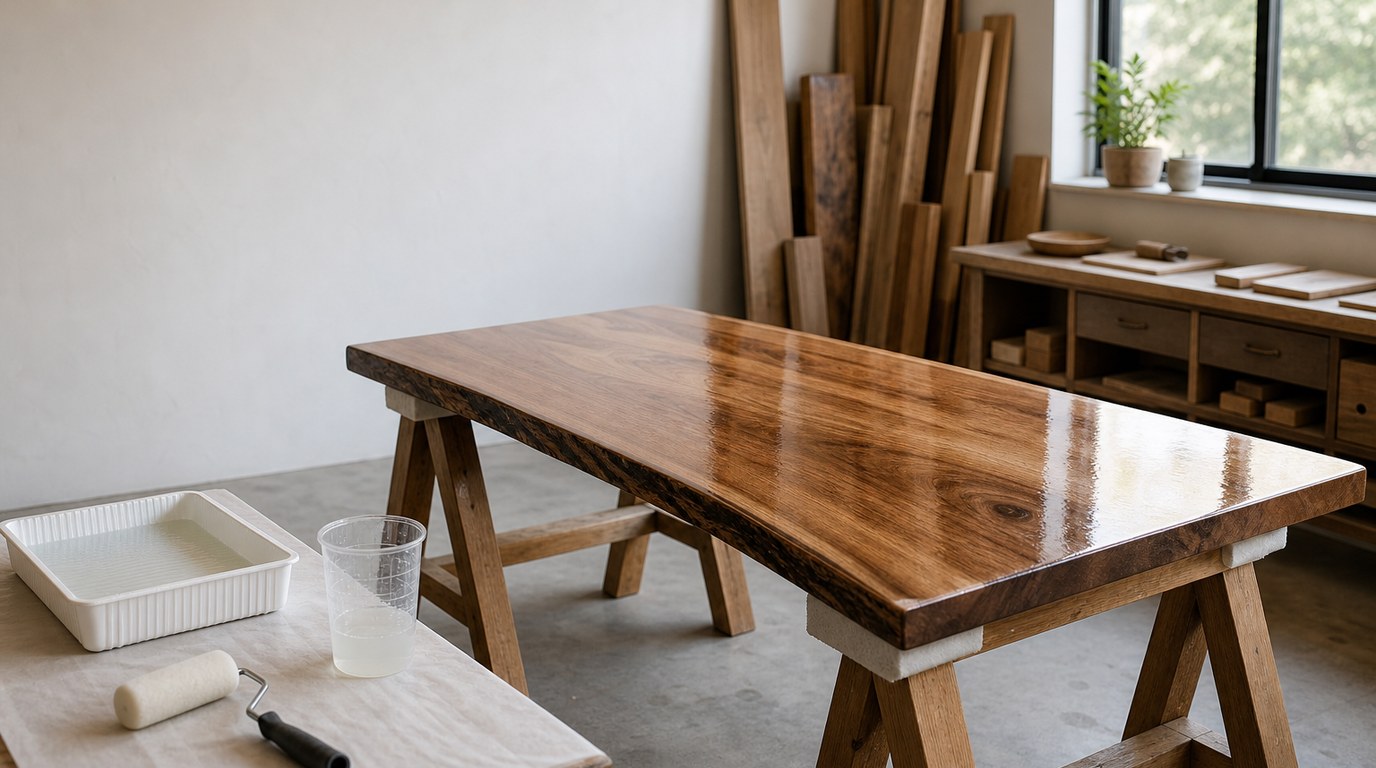
Tabletop epoxy resin is a coating epoxy made for thin layers, often around 1/8 inch per pour, though exact limits vary. It cures faster than deep pour resin and is designed to create a glossy, durable, protective surface.
You use tabletop epoxy when you want to coat a table, bar top, counter, serving tray, art board, tumbler topper, or finished casting. It is usually not meant for deep molds or thick voids. If poured too thick, tabletop resin can overheat, yellow, smoke, crack, ripple, or cure with trapped bubbles.
Deep Pour Vs Tabletop Epoxy: Side-by-side Comparison
Use this table as a selection shortcut. The exact numbers depend on the brand, temperature, and project size, but the comparison pattern is consistent: deep pour handles thickness, while tabletop epoxy handles surface performance.
| Criteria | Deep Pour Epoxy Resin | Tabletop Epoxy Resin |
|---|---|---|
| Best use | Thick casting, river tables, molds, void filling | Thin glossy coatings, tabletops, counters, trays |
| Typical pour depth | Much thicker per layer | Thin coats only |
| Cure speed | Slower | Faster |
| Working time | Longer | Shorter |
| Heat buildup | Lower in thick pours | Higher risk if poured too thick |
| Bubble release | Better for deep pours due to longer open time | Good in thin coats, harder in thick layers |
| Finished hardness | Often softer until fully cured | Usually harder as a surface coat |
| Best final surface | May need tabletop topcoat | Designed as the final topcoat |
| Beginner friendliness | Forgiving for large pours but slow | Easier for coatings, less forgiving if overpoured |
Pour Depth: the Most Important Difference
Pour depth is the first decision point because epoxy cures through an exothermic reaction, meaning it creates heat as it hardens. A resin designed for thin coats can generate too much heat when poured deep. That can cause cracking, yellowing, warping, bubbling, or even a smoking hot cure.
Deep pour epoxy spreads that reaction over a longer cure time, making thicker layers safer. Tabletop epoxy is better when kept thin because it cures into a strong, level, glossy coating. Never assume a “high gloss epoxy” can fill a deep mold unless the label gives a safe pour depth.
Working Time, Cure Time, and Bubble Control
Deep pour epoxy usually gives you a longer working time. That helps when you are tinting resin, arranging wood slabs, embedding objects, or pouring into detailed molds. It also gives bubbles more time to rise before the resin thickens.
Tabletop epoxy has a shorter working window, so you need to mix, pour, spread, and torch bubbles efficiently. The upside is speed: a tabletop coat often reaches the next handling stage sooner. For small coating projects, that is convenient. For large deep castings, that speed becomes a liability.
Finish, Hardness, and Durability

Tabletop epoxy usually wins for final surface durability. It is made to cure into a hard, glossy, protective layer that resists everyday wear better than most deep pour resins. That is why many river table makers use deep pour resin for the river section, then apply tabletop epoxy over the whole surface.
Deep pour resin can still look beautifully clear, but it is not always the best exposed top surface. Depending on the formula, it may be more prone to denting, scratching, or needing extra cure time before sanding and polishing.
Choose Deep Pour Epoxy Resin If…
Choose deep pour epoxy if your project has depth. This includes river tables, live-edge voids, large molds, casting blanks, thick jewelry molds, embedded flowers, stones, shells, or objects, and layered art with noticeable dimension.
It is also the better choice when you need more working time to place items, blend pigments, or manage bubbles in a thick pour. Just plan for a longer cure and follow the maximum depth instructions closely.
Choose Tabletop Epoxy Resin If…
Choose tabletop epoxy if your project is mainly a surface coating. It is the right resin for sealing wood, coating countertops, finishing trays, protecting artwork, adding a glossy layer over coasters, or topcoating a cured casting.
It is also the better option when you want a harder final finish and faster turnaround. Keep the pour thin, spread it evenly, and use a torch or heat gun carefully for surface bubbles.
Can You Use Them Together?
Yes. In many projects, the best workflow is to use both. For example, with a river table, use deep pour epoxy to fill the river or voids. After it cures and the surface is leveled, sand as directed and apply tabletop epoxy as the final flood coat.
This gives you the depth control of deep pour resin and the harder, glossier surface of tabletop epoxy. Always confirm recoat windows, sanding requirements, and compatibility between brands.
Common Mistakes When Choosing Between Them
The biggest mistake is using tabletop epoxy as if it were casting resin. Pouring it too thick can ruin a project quickly. Another mistake is using deep pour epoxy as a final tabletop coating and expecting the same hardness as a dedicated coating resin.
Other common problems include ignoring room temperature, mixing too much resin at once, using the wrong ratio, torching too aggressively, and skipping seal coats on porous wood. Choose by pour depth first, then by finish.
Final Recommendation
For the cleanest decision, ask one question: how thick is the resin layer? If it is a deep fill, choose deep pour epoxy. If it is a thin protective coating, choose tabletop epoxy.
For large furniture projects, you may need both: deep pour for the volume and tabletop epoxy for the final surface. Matching the resin to the layer thickness is the simplest way to avoid overheating, soft cures, bubbles, cracks, and disappointing finishes.
FAQ
Is Deep Pour Epoxy Stronger Than Tabletop Epoxy?
Not necessarily. Deep pour epoxy is better for thick casting because it controls heat and cures slowly, but tabletop epoxy is often harder as a finished surface. “Stronger” depends on the use: deep pour for volume and depth, tabletop epoxy for wear resistance and protective coating.
What Happens If I Pour Tabletop Epoxy Too Thick?
If tabletop epoxy is poured too thick, it can overheat during curing. That may cause bubbles, yellowing, cracks, ripples, smoking, or an uneven cure. It may also harden too quickly to release bubbles properly. Always follow the brand’s maximum pour depth.
Can I Use Deep Pour Epoxy for a Tabletop Coating?
You can, but it is usually not the best choice. Deep pour epoxy is made for thick layers, not necessarily for a hard, fast-curing surface coat. For tabletops, counters, and bar tops, tabletop epoxy usually gives better hardness, gloss, and durability.
Do I Need Tabletop Epoxy Over a Deep Pour River Table?
Often, yes. Many makers use deep pour epoxy for the river section, then sand and apply tabletop epoxy over the entire surface. This creates a more uniform gloss and adds a harder protective layer over both the wood and the cured deep pour resin.
Which Epoxy Is Better for Beginners?
For simple coating projects, tabletop epoxy is usually easier for beginners because the pours are thin and cure faster. For thick molds or river tables, beginners should use deep pour epoxy because it is safer for depth. The easiest resin is the one matched to the project thickness.