
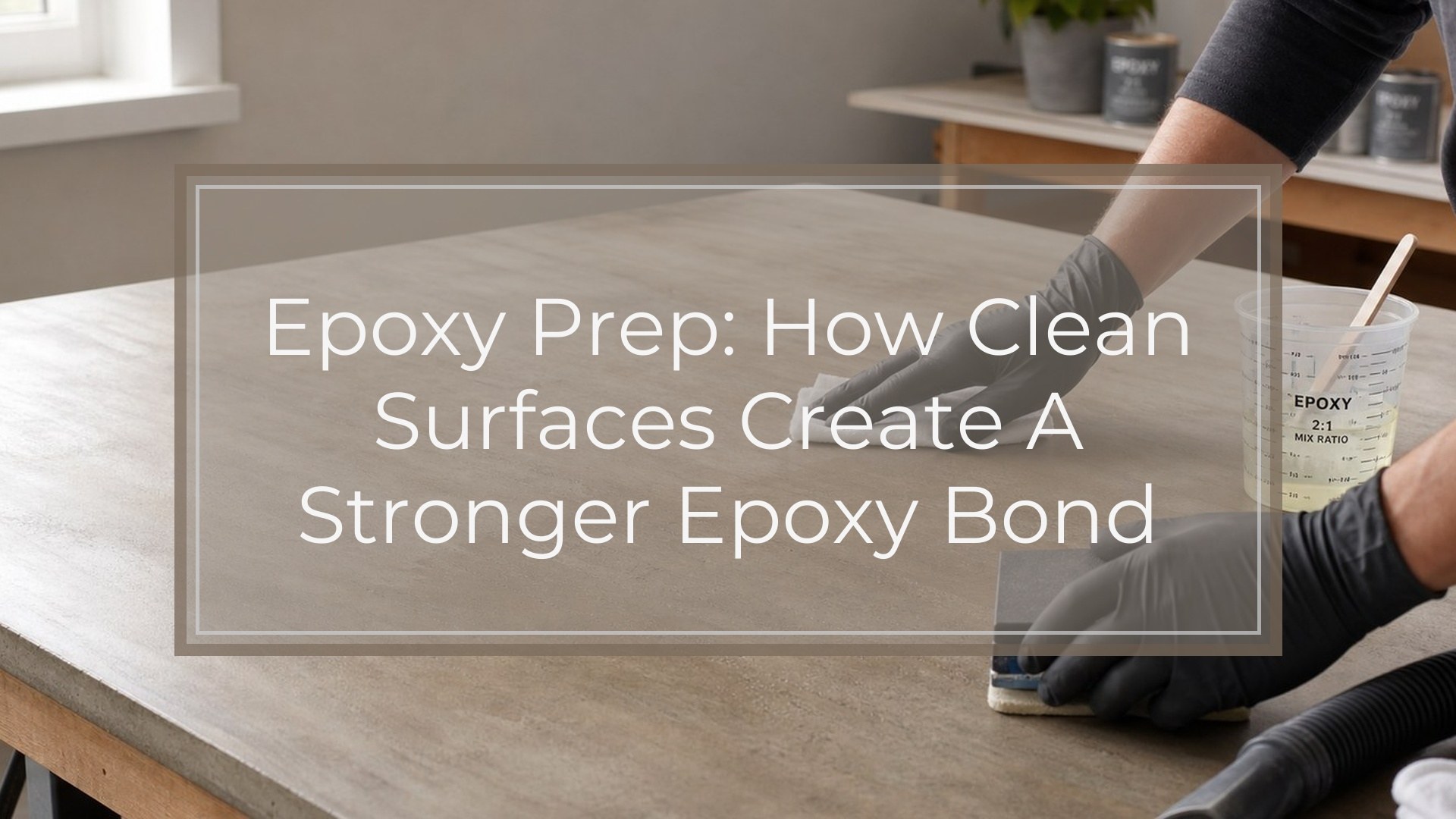
Clean surface prep gives epoxy the best chance to bond because resin needs direct contact with the material underneath. Dust, oil, wax, moisture, soap film, and sanding residue can all sit between the epoxy and the surface like a release layer. Good epoxy prep is simple: remove loose debris, wash away contamination, sand for grip when appropriate, remove dust, then apply epoxy before the surface gets dirty again. Whether you are using epoxy resin, epoxy glue, or an epoxy coating, the goal is the same: clean, dry, slightly textured, and ready before you mix.
Why Clean Surfaces Make Epoxy Bonds Stronger
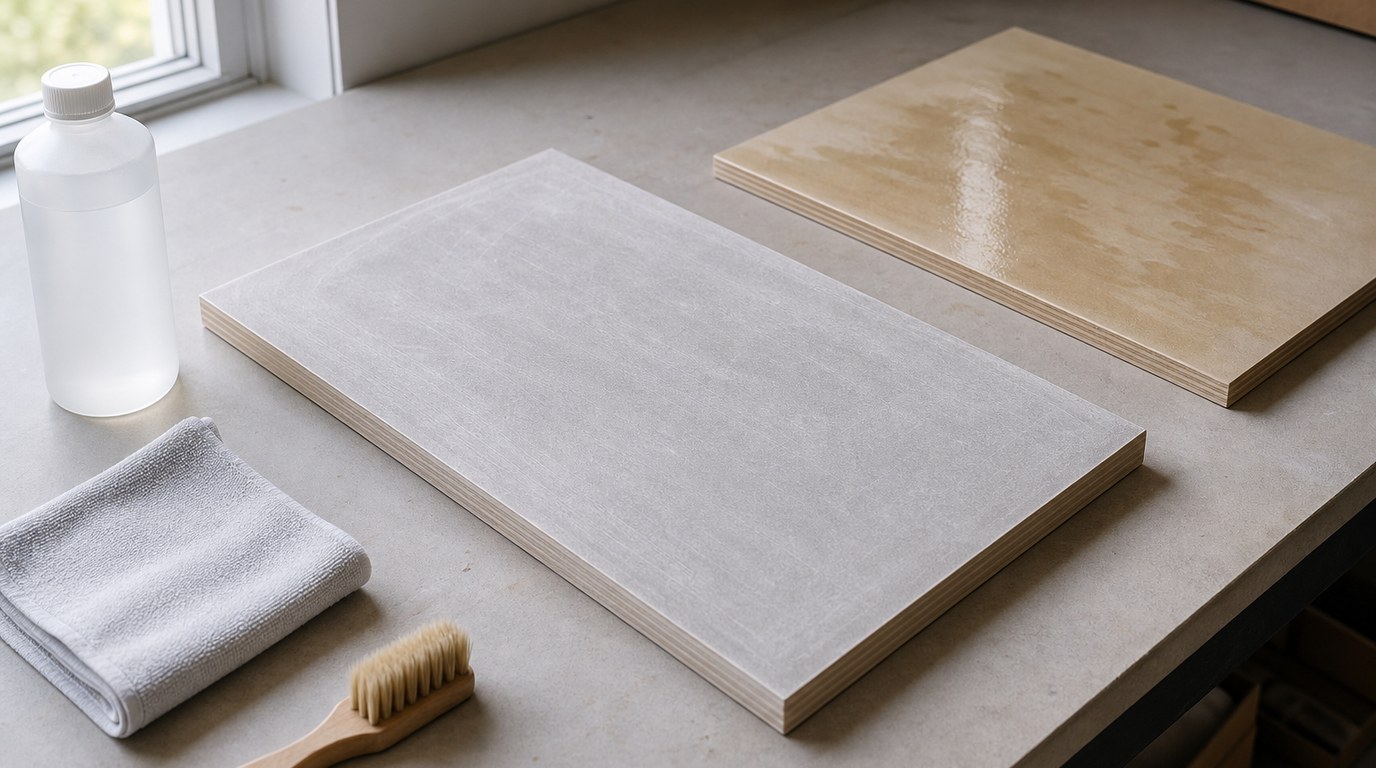
Epoxy bonds in two main ways: by sticking chemically to a compatible surface and by locking mechanically into tiny scratches or pores. A clean surface lets the epoxy touch the actual material. A roughened surface gives it more “tooth” to grip.
Contaminants weaken both. Grease, silicone, wax, skin oils, dust, and old polish create a barrier. Glossy plastic, sealed wood, or shiny metal can also be too slick for a reliable bond. Cleaning removes the barrier; sanding or scuffing adds profile. Together, they make epoxy prep more dependable.
Before You Start: Supplies and Safety
Gather everything before you open or mix epoxy. Once resin and hardener are combined, your working time is limited.
Useful supplies include:
- Nitrile gloves
- Safety glasses
- Dust mask or respirator for sanding
- Lint-free cloths or clean paper towels
- Mild dish soap and clean water
- Isopropyl alcohol or an appropriate degreaser
- Sandpaper or sanding pads, commonly 80 to 220 grit
- Vacuum, soft brush, or tack cloth suitable for your surface
- Clean mixing tools and covered workspace
Work with good ventilation, especially when using solvents. Keep solvent containers closed when not in use, keep them away from flames, and check whether your material tolerates the cleaner. Some plastics, paints, and finishes can soften, haze, or stain.
Step 1: Remove Loose Dirt, Dust, and Debris
Start dry. Brush, vacuum, or wipe away loose grit before adding water or solvent. This prevents dirt from turning into muddy residue or scratching delicate surfaces as you wipe.
For wood, vacuum the grain and corners. For metal, remove filings, rust flakes, and loose paint. For resin pieces, ceramics, glass, or plastic, use a soft cloth or brush so you do not create deep scratches where you do not want them.
Do not skip this step. If dust is still present, later cleaning may simply spread it into a thin film.
Step 2: Wash Away Grease, Oils, and Water-soluble Contaminants
Many contaminants are easier to remove with soap and water than with solvent alone. Fingerprints, food residue, dirt, salts, and some shop grime can lift well with warm water and a small amount of mild dish soap.
Wash the surface thoroughly, then rinse with clean water so no soap film remains. Soap residue can interfere with adhesion just like oil. Dry the surface completely with a clean cloth and allow extra drying time for porous materials such as wood, concrete, unsealed clay, or fabric.
Avoid heavy household cleaners that leave shine, fragrance, wax, or “protective” coatings behind.
Step 3: Degrease When Needed
Use a degreaser or solvent wipe when the surface may have oil, wax, adhesive residue, machine lubricant, silicone, or stubborn fingerprints. Isopropyl alcohol is commonly used for light cleaning, but it is not a universal cleaner for every contaminant or every material.
Use the two-cloth method: dampen one clean cloth with solvent and wipe a small area, then immediately wipe dry with a second clean cloth before the solvent evaporates. This lifts contamination instead of spreading it around.
Test first on plastics, painted surfaces, and delicate finishes. Never soak porous materials unless the cleaner is approved for that use.
Step 4: Sand or Scuff the Surface for Mechanical Grip
After the surface is clean and dry, sand or scuff it if the material needs more grip. The goal is an even dull finish, not deep gouges.
For most craft and repair work, 80 to 120 grit gives strong tooth for wood, cured epoxy, and many coatings. Finer grits such as 180 to 220 may be enough for delicate surfaces, small craft pieces, or areas where scratches might show through clear resin. Very smooth glass, glossy plastic, and sealed surfaces usually need scuffing if appearance and material compatibility allow it.
Sand evenly across the bonding area and slightly beyond the edge of where epoxy will go. Do not sand before removing grease; sanding oily residue can drive contamination deeper into scratches. If you expose fresh metal, plan to epoxy soon because oxidation can begin quickly.
Step 5: Remove Sanding Dust Completely
Sanding creates the texture epoxy needs, but the dust it leaves behind is a bond breaker. If dust remains, epoxy may bond to the dust instead of the surface.
Vacuum first, especially on wood grain, corners, and seams. Then wipe with a clean, lint-free cloth. If the material allows, use a lightly damp cloth or compatible solvent wipe to pick up fine particles. Let the surface dry fully afterward.
Be careful with tack cloths on absorbent materials or clear epoxy projects. Some tack cloths leave residue that can affect adhesion or clarity.
Step 6: Do a Final Clean-and-dry Check Before Mixing Epoxy
Before mixing epoxy, pause and inspect the surface. This is your last easy chance to correct problems.
Look across the surface at an angle under good light. It should appear evenly clean and dull where sanded. Touch only with clean gloves, not bare fingers. Check corners, edges, cracks, and low spots where dust or cleaner may collect.
Confirm that water, alcohol, or degreaser has fully evaporated. Porous surfaces can feel dry on top while holding moisture below. If there is any doubt, wait longer. Mixing epoxy too early can force you to apply it over trapped moisture or residue.
Step 7: Apply Epoxy During the Clean Window
A freshly prepared surface does not stay clean forever. Dust settles, moisture changes, metal oxidizes, and hands accidentally touch the work area. After the final check, mix and apply epoxy as soon as practical.
Keep pets, fans, sawdust, powders, and sanding tools away from the prepared surface. If you must pause for several hours or overnight, cover the piece with a clean dust cover. Before applying epoxy, inspect again and repeat a light dust removal or solvent wipe if needed.
Good timing is part of good epoxy prep.
How to Tell If the Surface Is Ready for Epoxy
Your surface is ready when it passes these checks:
- It is visibly clean with no dirt, waxy shine, oil spots, or residue.
- It is completely dry, including corners and pores.
- Glossy areas have been sanded or scuffed when needed.
- Sanding dust has been vacuumed and wiped away.
- A clean glove or white cloth does not pick up grime.
- The surface has not been touched with bare hands after cleaning.
If the surface looks patchy, slick, dusty, damp, or greasy, stop and fix it before mixing epoxy.
Common Epoxy Prep Mistakes and How to Fix Them
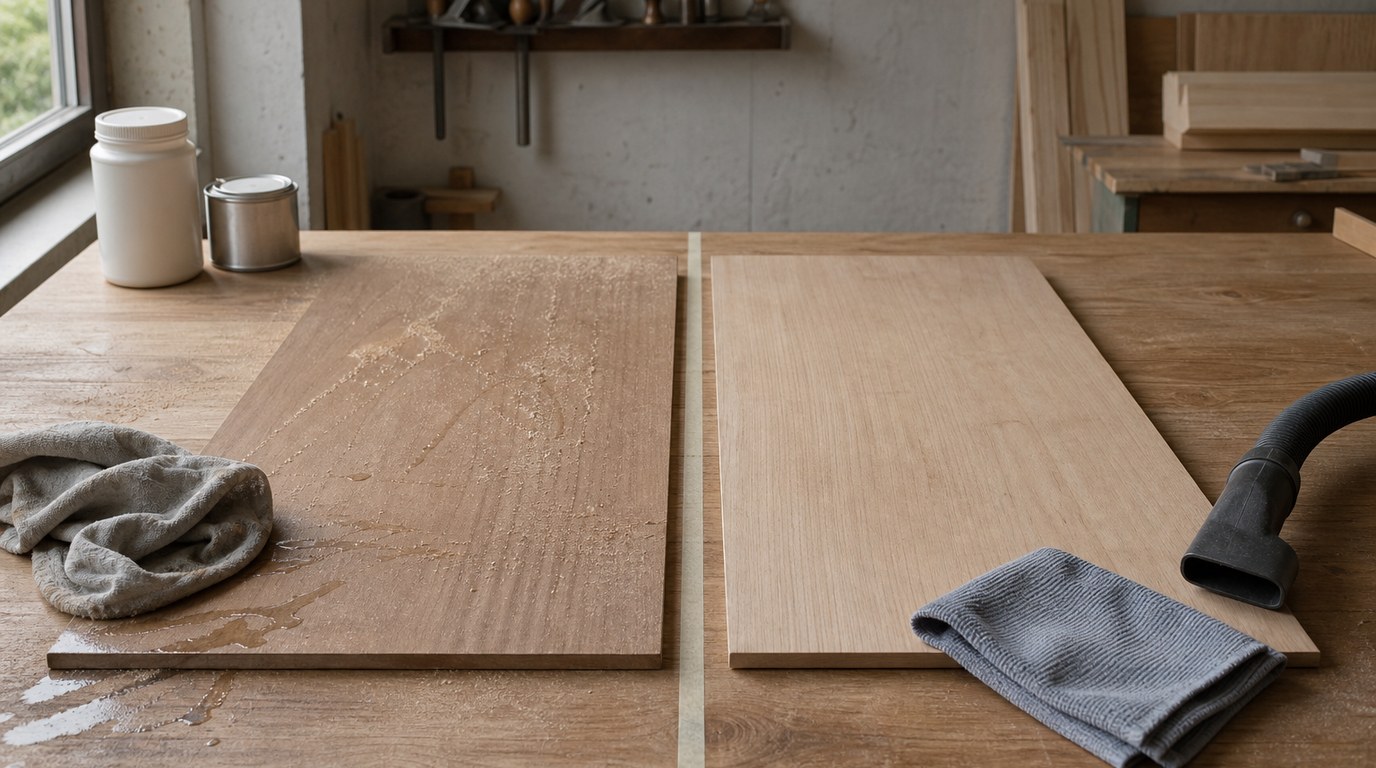
Cleaning only after sanding: If the surface was oily before sanding, the sandpaper may have spread oil into the scratches. Fix it by washing or degreasing, drying, then sanding again lightly and removing dust.
Using too much solvent: Flooding a surface can move contamination around or soak porous materials. Use controlled wiping and dry immediately with a second cloth.
Leaving dust in corners: Epoxy may lift, bubble, or form weak edges. Vacuum seams and corners carefully, then wipe again.
Touching the surface with bare hands: Skin oils can reduce adhesion. Reclean the touched area and wear nitrile gloves.
Applying epoxy to damp wood or concrete: Moisture can cause cloudy areas, bubbles, poor cure, or weak bonding. Allow more drying time and improve airflow.
Sanding too smooth: Highly polished surfaces may not give epoxy enough grip. Scuff back to a uniform dull finish.
Quick Surface Prep Workflow
Use this repeatable epoxy prep sequence:
- Remove loose dirt and debris.
- Wash with mild soap and water if grime or water-soluble contamination is present.
- Rinse and dry completely.
- Degrease if oil, wax, silicone, or fingerprints may be present.
- Sand or scuff for tooth.
- Vacuum and wipe away all sanding dust.
- Confirm the surface is clean, dry, and dull.
- Mix and apply epoxy before the surface is recontaminated.
FAQ
Should I Clean Before or After Sanding for Epoxy?
Do both, but start by cleaning before sanding if the surface may have grease, wax, oil, or grime. Otherwise, sanding can push contamination into the scratch pattern. After sanding, clean again to remove dust so epoxy bonds to the surface, not the residue.
Can I Use Alcohol to Clean a Surface Before Epoxy?
Yes, isopropyl alcohol can work for light fingerprints and some surface residue, but it is not the best cleaner for every material or contaminant. Use it with good ventilation, test delicate surfaces first, and wipe dry with a clean cloth before it evaporates.
Do I Always Need to Sand Before Applying Epoxy?
Not always, but many surfaces bond better when sanded or scuffed. Glossy, cured, sealed, or nonporous surfaces usually need mechanical tooth. Some porous or specially prepared materials may not require aggressive sanding. When in doubt, aim for a clean, dry, uniformly dull bonding area.
What Happens If There Is Dust Under Epoxy?
Dust creates a weak layer between the epoxy and the surface. The epoxy may peel, chip, fisheye, bubble, or separate because it bonded to loose particles instead of the material underneath. Remove dust by vacuuming and wiping before mixing epoxy.
How Dry Does Wood Need to Be Before Epoxy?
Wood should be dry throughout the bonding area, not just dry to the touch. Damp wood can cause bubbles, cloudiness, poor penetration, or weak adhesion. Let washed or stored wood acclimate, improve airflow, and avoid sealing in moisture with epoxy.