
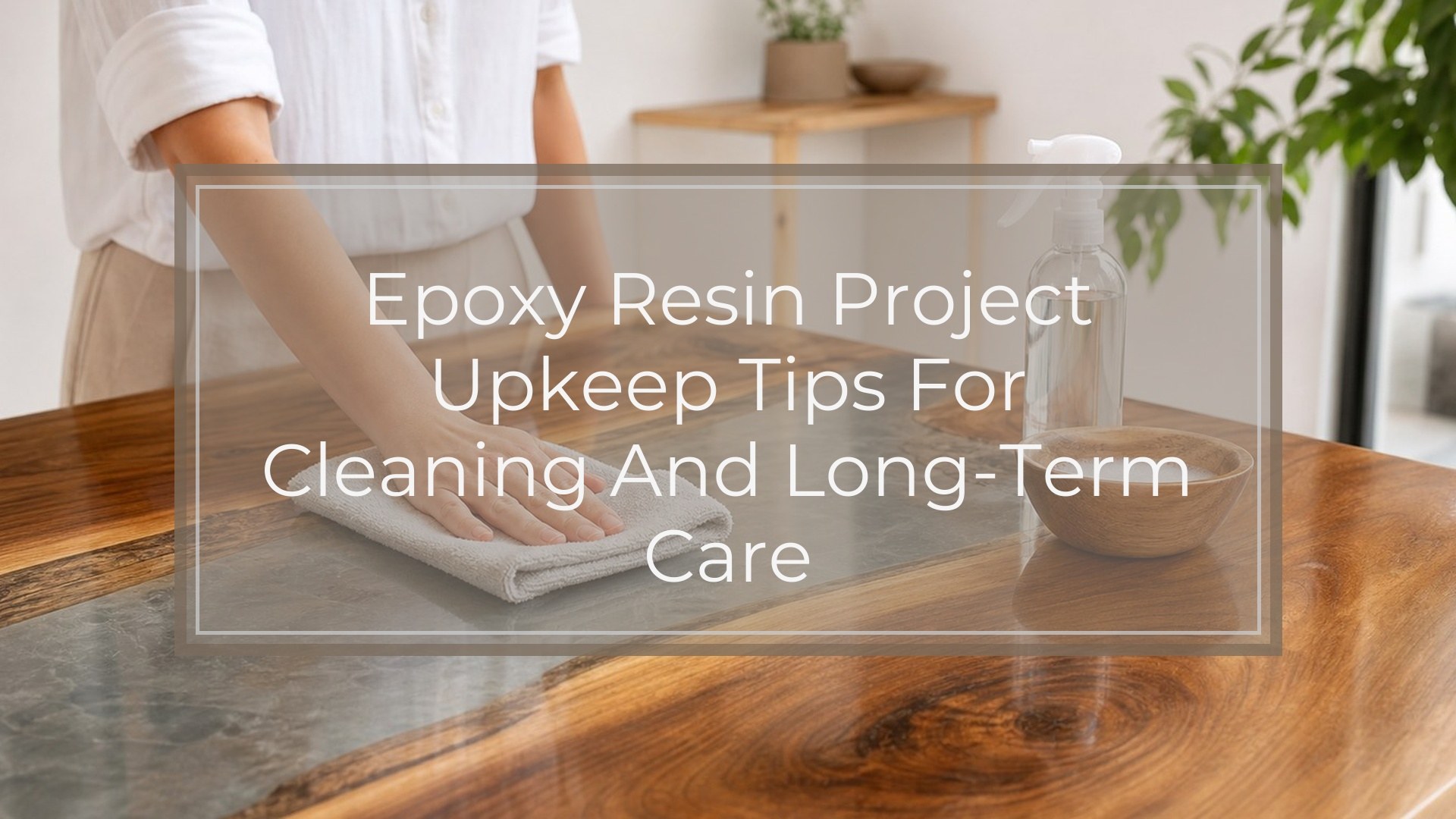
For most finished epoxy resin projects, upkeep is simple: dust first, wash gently, rinse lightly, dry fully, and protect the surface from heat, sunlight, abrasion, and harsh chemicals. Use a soft microfiber cloth, mild dish soap, and lukewarm water for routine cleaning. Avoid dishwasher cycles, soaking, alcohol-heavy cleaners, acetone, bleach, abrasive pads, and direct heat.
The safest epoxy resin project upkeep tips depend on the piece. A coaster, jewelry pendant, wall art panel, tumbler, and mixed-media tray may all need slightly different handling. When in doubt, treat cured resin like a glossy surface: clean with low pressure, avoid scratches, and store it away from UV exposure and sharp contact.
Before You Start: Identify What Kind of Resin Project You Have
Before cleaning, check what your resin project is made to do. Is it decorative, wearable, handled daily, or exposed to moisture? Also look for added materials such as wood, dried flowers, paper, vinyl, metal findings, paint, glitter, or photographs.
Fully cured epoxy resin is water-resistant, but not every object embedded in or attached to it is. A resin-coated wooden tray, for example, should not be soaked. Jewelry with metal hardware may tarnish if left wet. If the surface feels tacky, soft, or rubbery, stop; it may not be fully cured and needs troubleshooting, not routine upkeep.
Supplies for Routine Epoxy Resin Maintenance
Gather gentle supplies before you start:
- Microfiber cloths
- Soft makeup brush or clean paintbrush
- Mild dish soap
- Lukewarm water
- Small bowl
- Cotton swabs for edges and hardware
- Soft towel for drying
- Non-abrasive polishing cloth
- Optional: plastic polish made for glossy surfaces
Avoid scouring pads, powdered cleansers, magic erasers, acetone, ammonia-heavy sprays, bleach, and strong solvents unless you are deliberately repairing a damaged surface and know the resin can tolerate it.
Epoxy Resin Upkeep Quick Reference
| Resin project type | Safest upkeep method | Avoid |
|---|---|---|
| Coasters and trays | Wipe with mild soap, rinse lightly, dry fully | Dishwasher, soaking, hot pans |
| Jewelry | Wipe with damp cloth, dry hardware well | Perfume, alcohol, swimming |
| Wall art | Dust with microfiber or soft brush | Spray cleaners, direct sun |
| Tumblers | Hand-wash exterior gently | Dishwasher, high heat |
| Mixed-media pieces | Spot-clean only | Submerging, scrubbing edges |
Use this table as a starting point, then adjust based on attachments, coatings, and how fragile the piece feels.
Step 1: Dust the Resin Surface Before Washing
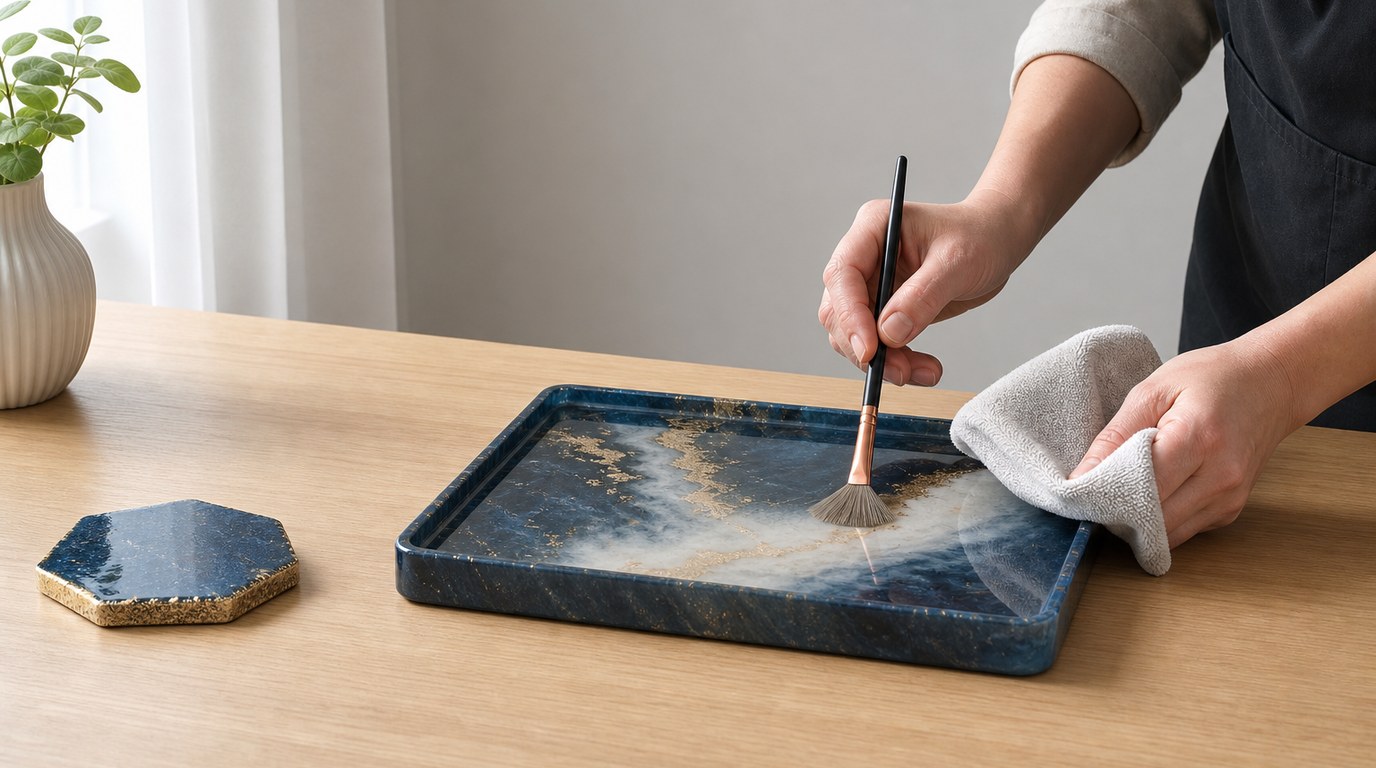
Always remove loose dust before adding water. Dust can act like fine grit and create tiny scratches when rubbed across glossy resin.
Use a dry microfiber cloth for flat surfaces. For textured pieces, molds with ridges, jewelry settings, or embedded details near the edge, use a soft brush and light strokes. Do not press hard. If a particle is stuck, lift it with a damp cotton swab instead of scraping with a fingernail or tool.
This small step helps preserve clarity and shine over repeated cleanings.
Step 2: Clean with Mild Soap and Lukewarm Water
Mix a drop or two of mild dish soap into a small bowl of lukewarm water. Dampen a microfiber cloth, wring it out well, and wipe the resin surface using gentle circular motions.
For coasters, trays, bookmarks, ornaments, and décor, clean the top surface first, then edges. For jewelry, use the least water possible and keep metal findings, cords, and glued areas from staying wet. For tumblers or functional items, follow the maker’s care instructions if available.
Do not use hot water. Heat can soften some finishes, stress adhesives, or worsen warping in thin pieces. Lukewarm water is enough for fingerprints, dust, light oils, and everyday grime.
Step 3: Rinse Residue Without Over-wetting the Piece
Soap residue can leave resin looking hazy, so remove it carefully. Dampen a fresh cloth with clean lukewarm water and wipe the surface until it no longer feels slick.
Avoid holding mixed-media resin projects under running water unless you are sure every part is sealed and water-safe. Wood, paper, fabric, dried flowers near edges, and glued embellishments can absorb moisture. For delicate pieces, use cotton swabs along corners and hardware. The goal is to remove soap, not saturate the project.
Step 4: Dry Completely and Buff the Finish
Dry the project immediately with a clean, soft towel. Then use a dry microfiber cloth to buff the surface lightly until the gloss returns.
Do not air-dry resin pieces if water can sit along edges, bezels, screw eyes, cork backing, or wood surfaces. Water spots and trapped moisture can make a project look cloudy even when the resin itself is fine. For jewelry, pay attention to jump rings, chains, and earring posts. For trays and coasters, dry the underside as well as the top.
Step 5: Protect Resin Projects During Everyday Use
Good upkeep is mostly prevention. Keep resin away from direct heat, including hot mugs, pans, curling irons, space heaters, and sunny windowsills. Many epoxy projects tolerate warm objects, but high heat can cause dents, rings, softening, or surface marks.
Use felt pads under resin décor that sits on shelves. Add cork or silicone bumpers to coasters and trays when appropriate. Pick up resin items instead of dragging them across tables. Keep sharp keys, metal tools, and rough ceramics from scraping the surface.
For resin jewelry, apply lotions, sunscreen, perfume, and hairspray before putting jewelry on. Remove pieces before showering, swimming, sleeping, or exercising.
Step 6: Store Resin Pieces so They Stay Clear and Scratch-free
Store resin projects in a cool, dry place away from strong sunlight. UV exposure can yellow or fade some resin, pigments, flowers, and paper inclusions over time.
Wrap delicate items in soft cloth, tissue, or individual pouches. Do not stack glossy resin pieces face-to-face without a protective layer between them. For ornaments or seasonal crafts, use divided storage boxes so hard edges cannot rub together. Store jewelry flat or hanging separately to prevent chain marks, pressure dents, and scratches from metal findings.
Step 7: Refresh Light Scratches, Haze, or Dull Spots
For minor dullness, clean and dry the piece first. Then buff with a soft polishing cloth. If the haze remains, use a small amount of plastic polish or resin-safe polishing compound on an inconspicuous area. Rub gently, check the surface, and repeat only if needed.
Do not jump straight to sanding. Sanding removes material and can turn a small dull spot into a larger repair job. Deep scratches, chips, cloudy uncured areas, or sticky patches usually need a repair process, such as sanding and recoating, not routine maintenance.
If the project contains a thin resin coating over paint, photos, decals, or wood, be extra cautious. Over-polishing can wear through high spots or edges.
Common Epoxy Resin Upkeep Mistakes to Avoid
Avoid these common maintenance errors:
- Using alcohol as an all-purpose cleaner: It may dull some finishes or affect attached materials.
- Putting resin coasters in the dishwasher: Heat, detergent, and pressure can damage them.
- Soaking mixed-media pieces: Water can enter seams or unsealed backing.
- Scrubbing with abrasive pads: Even “gentle” scrubbers can leave fine scratches.
- Leaving projects in direct sun: UV exposure can cause yellowing or fading.
- Setting hot cookware on resin: Use trivets for high heat.
- Stacking without protection: Glossy surfaces can scuff or stick together.
Treat resin as durable, not indestructible.
Result Check: How to Know Your Resin Project Is Properly Maintained
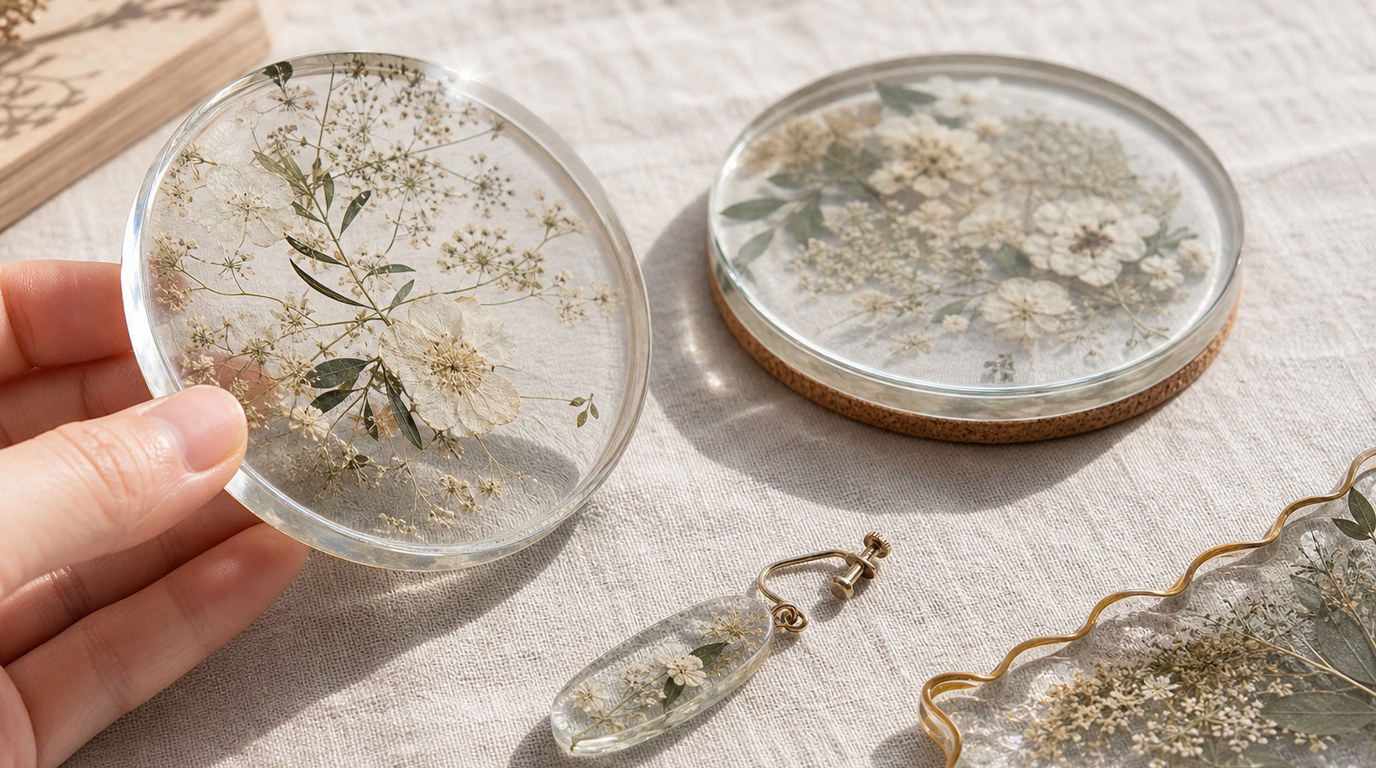
After cleaning, your resin project should feel smooth, dry, and residue-free. The surface should look clear or evenly glossy, without soap haze, water spots, tackiness, or new scratches.
Check edges, hardware, cork backing, and attached embellishments for trapped moisture. Jewelry should be dry before storage or wearing. Coasters and trays should sit flat and not feel softened. If the piece looks dull only in certain spots, note whether those areas match wear patterns from use; they may need polishing or repair.
When a Resin Project Needs Repair Instead of Routine Upkeep
Routine upkeep cannot fix every problem. A project may need repair if it has deep scratches, chips, peeling edges, sticky uncured spots, major yellowing, cracks, heat dents, or cloudy areas inside the resin.
Do not keep scrubbing a damaged piece. More pressure often makes the surface worse. Instead, identify the cause: heat, UV exposure, incomplete cure, impact damage, or chemical exposure. Depending on the issue, the project may need sanding, recoating, hardware replacement, or safe disposal if it remains uncured.
FAQ
Can I Clean Epoxy Resin with Rubbing Alcohol?
Use rubbing alcohol sparingly, not as your default cleaner. A quick wipe may be fine on some fully cured resin surfaces, but repeated use can dull the finish or affect paint, vinyl, adhesives, and metal parts. Mild soap and lukewarm water are safer for routine cleaning.
Are Epoxy Resin Coasters Dishwasher-safe?
Most handmade epoxy resin coasters are not dishwasher-safe. Dishwashers combine heat, harsh detergent, water pressure, and long exposure, which can cause cloudiness, warping, softening, or edge damage. Hand-wash with mild soap, rinse lightly, and dry immediately.
How Do I Keep Resin from Yellowing?
Limit UV exposure, store pieces away from sunny windows, and avoid high heat. If you are making new projects, choose a UV-resistant epoxy and add a compatible UV-protective topcoat when appropriate. For finished pieces, prevention is more effective than trying to reverse yellowing later.
Can I Polish Scratched Epoxy Resin?
Yes, light surface scratches can often be improved with a soft cloth and resin-safe or plastic polish. Clean first, test a small area, and use gentle pressure. Deep scratches usually require sanding and recoating, which is a repair process rather than basic upkeep.
How Often Should I Clean Resin Jewelry or Décor?
Clean handled items, such as jewelry, keychains, trays, and coasters, whenever they show fingerprints, oils, or residue. Decorative pieces may only need dusting every few weeks. Store jewelry dry after each wear, especially if it touched lotion, perfume, sweat, or water.