Epoxy resin and hardener usually last about 1 to 2 years unopened when stored well, though the exact shelf life depends on the brand, formula, and storage conditions. Opened epoxy can still last many months if the caps are sealed tightly and the bottles are kept clean, dry, and at stable room temperature. Heat, cold, moisture, sunlight, and contamination shorten usable life. Before using old epoxy on resin art, jewelry, coatings, or other maker projects, inspect both parts, warm and restore crystallized resin if appropriate, then mix a small test batch. If it cures hard, clear enough, and on schedule, it may still be usable.
How Long Does Epoxy Last?
Most craft and coating epoxies have a typical shelf life of about 12 to 24 months from manufacture when unopened. Some manufacturers list a shorter or longer window, so the label or technical data sheet is the best authority.
Once opened, shelf life becomes less predictable. The resin side often stores better than the hardener, while hardeners are more likely to darken, absorb moisture, or react with air over time. Old epoxy is not automatically useless, but it becomes less reliable. For low-risk practice pieces, it may be fine. For a tabletop, final art coat, jewelry batch, or customer order, fresh epoxy is the safer choice.
The Simple Mental Model: What Makes Epoxy Go Bad
Think of epoxy storage as controlling four enemies: air, moisture, temperature swings, and contamination. Epoxy resin and hardener are designed to react with each other, but they can also change slowly when exposed to poor conditions.
Heat speeds up aging and can make components thicken or yellow faster. Cold can cause some resins to crystallize, making them cloudy, grainy, or solid-looking. Moisture can interfere with cure and create cloudy results or surface problems. Contamination from dirty caps, mixed tools, dust, or pigment residue can start unwanted reactions in the bottle. Good storage simply slows all of that down.
Best Conditions for Storing Epoxy Resin and Hardener
Store epoxy in its original containers whenever possible. The manufacturer’s bottles are usually chosen to protect the contents from air and light and to handle the chemical safely. Keep the containers upright, tightly closed, and clearly labeled so resin and hardener are not confused.
A stable room-temperature location is ideal, usually around 65°F to 75°F, unless the product label says otherwise. Avoid garages, sheds, windowsills, cars, and uninsulated storage areas where the epoxy may freeze, overheat, or cycle between hot days and cold nights.
Keep bottles away from direct sunlight and strong UV exposure, which can speed yellowing. Choose a dry shelf or cabinet, not a damp basement corner. If you store multiple resin products, keep each kit together and avoid swapping caps between bottles. Even a tiny amount of hardener in the resin bottle, or resin in the hardener bottle, can ruin the container.
How to Store Opened Epoxy Without Contaminating It
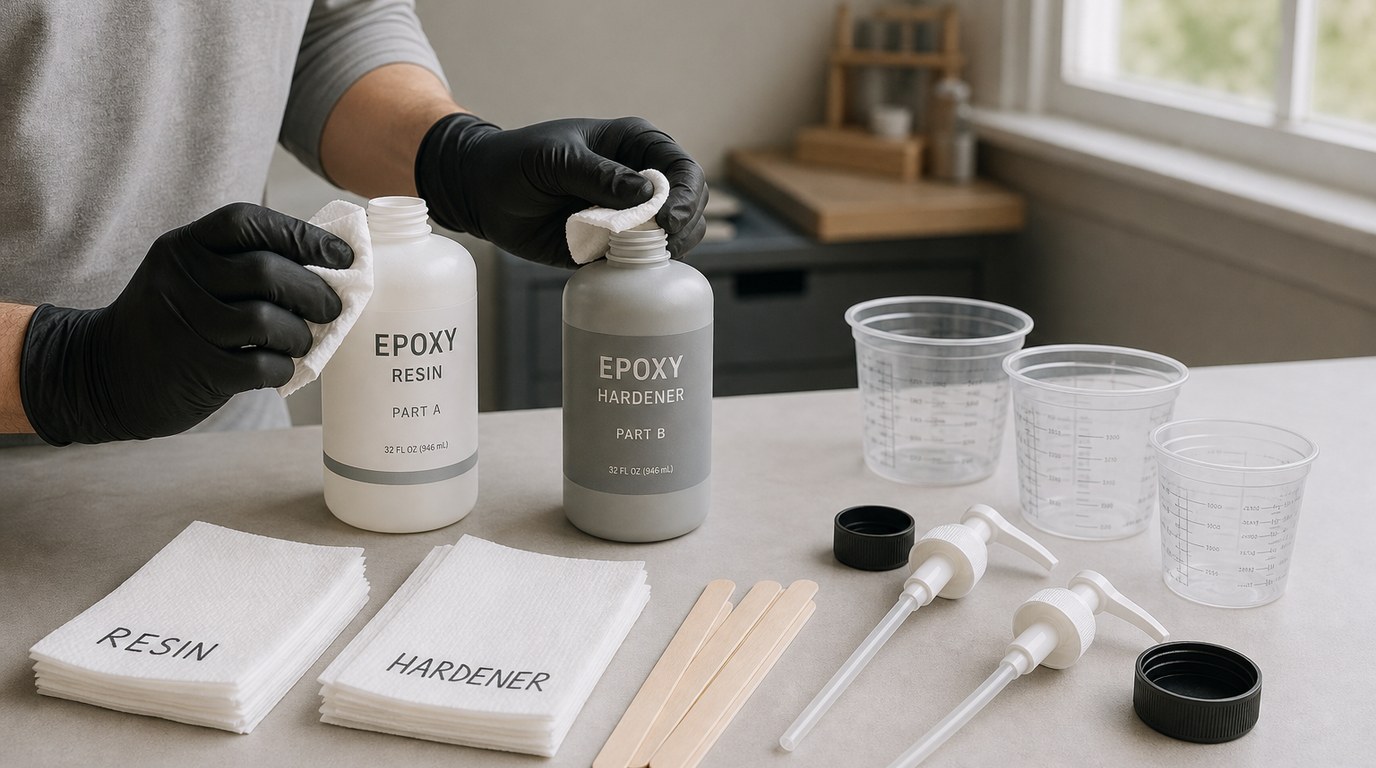
After each use, wipe the bottle threads and rim with a clean disposable towel before closing. Do not use the same towel on both resin and hardener openings. If drips build up around the cap, they can prevent a tight seal and may glue the cap shut.
Use separate measuring cups, stir sticks, pumps, or pour spouts for each part. Never dip a mixed tool back into either original bottle. If your kit has pumps, make sure the resin pump stays with resin and the hardener pump stays with hardener.
Close bottles immediately after pouring instead of leaving them open while you mix. Store them upright in a tray or plastic bin so leaks are contained and labels remain readable.
Signs Your Epoxy May Be Too Old to Use
Check the resin and hardener separately before deciding. Warning signs include a strong unusual odor, leaking or swollen containers, crust around the cap, obvious contamination, or material that has separated into strange layers and will not return to normal with gentle handling.
Resin may become cloudy, thick, grainy, or crystallized. This is not always permanent damage, but it needs attention before use. Hardener often darkens from pale amber to deeper yellow or brown as it ages. Slight yellowing may still cure, but it can affect clear castings, white pigments, jewelry, and topcoats.
The most important sign is cure behavior. If a properly measured and mixed test batch stays soft, sticky, rubbery, oily, or tacky beyond the normal cure time, do not use that epoxy for an important project.
Can You Fix Crystallized or Thick Epoxy?
Some cloudy or crystallized resin can be restored with gentle warmth. Place the sealed resin bottle in a warm water bath, keeping water below the cap so none enters the container. Let it warm gradually, then shake or roll the bottle gently until the resin becomes clear and fluid again. Dry the bottle completely before opening.
Do not overheat epoxy, microwave it, or put it directly on a stove. If warming does not restore normal clarity and flow, or if the material contains debris, hardened chunks, or signs of contamination, discard it. Thickened or darkened hardener is usually less recoverable than crystallized resin.
How to Test Old Epoxy Before a Project
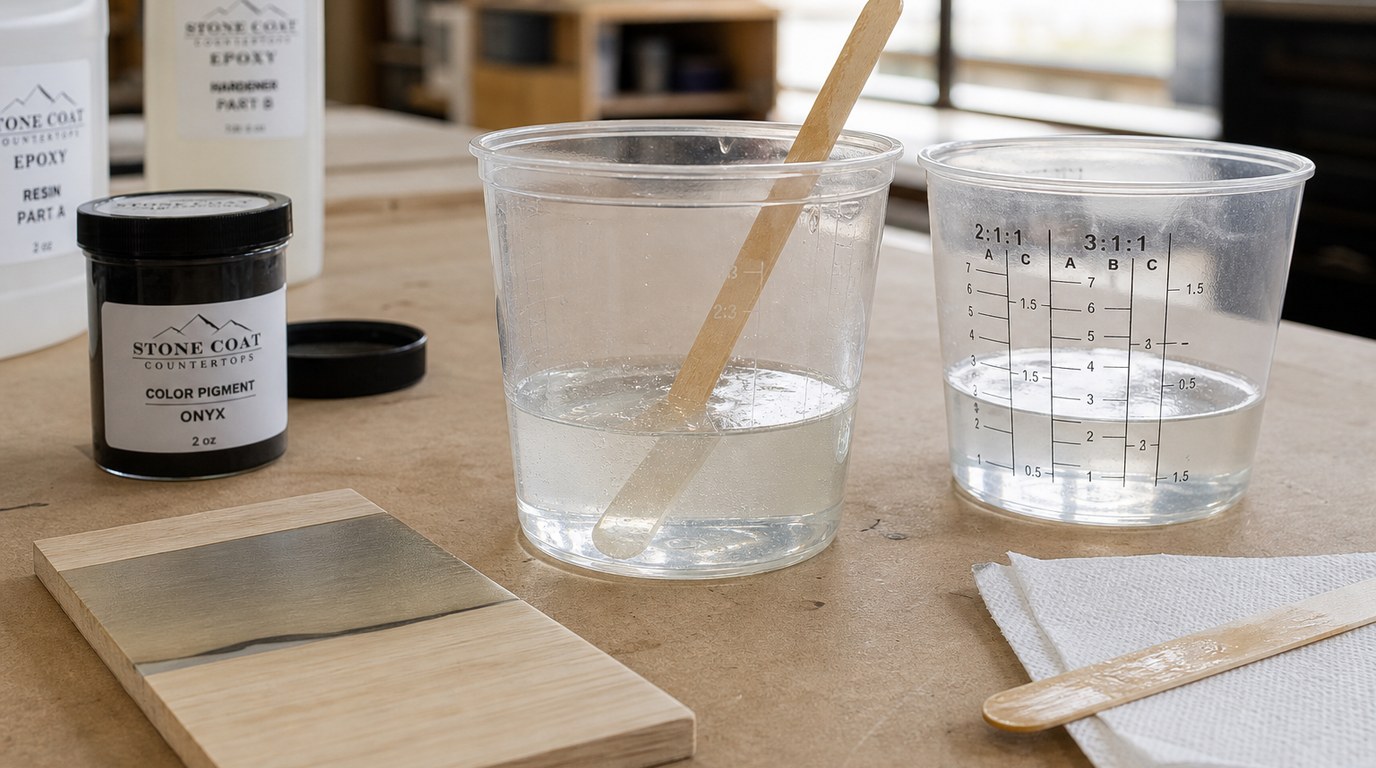
Before using old epoxy on a real piece, make a small test batch with the same mixing ratio, temperature, pigments, and approximate thickness you plan to use. Measure carefully by the manufacturer’s instructions. Mix thoroughly, scraping the sides and bottom of the cup, then pour it onto scrap material or into a small mold.
Label the test with the date and expected cure time. Watch for bubbles, cloudiness, odd heat buildup, separation, fish eyes, or surface haze. After the full cure window, press the surface with a fingernail or tool. It should be hard and dry, not bendy, greasy, or tacky.
If the test cures well, the epoxy may be suitable for practice, small castings, or noncritical work. If results are borderline, do not “hope it works” on a finished painting, river tray, jewelry batch, or countertop.
When to Keep, Downgrade, or Throw Away Old Epoxy
Use the project risk to decide what to do with old epoxy.
| Condition | Best decision |
|---|---|
| Clear, clean, in date, and passes a cure test | Use normally |
| Slightly yellowed but cures hard | Use for tinted, practice, or hidden layers |
| Crystallized resin restored fully with warmth | Test first, then use cautiously |
| Contaminated, leaking, or fails cure test | Throw away safely |
When appearance matters, downgrade sooner. Clear jewelry, white backgrounds, and glossy final coats show defects more than pigmented coasters or practice pours.
Disposal and Safety Notes for Old Epoxy
Do not pour liquid resin, hardener, or mixed epoxy down a drain, into soil, or into regular trash where it can leak. Follow the product label and local household hazardous waste rules.
Small amounts of correctly mixed epoxy can often be allowed to cure fully, then discarded as solid waste, depending on local regulations. Keep uncured components away from children, pets, food areas, and skin contact. Wear gloves when handling old or leaking containers, and work with ventilation if you are inspecting or testing questionable material.
FAQ
Does Epoxy Resin Expire?
Yes. Epoxy resin and hardener have a practical shelf life, even if they do not spoil like food. Over time they may thicken, yellow, absorb moisture, crystallize, or cure less reliably. Always check the manufacturer’s date and test older material before using it.
Can I Use Epoxy After the Expiration Date?
Sometimes, but it is a risk decision. If the bottles were stored well and the epoxy looks normal, mix a small test batch. Use it only if it cures hard and dry on schedule. Avoid expired epoxy for important clear coats, commissions, or structural repairs.
Should Epoxy Be Stored in the Refrigerator?
Usually no. Refrigeration can introduce condensation and may cause some resins to crystallize or thicken. A dry, dark cabinet at stable room temperature is better for most craft epoxies. Follow the product label if a specific formula has unusual storage instructions.
Why Did My Stored Epoxy Turn Yellow?
Yellowing usually comes from age, heat, UV exposure, or oxidation, especially in the hardener. Slight yellowing does not always mean the epoxy will fail, but it can discolor clear projects. Use yellowed material only after testing, preferably with pigments or noncritical pieces.
Is Cloudy Epoxy Always Bad?
No. Cloudy resin may simply be cold or crystallized, and gentle warming can sometimes restore it. Cloudiness from moisture, contamination, or failed chemistry is different. If warming does not return the resin to normal, or a test batch cures poorly, do not use it.