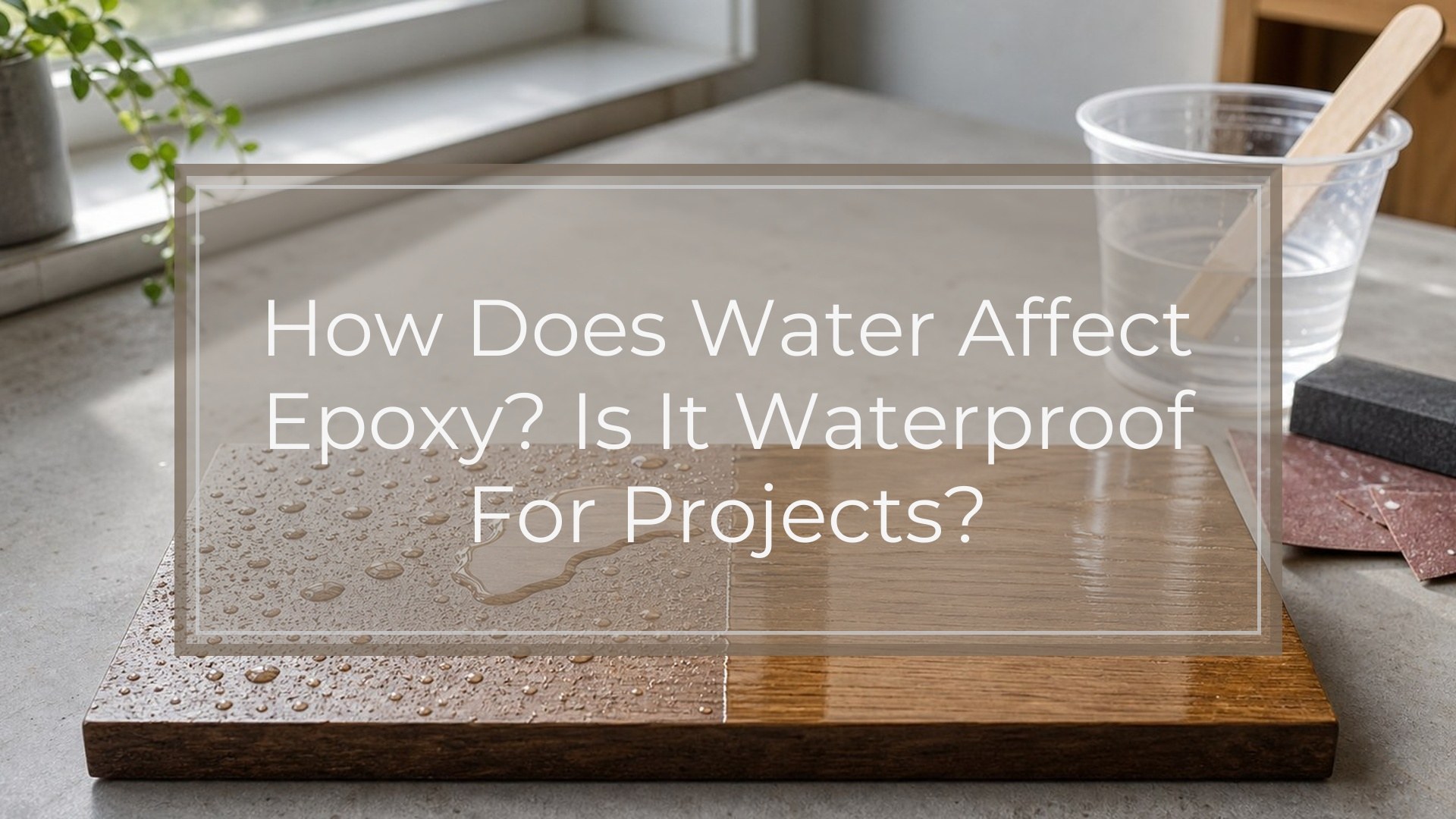
Cured epoxy is generally water-resistant, but “waterproof” needs context. A well-mixed, fully cured epoxy surface can usually handle spills, humidity, wiping, and sometimes short-term water exposure without immediate damage. That does not mean every epoxy project can sit underwater forever.
Water affects epoxy differently depending on the resin formula, how accurately it was mixed, whether it cured completely, how long it is exposed, and whether heat, sunlight, flexing, or unsealed edges are involved. For resin crafts, tabletops, coatings, and jewelry, the practical answer is this: cured epoxy can often get wet, but long-term water resistance depends on the whole project, not just the word “epoxy” on the label.
What “Waterproof Epoxy” Really Means
In craft and coating terms, “waterproof” is often used loosely. A more careful definition is that a material resists water passing through it or being damaged by water under the expected conditions of use.
Water-resistant epoxy can tolerate moisture, spills, and brief contact with water. This describes many fully cured epoxy projects.
Water-repellent means water tends to bead on the surface, but that does not guarantee the material will survive soaking, heat, or weather.
Water-sealed means the epoxy is being used as a barrier over another material, such as wood, paper, or concrete. In that case, the seal is only as good as the coverage, edges, thickness, and bond.
So, is epoxy waterproof? Sometimes, in practical everyday use. But it is safer to think of epoxy as highly water-resistant unless the product is specifically rated and applied for continuous wet service.
How Water Affects Uncured Epoxy
Water is much more likely to cause problems before epoxy has cured. Epoxy depends on a chemical reaction between resin and hardener. If moisture gets into the mixture or onto the surface during curing, it can interfere with the finish and, in some cases, the cure quality.
Common signs include cloudiness, milky streaks, surface blush, soft spots, fisheyes, poor adhesion, or a tacky layer. Humidity can also contribute to amine blush, a waxy or greasy film that may appear on some curing epoxies.
To reduce problems, keep your workspace dry, avoid pouring over damp wood or flowers, and do not wash tools or containers where water can contaminate the mix. Warm resin and hardener to room temperature before use, measure accurately, and cover curing projects to protect them from condensation, rain, or accidental splashes.
How Water Affects Fully Cured Epoxy
Once epoxy is fully cured, water usually has much less effect. A solid, well-cured epoxy coating can resist normal household moisture, drink spills, bathroom humidity, and gentle cleaning. This is why epoxy is popular for tumblers, trays, countertops, tabletops, and sealed art pieces.
However, water exposure is not just about whether the surface gets wet. Duration matters. A quick spill is different from a flower pot sitting on the same spot for weeks. Temperature matters too: warm or hot water can stress some coatings more than cool water. UV exposure can also weaken or yellow some epoxies over time, especially outdoors.
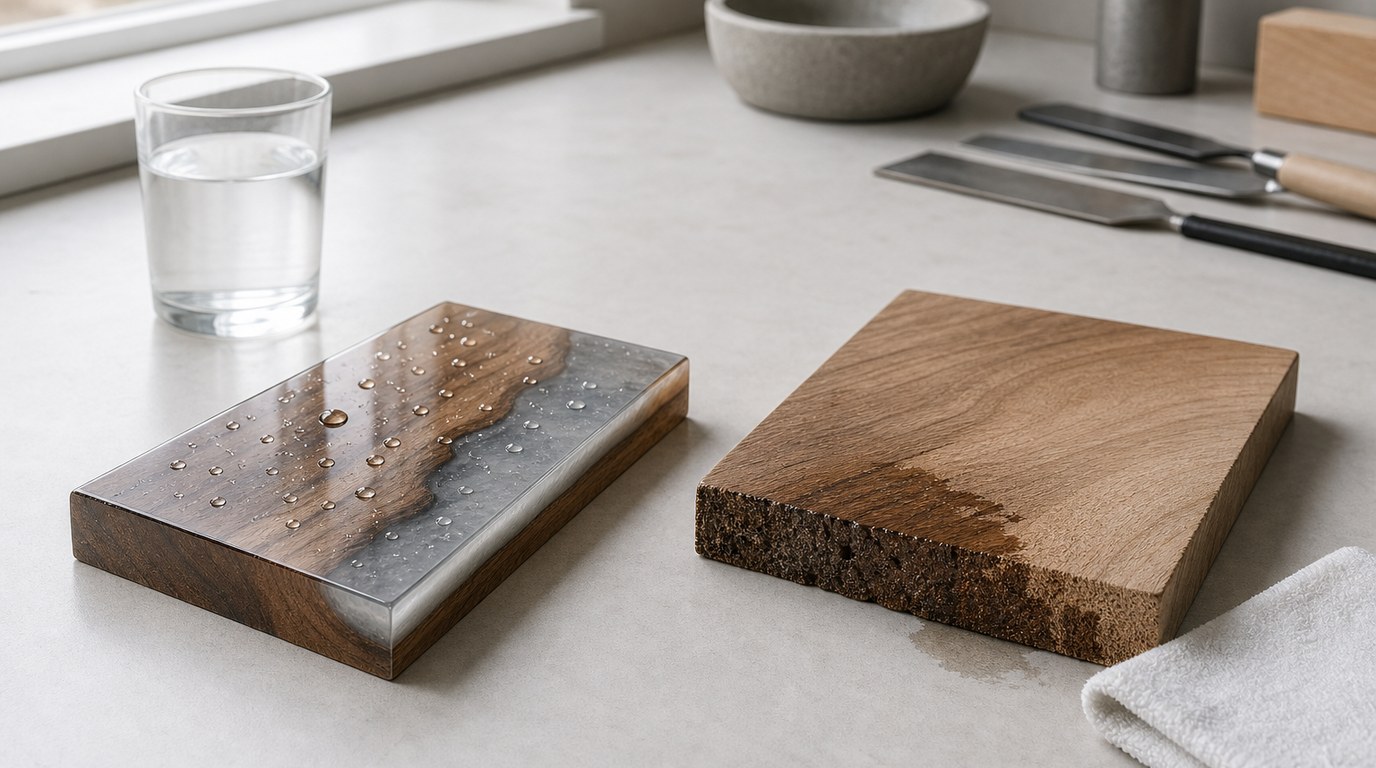
Project design matters as much as the cured resin. If water reaches unsealed wood, paper, fabric, or the underside of a piece, the base material may swell, stain, or separate from the epoxy. In those cases, the failure may look like an epoxy problem, even though the weak point was an edge, hole, seam, or substrate.
Is Epoxy Safe to Submerge in Water?
Some epoxies can handle immersion better than others, but submersion is where you should be cautious. A craft resin that is fine for coasters or jewelry is not automatically suitable for aquariums, ponds, showers, boats, or fountains.
For short-term decorative immersion, fully cured epoxy may perform well if the product allows it. For continuous underwater use, choose an epoxy specifically labeled for marine, potable water, aquarium, or immersion service as appropriate. Also follow the full cure time, not just the “dry to touch” time.
If the water will contain fish, plants, drinking water, chlorine, salt, heat, or cleaning chemicals, do not guess. The cured material may be inert enough for some uses, but safety depends on the exact formulation and application.
Common Misconceptions About Epoxy and Water
A common misconception is that all epoxy is automatically waterproof because it cures into hard plastic. Hardness and water resistance are related, but they are not the same thing.
Another mistaken belief is that a thick pour is always more waterproof. Thickness can help create a barrier, but trapped bubbles, poor mixing, or unsealed edges can still allow water damage.
Some makers also assume that if epoxy looks cured, it is ready for water. Many epoxies become touchable before they reach full chemical cure. Exposing them too early can cause cloudiness, marks, or a weaker surface.
Finally, epoxy does not make every object waterproof by magic. If you coat only the top of a wood sign, water can still enter through the back, screw holes, bark edges, or tiny gaps.
How to Make an Epoxy Project More Water-resistant
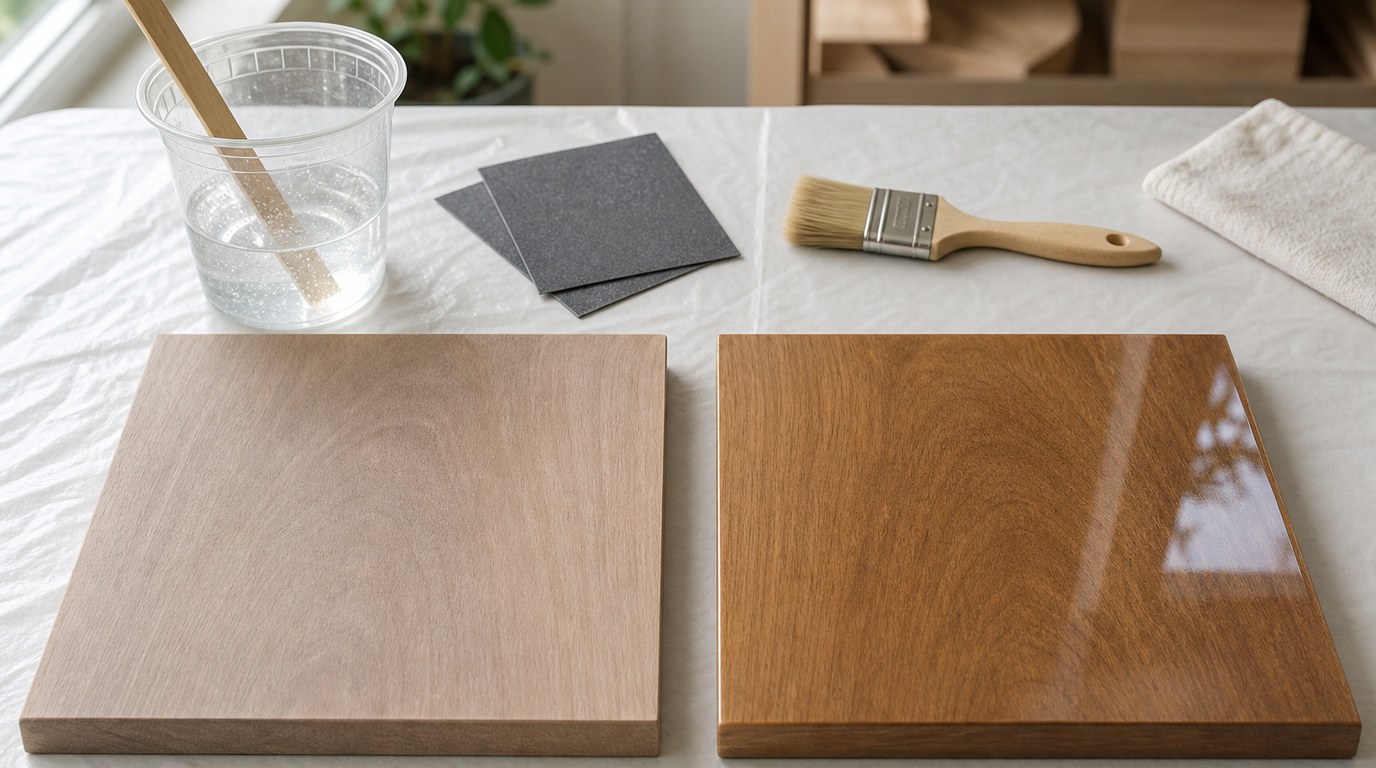
Start with the right epoxy for the job. For simple crafts, use a resin intended for coating or casting. For outdoor, marine, bathroom, or immersion projects, look for specific manufacturer guidance.
Prepare the surface carefully. Wood, concrete, paper, and other porous materials should be dry before coating. If needed, seal porous surfaces with a thin coat first to reduce bubbles and improve coverage.
Measure and mix exactly as directed. Inaccurate ratios and undermixing are major reasons epoxy stays soft, cloudy, or vulnerable to moisture. Scrape the sides and bottom of your cup, then transfer to a clean cup and mix again if the project needs maximum reliability.
Seal all sides, not just the visible face. Pay attention to edges, drilled holes, seams, feet, and undersides. Let the epoxy cure for the full recommended time before washing, placing outdoors, or exposing it to standing water.
For outdoor projects, consider a UV-resistant topcoat or maintenance plan because sunlight and weather can age epoxy even when water resistance is good.
Examples: What Water Exposure Means for Popular Resin Projects
Coasters: Fully cured epoxy coasters usually handle condensation and spills well. Problems are more likely if heat, alcohol, or standing water sits on the surface for long periods.
Jewelry: Resin jewelry can get splashed, but repeated showering or swimming may dull findings, weaken glue, or affect embedded materials.
Tabletops: Epoxy tables resist normal wiping and spills. Unsealed wood underneath or around edges is often the weak point.
Outdoor art: Rain may be fine for some coated pieces, but UV, freeze-thaw cycles, and unsealed backs can shorten the life of the project.
Bathroom items: Humidity is usually easier to manage than constant water flow or pooled water.
FAQ
Can Epoxy Get Wet After It Cures?
Yes, fully cured epoxy can usually get wet from spills, cleaning, humidity, and brief water contact. The key is “fully cured.” A surface that feels hard may still be curing internally, so follow the manufacturer’s cure time before exposing it to water.
What Happens If Water Gets Into Epoxy While It Is Curing?
Water can cause cloudiness, streaks, blush, bubbles, soft spots, poor adhesion, or a tacky surface. The result depends on how much moisture was present and when it contacted the epoxy. Prevent it by using dry materials and protecting the project while it cures.
Is Epoxy Waterproof for Outdoor Use?
Epoxy can be water-resistant outdoors, but outdoor durability also depends on UV exposure, temperature changes, rain, and surface preparation. Many epoxies need UV protection or a compatible outdoor topcoat. Use a product rated for exterior use when the project must last outside.
Can Epoxy Be Used in a Shower, Aquarium, or Pond?
Only use epoxy in showers, aquariums, or ponds if the specific product is rated for that type of wet or submerged use. Continuous water exposure is more demanding than occasional splashes. For aquariums or ponds, confirm the cured epoxy is suitable for aquatic life.
Why Did My Epoxy Turn Cloudy After Getting Wet?
Cloudiness can happen if epoxy was exposed to water before full cure, if moisture entered through an unsealed edge, or if the surface reacted to heat, soap, alcohol, or abrasion. In some cases, sanding and recoating fixes it; in others, trapped moisture remains visible.