
The best clear epoxy resin is the one that matches your project’s thickness, working time, clarity needs, and finished-use demands. For thin coatings, choose a tabletop or coating resin. For deep molds, flowers, river tables, or thick castings, choose a casting or deep-pour resin. For jewelry and small molds, look for low-viscosity resin with excellent bubble release and UV resistance. For countertops, trays, coasters, and surfaces that will be handled often, prioritize hardness, scratch resistance, and heat resistance.
Do not choose by brand name or “crystal clear” claims alone. Compare the label: maximum pour depth, mix ratio, pot life, cure time, UV inhibitors, viscosity, intended use, and safety requirements. Match those specs to your project before you buy.
Start with the Project, Not the Resin Brand
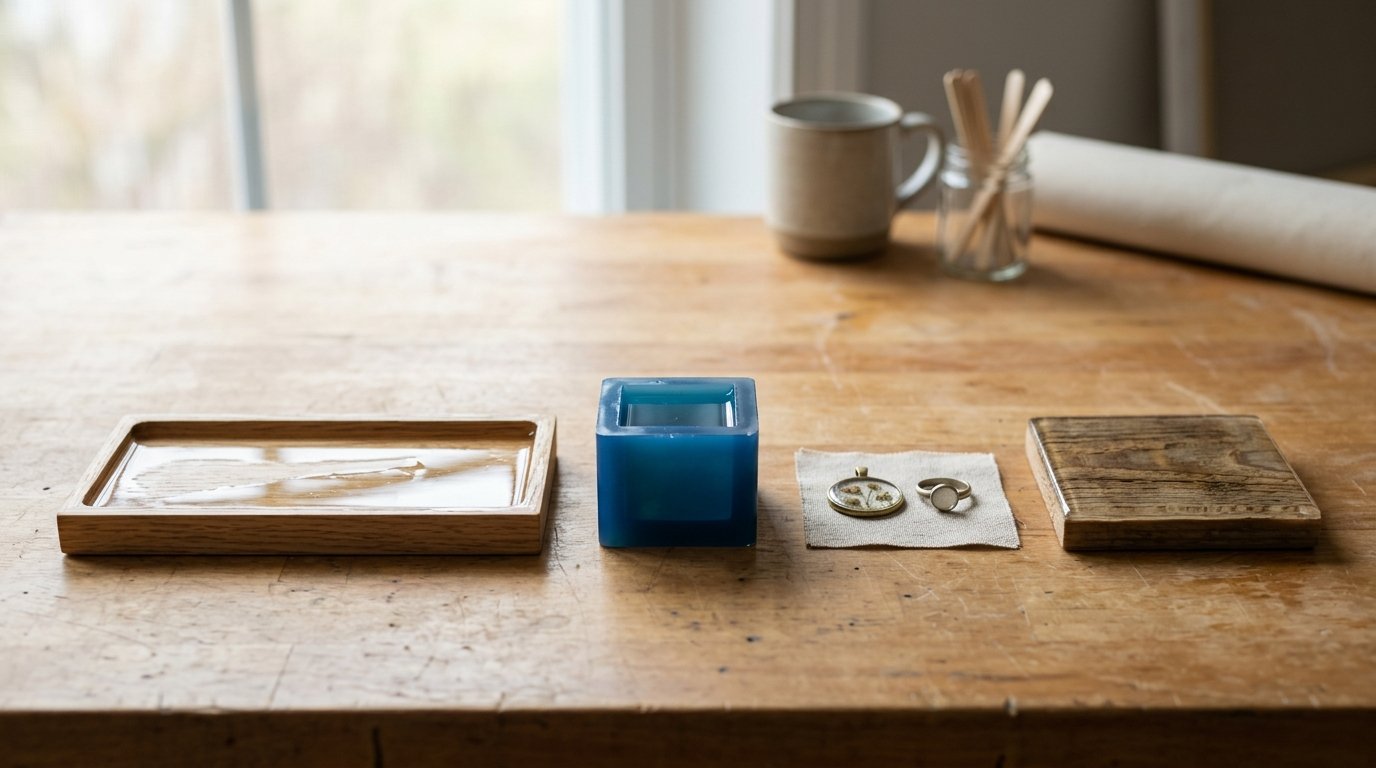
The easiest way to choose clear epoxy resin is to describe the finished piece first. Ask: Is it a thin glossy coating, a thick casting, a mold project, a piece of jewelry, or a surface that must handle cups, heat, or daily use?
Resin formulas are designed for different jobs. A resin that works beautifully as a thin tabletop coating may overheat, yellow, crack, or trap bubbles if poured too thick. A deep-pour resin that is perfect for a river table may cure too slowly or feel too soft for a quick coaster project.
Think in project requirements, not marketing words. “Crystal clear,” “high gloss,” and “professional grade” are not enough. You need to know how thick you will pour, how long you need to work, what you are adding, and how the finished item will be used.
Match the Resin Type to Your Project
Clear epoxy resin usually falls into a few practical categories. The names vary by brand, but the use cases are consistent.
| Resin type | Best for | Watch for |
|---|---|---|
| Coating or tabletop resin | Bar tops, trays, art panels, sealed surfaces, thin flood coats | Usually meant for shallow pours only |
| Casting resin | Molds, small objects, jewelry, embedded items | May need longer cure time |
| Deep-pour resin | River tables, thick molds, large castings | Often too slow for small quick projects |
| Art resin | Paintings, geodes, decorative panels, pigments | Check heat and scratch resistance if functional |
| UV resin | Tiny jewelry repairs, bezels, small charms | Not ideal for large pours or deep molds |
For a thin protective layer over wood, art, photos, or a tray, start with coating resin. For silicone molds, dice, ornaments, and embedded flowers, look at casting resin. For anything poured over about 1/4 inch, check whether you need a deep-pour formula.
If your project is both decorative and functional, such as a serving tray or coaster set, choose based on use, not only appearance.
Check the Maximum Pour Depth
Maximum pour depth is one of the most important resin specifications. Epoxy generates heat as it cures. If you pour a formula deeper than recommended, it can overheat, smoke, crack, warp the mold, cure cloudy, or turn yellow.
A coating resin might be designed for pours around 1/8 inch thick. Some casting resins handle 1/2 inch or more. Deep-pour formulas may allow 1 inch, 2 inches, or more per layer, depending on volume and mold shape.
Always read the manufacturer’s maximum depth for one pour, not just the total project size. A large, enclosed mold holds heat differently than a thin open tray. If your project is deeper than the limit, pour in layers or choose a resin made for deep casting.
Choose the Right Working Time and Cure Time
Working time, also called pot life, is how long you have after mixing before the resin thickens. Cure time is how long it takes to become solid enough to demold, sand, coat, or use.
Choose longer working time for large pours, many colors, detailed molds, embedded objects, or beginners who need more time to mix carefully. Choose faster resin for small projects, simple coatings, or production work where waiting days between layers is inconvenient.
Do not buy the fastest resin just because it sounds efficient. Fast formulas can trap bubbles, leave less time for pigment work, and increase mistakes. For a first project, a moderate working time is usually easier to control.
Look at Viscosity and Bubble Release
Viscosity means thickness. Low-viscosity resin is thinner, flows easily into mold details, and usually releases bubbles better. It is useful for jewelry molds, dice, flowers, and clear castings where trapped bubbles are obvious.
Higher-viscosity resin is thicker. It can be helpful for doming, coating surfaces, keeping glitter suspended, or creating controlled art effects. However, it may hold bubbles longer and may not reach tiny mold details as easily.
If clarity matters, look for phrases such as “low viscosity,” “self-leveling,” and “excellent bubble release,” but confirm with reviews showing similar projects. Also check whether the resin allows heat gun or torch use, because some molds, pigments, or surfaces can be damaged by too much heat.
Compare Clarity, Yellowing Resistance, and Uv Protection
Most clear epoxy looks good when freshly cured. The real test is how it looks months later. UV light, heat, and some additives can cause yellowing over time, especially in clear or pale projects.
For jewelry, floral preservation, white pigments, ocean art, and clear tabletops, choose resin with UV inhibitors or strong yellowing resistance. This does not make epoxy completely immune to sunlight, but it slows discoloration.
If the finished piece will sit near a window, outdoors, or under strong light, yellowing resistance matters more. For dark pigments, opaque colors, or items stored indoors, it may be less critical. Still, avoid very cheap clear resin for projects where long-term clarity is the main feature.
Check Surface Durability, Heat Resistance, and Intended Use
A resin project can be clear and beautiful but still wrong for the job. Surface durability matters for anything that will be touched, washed, slid across a table, or exposed to warm objects.
For coasters, countertops, trays, bar tops, and table coatings, check cured hardness, scratch resistance, food-contact information, and heat resistance. Some resins soften under hot mugs or show scratches easily. Others are designed specifically for functional surfaces.
For purely decorative molds, ornaments, or display pieces, you may not need the toughest coating resin. For jewelry, look for a formula that cures hard enough to polish and wear comfortably. Always separate “looks clear” from “performs well for this use.”
Make Sure It Works with Your Colors, Molds, and Add-ins

Before buying, check whether the resin is compatible with your pigments, molds, embedded objects, and surface materials. Alcohol inks, mica powders, resin dyes, glitter, dried flowers, paper, photos, shells, and wood can all behave differently.
Use resin-safe colorants when possible. Too much liquid color can interfere with curing. Porous items such as paper, flowers, and wood may need sealing first to prevent bubbles or staining.
For silicone molds, confirm the resin cures hard enough for demolding without bending permanently. For wood or painted surfaces, check whether the resin is suitable for coating and whether the surface needs sanding, sealing, or priming.
Read the Label Like a Buyer: Specs That Matter
When comparing clear epoxy resin, look past the front of the box. The useful buying information is usually in the technical details, instructions, or product listing.
Check these specs before purchasing:
- Intended use: coating, casting, deep pour, art, jewelry, or tabletop
- Maximum pour depth per layer
- Mix ratio by volume or weight
- Working time or pot life
- Demold time and full cure time
- UV or yellowing resistance
- Heat resistance after full cure
- Viscosity and bubble-release claims
- Compatible pigments and surfaces
- Safety instructions, ventilation needs, and protective gear
Also read reviews from people making the same type of project. A five-star review for tumblers does not prove the resin is right for a deep flower casting.
Budget Smart: When to Spend More and When Not to
Spend more when the project is large, sentimental, time-consuming, or meant to last: wedding flowers, river tables, countertops, memorial pieces, or clear jewelry with delicate inclusions. In these cases, failed resin costs more than better resin.
You can often spend less for practice pours, small opaque crafts, test tiles, or projects where slight yellowing would not be noticeable. The cheapest option is risky when clarity, depth, or durability matters.
A smart budget includes extra resin for sealing, test pours, mistakes, and overflow. Buying exactly the estimated amount can leave you short halfway through a layer.
Quick Buying Checklist Before You Purchase
Before you add clear epoxy resin to your cart, confirm:
- What are you making: coating, mold, casting, jewelry, or surface?
- How thick is the deepest pour?
- How much working time do you need?
- Does the resin resist yellowing for clear or pale projects?
- Is it hard and heat-resistant enough for the final use?
- Will it work with your pigments, mold, surface, and add-ins?
- Are the mix ratio and cure time realistic for your workspace?
- Do reviews show projects similar to yours?
If one key spec is missing, keep looking or contact the manufacturer before buying.
FAQ
What Should a Beginner Know First About How to Choose the Best Clear Epoxy Resin for Your Project?
Beginners should know that clear epoxy resin is not one-size-fits-all. Start with the project type and pour depth. A thin coating resin, deep-pour resin, and jewelry casting resin can all be clear, but they behave differently during mixing, curing, bubbling, and final use.
What Matters Most When Evaluating How to Choose the Best Clear Epoxy Resin for Your Project?
The most important factors are intended use, maximum pour depth, working time, cure time, clarity, yellowing resistance, and durability. If your resin matches those requirements, brand choice becomes easier. If one of those specs is wrong, even a highly rated resin may fail.
What Mistakes Should Readers Avoid with How to Choose the Best Clear Epoxy Resin for Your Project?
Avoid choosing resin only by price, gloss, or brand popularity. Do not exceed the maximum pour depth, use too much liquid pigment, skip surface preparation, or assume all clear resins are heat-resistant. Also avoid buying before checking reviews from projects similar to yours.
What Is the Next Logical Step After Learning About How to Choose the Best Clear Epoxy Resin for Your Project?
Write down your project size, depth, surface, colors, add-ins, and finished-use needs. Then compare two or three resins by their technical specs, not just photos. If you are still unsure, run a small test pour before committing to the full project.