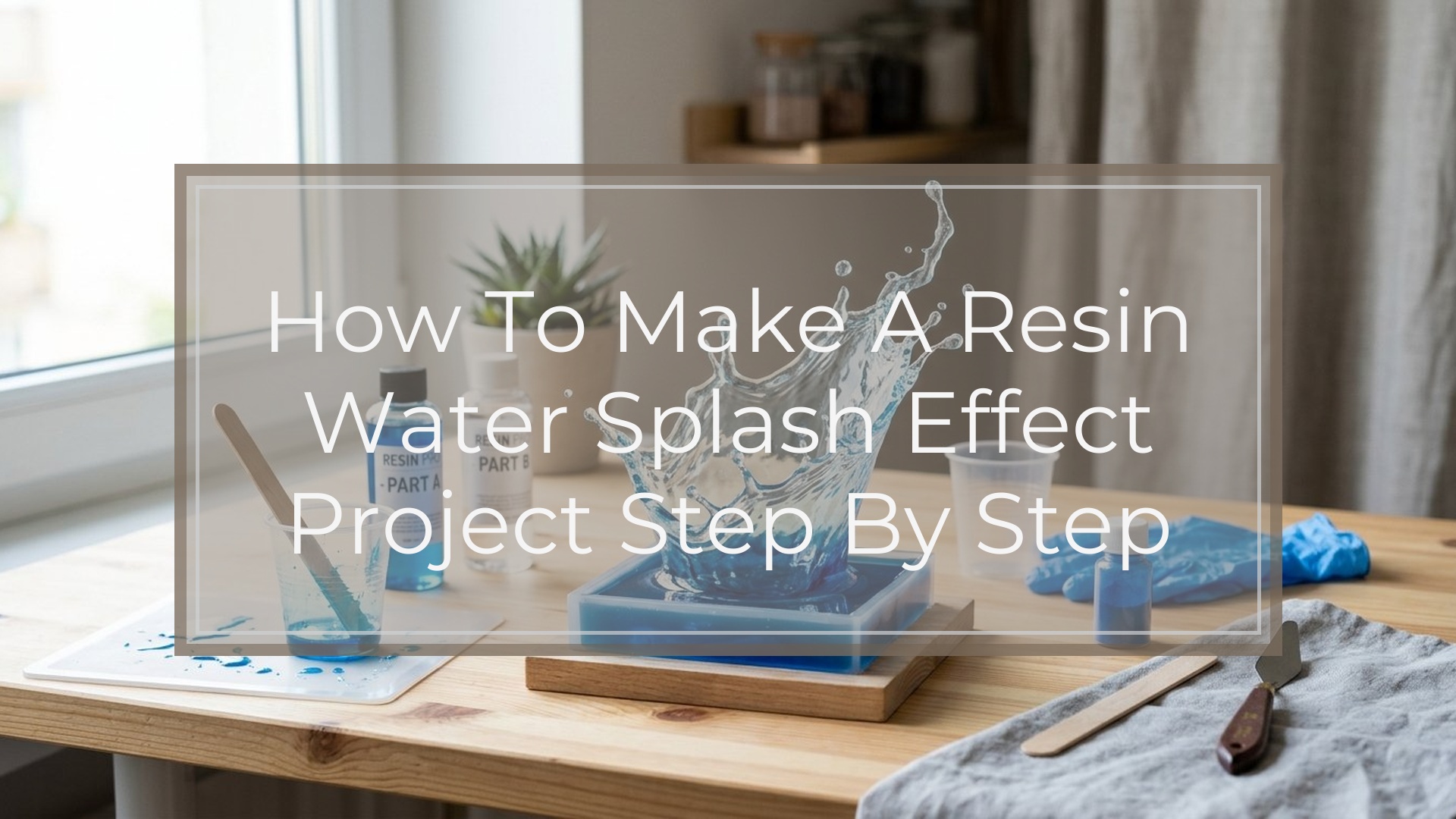
To make a project with the effect of water splashing, build the shape first, then apply resin in controlled stages instead of pouring one thick blob. Start with a clear support such as acetate, fishing line, or thin wire, make a splash skeleton, coat it with a high-viscosity clear resin or UV resin, and cure in layers so the shape holds. Add tiny white accents only at impact points and tips, not across the whole form. The goal is not “more resin,” but thin arcs, stretched droplets, and variation. If you control structure, timing, and curing, you can create a splash that looks dynamic instead of like a lump of glass.
What You Need Before You Start
Gather everything before mixing resin, because splash work is time-sensitive and hard to pause midway.
You will need:
- Clear resin: a thick doming epoxy or UV resin works best for vertical or suspended splash shapes
- Mixing cups and stir sticks: for accurate measuring and slow mixing
- Nitrile gloves, respirator if needed, and eye protection
- Silicone mat or protected work surface
- Heat tool, lighter, or fine mist alcohol spray: for surface bubbles only
- Support material: clear acetate strips, fishing line, thin clear filament, or very fine craft wire
- Tweezers and small scissors
- Disposable brushes, silicone tools, or toothpicks: for pulling resin into splash points
- Masking tape or clips: to hold supports in place
- White resin pigment, white ink, or acrylic paint: used very sparingly for foam highlights
- Optional transparent blue or gray tint: only a drop if you want depth
- UV lamp: if using UV resin
- Your base project: coaster, wave artwork, sculpture, diorama, cup topper, or mixed-media piece
Conditions matter as much as materials. Work in a dust-free room, on a level surface, at a temperature recommended by your resin maker. Cold resin stays thick but traps bubbles; overheated resin runs and sags fast. If your splash will rise off the surface, make a small test piece first. That will tell you how long your resin stays shapeable, how much support it needs, and whether your clear material stays invisible after curing.
One practical rule: choose the splash direction before you begin. Random shaping almost always looks heavy and unnatural.
Step 1
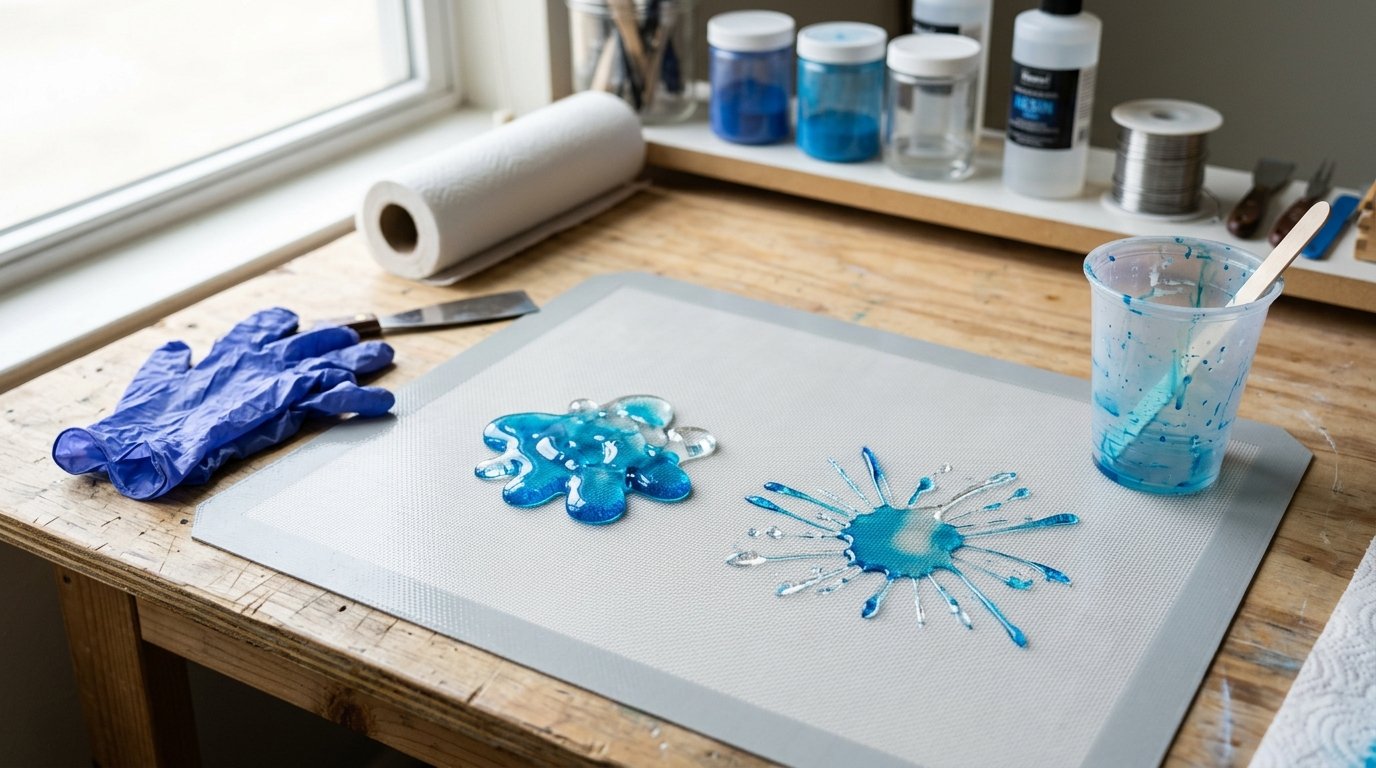
- Plan the motion of the splash. Decide where the “water” is coming from and what caused the impact. A believable splash has a source, a highest point, and a landing direction. Sketch a quick arc on paper or mark the path lightly on your base.
- Build a light support skeleton. For a surface splash, tape a narrow acetate strip or fishing line where the resin will rise. For a freestanding splash, bend very thin wire into a loose arc and anchor it firmly into the project base. Keep supports delicate. Thick armatures make the final effect look mechanical.
- Mix a small batch of resin slowly. Stir carefully to avoid whipping in air. If you are using two-part epoxy, scrape the cup sides and bottom so the resin cures fully. Do not mix a large batch. Small amounts are easier to control and create less heat.
- Apply the first coat as a tack layer. Brush or dab a thin coat along the support and at the splash origin point. This first layer is not the finished shape; it is the grip that helps later layers stay in place. Let it reach a gel stage or partially cure under a UV lamp.
- Pull out the main splash forms. Use a toothpick or silicone tool to drag resin upward and outward in thin arcs. Vary the lengths. Real water does not form identical spikes. Make one or two dominant arcs, then several shorter side splashes and a few droplet trails.
- Pause before adding more bulk. Let the resin thicken or cure partway, then inspect it from the front and side. If everything already looks heavy, do not keep adding resin. Water splash realism comes from negative space between strands, not a solid mass.
A useful visual cue: if the splash resembles melted candy at this stage, it needs more separation, not more material.
Step 2
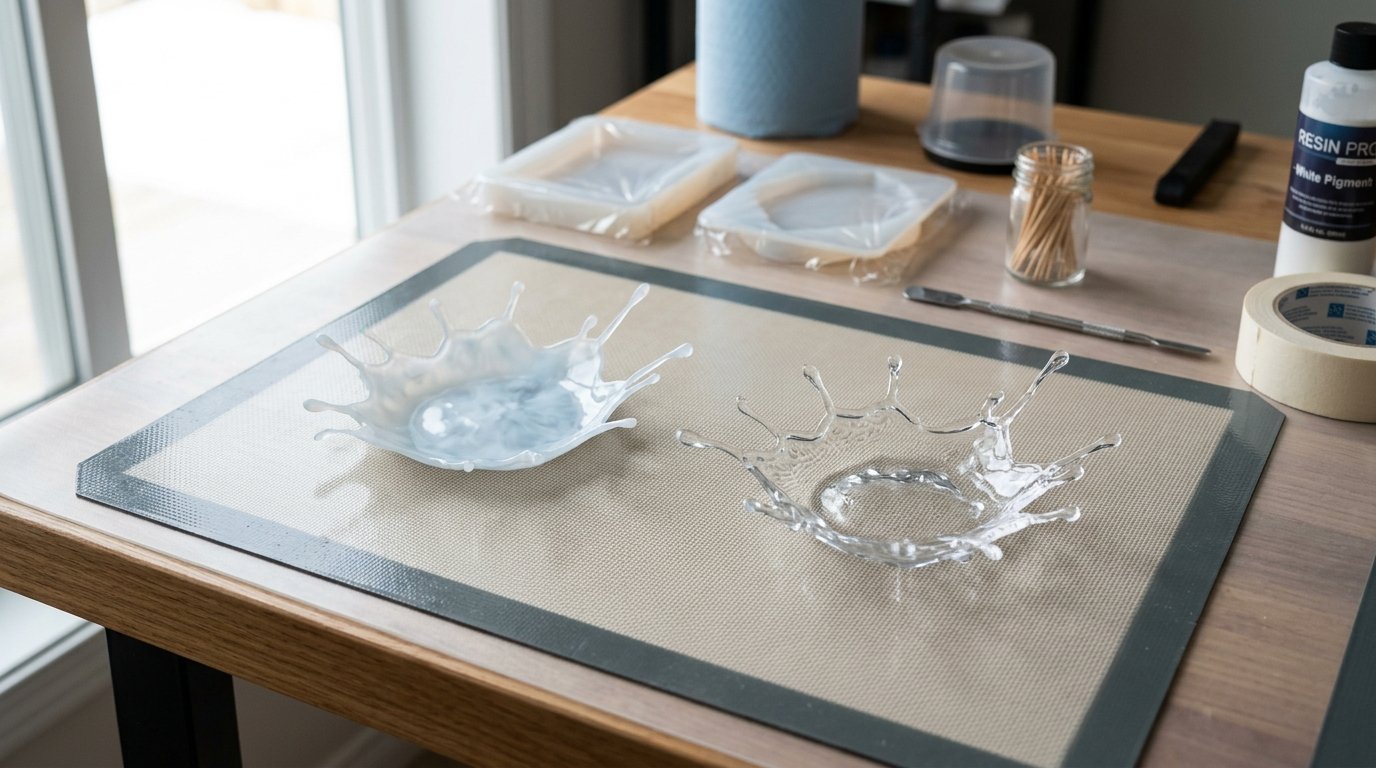
- Strengthen the shape with layered coats. Add resin only where structure is weak: at the base, at tight curves, and on long thin arcs that may flex. Cure between additions. Several thin coats hold better than one thick coat and stay clearer.
- Form droplets and broken edges. Use the tip of a stick to place tiny beads of resin at the ends of some arcs. Pull lightly so each bead looks like it is just leaving the main body of water. Add only a few. Too many droplets turn the splash decorative instead of realistic.
- Create surface texture, not cloudiness. Leave most of the splash fully clear. If you want the look of agitated water, add a trace of white only at the impact base, a few tips, or along one sharp crest. Blend it immediately.
Caution: too much white pigment makes the piece look like milk or ice, not splashing water.
- Hide or reduce visible supports. Once the structure is stable, coat clear supports so they visually merge into the splash. If a wire shows too much, add a thin resin ridge beside it to disguise the line. If a support is removable, wait until the splash is fully cured before trimming or pulling it away.
- Sagging: stop adding resin, cure sooner, and shorten the unsupported span
- Bubbles: pop only surface bubbles; do not overheat thin resin strands
- Blobby edges: drag out a fresh thin point with a clean tool while the resin is still workable
- Cloudiness: reduce pigment and avoid overmixing with wet white color
- Droplets falling off: let the base droplet gel first, then add a second tiny coat
- Fix common problems as you work.
- Finish with a final gloss pass. When the shape is correct, brush on a last thin clear coat to unify the sheen and smooth rough joins. Do not flood the piece. The final pass should refine contours, not change the silhouette.
Let the project cure fully according to the product instructions before moving it. Many splash pieces feel firm early but can still bend if handled too soon.
How to Check the Result
A successful resin splash should look energetic, clear, and physically believable from more than one angle.
Check these points:
- The base is strongest. The splash should look anchored where the water hits or rises.
- The arcs taper. Thick roots and thinner tips read as motion. Equal thickness everywhere looks artificial.
- There is open space between strands. You should see air through the splash, not a single clear clump.
- The droplets vary in size and distance. Real splashes scatter irregularly.
- White accents are minimal. They should suggest foam or reflected light, not coat the entire form.
- The piece holds its shape without drooping. Gently inspect from the side; long arcs should not slump downward.
- Supports are hidden or visually quiet. If your eye goes straight to the wire or strip, the illusion is not finished.
- The surface is glossy and mostly bubble-free.
If the splash reads as “frozen motion” at first glance, you got it right. If it reads as “clear blob,” trim, reshape, or add a few thinner directional extensions rather than another heavy coat.
FAQ
What Type of Resin Works Best for a Water Splash Effect?
A thicker clear resin works best, especially doming epoxy or UV resin. Thin casting resin usually runs too much for raised splash shapes. For small details and droplets, UV resin is especially useful because you can cure each part quickly before it sags.
Can Beginners Make a Resin Splash Effect?
Yes, but start small. A low splash attached to a surface is much easier than a tall freestanding arc. Practice on scrap first, learn your resin’s gel time, and use supports. Beginners usually struggle more with overbuilding than with underbuilding.
How Do You Make Resin Look Like Splashing Water Instead of Solid Glass?
Use thin strands, irregular arcs, and open gaps. Add only a little white at impact points and tips. Build in layers, not one pour. Realistic splashes show motion and separation, while a solid glassy shape looks static and heavy.
How Do You Stop a Resin Splash from Sagging?
Use a support skeleton, work with smaller resin amounts, and cure in stages. Let each layer reach a gel or partial cure before extending farther. Shorter spans and thicker bases help. If needed, switch to a more viscous resin or UV resin.
Can You Add Droplets After the Main Splash Cures?
Yes. Lightly scuff the attachment point if needed, then add tiny droplets with fresh resin. Cure each one before adding more nearby. This is a good way to improve realism at the end without reshaping the entire splash.