
Working with epoxy resin is a popular activity for artists, hobbyists, and DIY enthusiasts. However, it’s essential to prioritize safety when using these materials. One critical aspect of ensuring safety and reducing potential health risks is proper ventilation in the workspace. Adequate ventilation helps disperse harmful fumes and promote a healthier environment during the epoxy resin process.
There are various methods for ventilating a room when working with epoxy, suitable for different situations and workspace layouts. Some common practices include opening windows and doors, using fans to circulate air, and employing exhaust systems. In the following article, we will explore these methods in more detail, helping you understand how to create an ideal, well-ventilated workspace for working with epoxy resins.
Understanding Epoxy Fumes
Epoxy fumes are produced when the epoxy resin undergoes a chemical reaction during curing. These fumes contain volatile organic compounds (VOCs) that can be harmful if inhaled in high concentrations or for prolonged periods. While some epoxy products have low-VOC formulations, it’s necessary to be cautious and ensure adequate ventilation when working with any epoxy resin.
The risks associated with epoxy fumes include respiratory irritation, allergic reactions, and long-term side effects like occupational asthma. Typically, epoxy fumes are heavier than air and tend to settle near the ground, which is why proper ventilation is needed to disperse them and reduce exposure.
Several methods can help to ventilate a room when working with epoxy:
- Opening windows and doors to allow fresh air to circulate.
- Using fans to move the air around and promote air exchange.
- Turning on an exhaust fan or range hood, if available.
- Using a designated epoxy tent or a hydroponic grow tent with fans attached to exchange fresh air with resin fumes.
It’s also essential to follow other safety precautions like wearing appropriate personal protective equipment (PPE) such as gloves, goggles, and a respiratory mask.
Why Ventilation is Important
Proper ventilation is crucial when working with epoxy resins for several reasons. One primary concern is the prevention of toxic fumes inhalation. Although some epoxy products are labeled as non-toxic, they can still release harmful fumes during mixing, pouring, and curing processes. It is essential to ensure continuous fresh air circulation to minimize the risk of exposure to these fumes1.
In addition, proper ventilation aids in maintaining good indoor air quality. The tightening of building envelopes and the introduction of various materials that may emit pollutants can significantly impact indoor air quality2. Ensuring a well-ventilated workspace can help mitigate this impact, providing a healthier and more comfortable environment for those working with epoxy and others nearby.
A well-ventilated room can also contribute to the proper curing and hardening of epoxy resin projects. Adequate air circulation helps maintain consistent temperature and humidity levels, which are crucial factors in the successful curing of epoxy3. This helps minimize the risks of defects or issues with the final product, improving overall project results.
It is worth noting that local regulations and safety guidelines may require specific ventilation requirements when working with epoxy resins. Following these guidelines helps comply with safety standards and ensures a safe work environment for all involved.
Setting Up Ventilation

When working with epoxy, proper ventilation is crucial for your health and safety. In this section, we will discuss two types of ventilation methods: natural and mechanical ventilation.
Natural Ventilation
Natural ventilation is the simplest way to ventilate a room for epoxy. This method relies on the air outside to dilute and disperse epoxy fumes. Follow these steps to ensure proper natural ventilation:
- Open windows and doors on opposite sides of the room to create a cross-ventilation effect. This allows fresh air to circulate and disperse fumes.
- Consider working near an open window or door to increase the exposure of your work area to fresh air.
- Take note of the weather conditions outside, as high humidity and extreme temperatures can affect the curing process of epoxy resin.
Mechanical Ventilation
Mechanical ventilation may be necessary when natural ventilation is not sufficient or possible. This method uses fans and other devices to circulate air and remove epoxy fumes. Here are some mechanical ventilation techniques you can use:
- Place a portable fan near your work area and point it towards an open window or door to direct fumes outside.
- Use an exhaust fan or hood to capture and vent fumes outside, if available. This is particularly useful if you are working in a room without windows or adequate cross-ventilation.
- Turn on the ceiling fan to help circulate the air and disperse fumes. Set it to draw air away from your work area and to the top of the room.
Regardless of the ventilation method used, it’s important to always follow the safety guidelines provided by your epoxy resin manufacturer. Also, consider wearing a NIOSH-approved respirator designed for fumes as an added safety measure.
Additional Safety Precautions
Personal Protective Equipment
When working with epoxy resin, personal protective equipment (PPE) is crucial to ensure safety. Here are some recommended PPE items to wear while handling epoxy:
- Respirator – A respirator will protect your lungs from epoxy fumes.
- Gloves – Choose disposable nitrile gloves to protect your skin from resin contact and to avoid chemical reactions.
- Safety goggles – Protect your eyes from potential splashes and fumes by wearing safety goggles.
- Protective clothing – Wearing long-sleeved shirts and pants can help prevent skin contact with epoxy resin.
Epoxy Storage and Handling
Proper epoxy storage and handling can reduce potential risks and ensure safety in your workspace. Here are some guidelines to follow:
- Store epoxy resin products in a cool, dry, and well-ventilated area. Avoid direct sunlight, high temperatures, and humidity.
- Keep containers tightly closed when not in use to minimize exposure to air and moisture.
- Label containers clearly, and store them away from food, beverages, and tools that are used for food preparation.
- Dispose of empty containers, used gloves, and other disposable PPE safely, according to local regulations.
By following these additional safety precautions and ensuring proper ventilation when using epoxy resin, you can create a safer working environment and minimize potential health risks.
Monitoring Ventilation
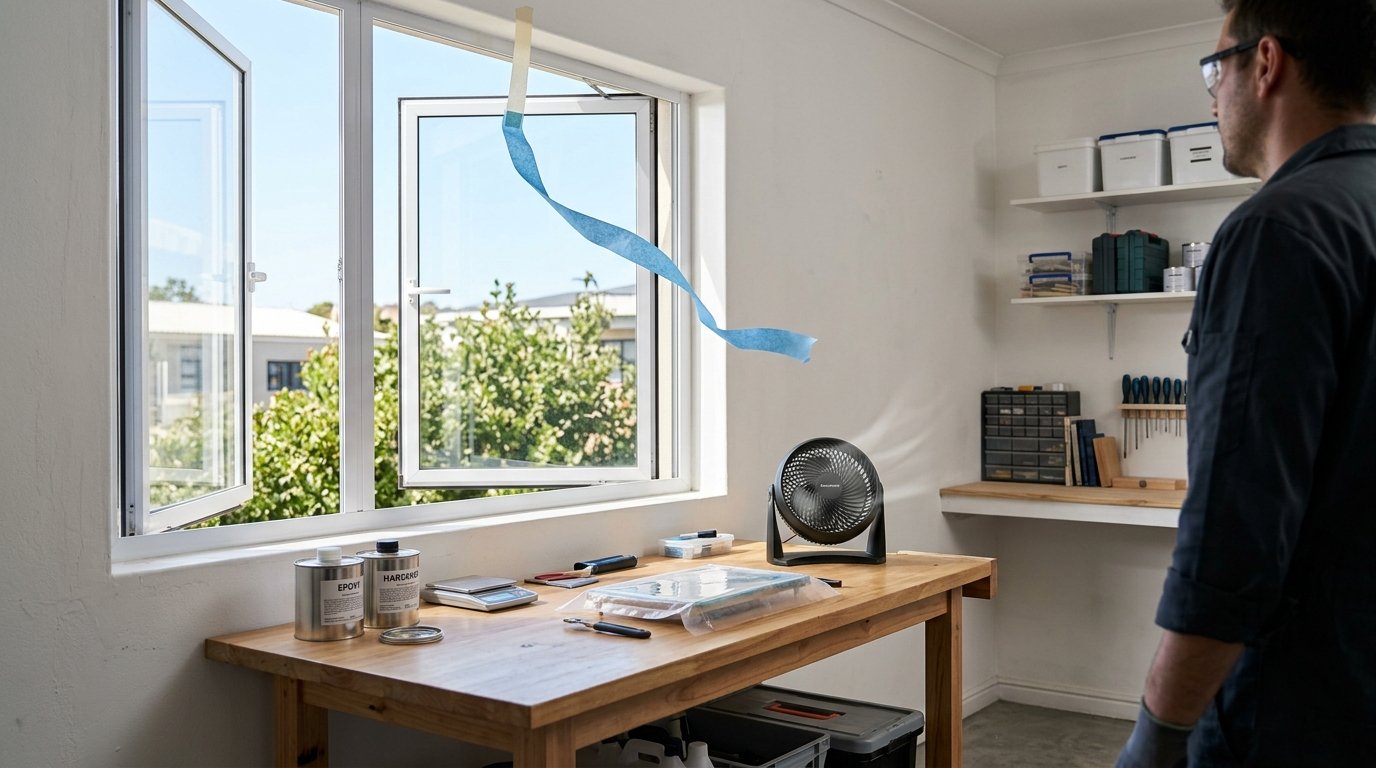
Proper air circulation is essential when working with epoxy resin to reduce the buildup of fumes and minimize potential health risks. To ensure that you’re maintaining adequate ventilation in your workspace, follow these simple steps:
First, open windows and doors to promote cross-ventilation and allow fresh air to flow through the room. If there are no windows in your workspace, consider using an exhaust fan or a portable fan to help move air around.
Next, consider using fans to further enhance air circulation within the room. Place a fan near the work area and direct it toward an open window or door, ensuring that it does not blow onto your epoxy project, as this may introduce dust and other contaminants to the resin.
Review the MSDS or SDS information provided by the epoxy resin manufacturer to determine the recommended air exchange rate for your specific product. In general, a room should have its air exchanged at least 8 times per hour when working with epoxy, but this may vary depending on the specific resin used and the size of the room.
You can check the airflow periodically by observing the movement of a lightweight material, such as tissue paper, near the open window or door. If it is moving steadily, the air circulation is likely appropriate for working with epoxy resin.
Lastly, always follow the manufacturer’s guidelines for proper equipment and safety precautions, such as wearing a respirator, gloves, and protective eyewear if necessary. These measures will further ensure a safe environment when working with epoxy resin.
Conclusion
In conclusion, proper ventilation is crucial when working with epoxy resin to ensure a safe and healthy work environment. By taking a few precautionary measures, you can limit exposure to potentially harmful fumes and contribute to a cleaner work area. Implementing a combination of the following methods can have a significant impact on air quality and safety.
Firstly, open windows and doors to allow fresh air to circulate throughout the room. This natural method helps dilute vapors and will significantly reduce the concentration of harmful chemicals in the air.
Secondly, utilize fans to help move air around more efficiently. Position fans near your work area and aim them toward open windows or doors to help drive out stagnant air and bring in fresh air from outside.
Lastly, consider investing in a ventilation kit or using local exhaust systems for optimal results when working with epoxy indoors. These tools can assist in removing contaminated air and replacing it with fresh air from the outdoors.
By incorporating these techniques into your epoxy resin projects, you can ensure a safe workspace and a more enjoyable experience with the material.