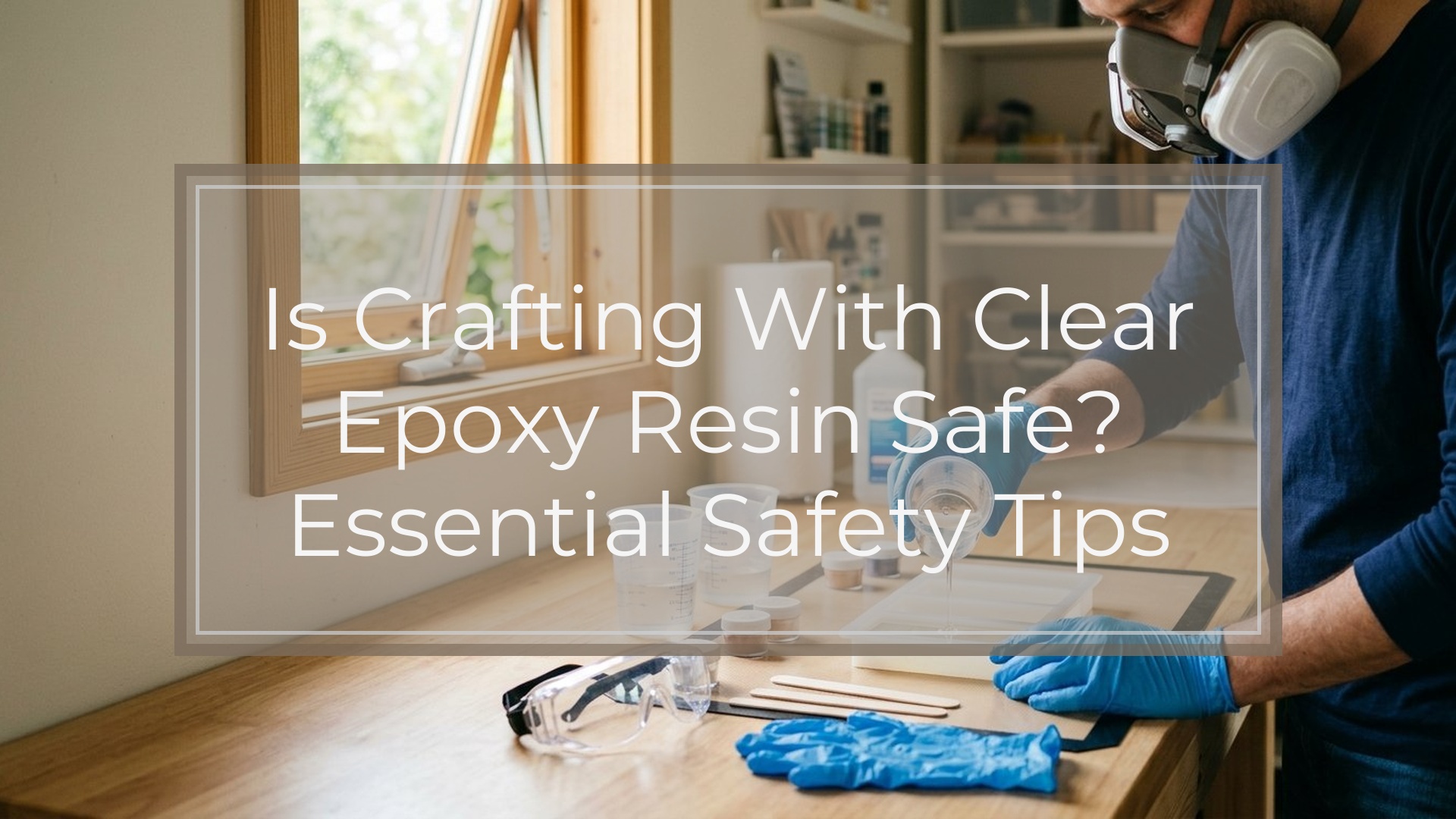
Crafting with clear epoxy resin can be safe for most home crafters when you treat the uncured resin and hardener as chemicals, not as ordinary craft glue. The main rule is simple: avoid skin contact, avoid breathing vapors or sanding dust, work with good ventilation, and follow the product label or SDS. The riskiest stages are measuring, mixing, pouring, and early curing, when the resin is still liquid or tacky. Fully cured epoxy is much safer to handle, but cutting or sanding it creates dust that still needs protection. If you are pregnant, highly sensitive to chemicals, asthmatic, or working around children or pets, take extra precautions or ask a medical professional before starting.
What Makes Clear Epoxy Resin Potentially Unsafe?
The safety concern is mostly about exposure before the resin has fully cured. Epoxy resin systems usually include a resin part and a hardener part. Either can irritate skin, eyes, or lungs, and repeated skin exposure may lead to sensitization, which means you could react more strongly in the future.
Clear epoxy can also release vapors while mixed and curing. Some products smell mild, but low odor does not automatically mean no risk. Heat can build if you mix too much resin at once, and spills can spread quickly across tools, tables, and gloves.
The goal is not to be afraid of resin. It is to control contact, airflow, cleanup, and cure time so exposure stays low.
Basic Safety Gear You Should Use Every Time
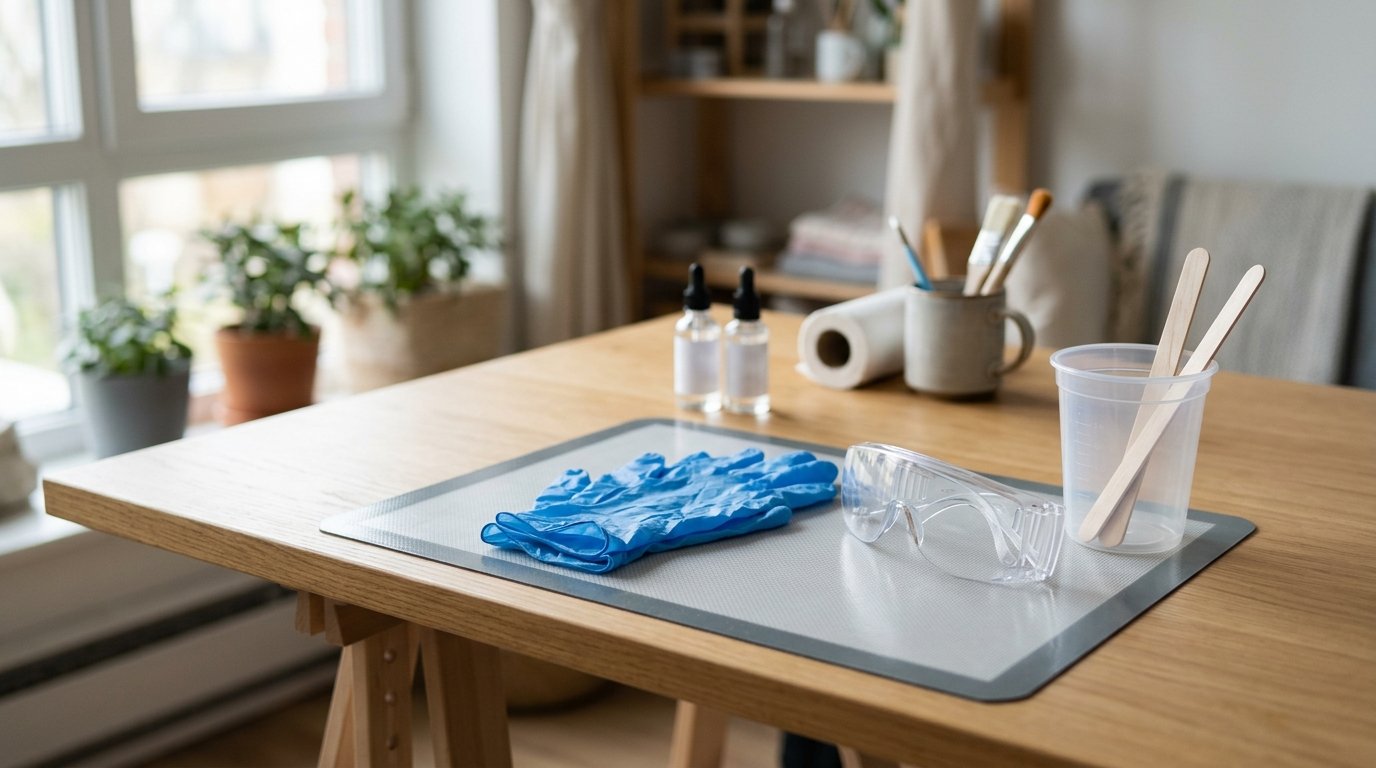
At minimum, wear disposable nitrile gloves, not latex gloves. Nitrile gives better chemical resistance for typical resin crafting. Replace gloves if they tear, get sticky, or become heavily coated with resin.
Use eye protection, especially when mixing, pouring, popping bubbles, or trimming pieces. A small splash can be serious, and resin is awkward to remove safely from skin or eyes.
For ventilation, work where fresh air moves through the space. If the product label or SDS calls for respiratory protection, or if ventilation is poor, use a properly fitted respirator with cartridges rated for organic vapors. A paper dust mask is not the same thing.
Also wear an apron or old long-sleeve clothing. Resin does not wash out easily, and contaminated fabric can keep uncured chemicals against your skin.
How to Set up a Safer Resin Workspace
Choose a workspace away from food preparation, sleeping areas, children, and pets. A garage, studio room, covered patio, or dedicated craft area is usually better than a kitchen table. If you must work indoors, open windows and use a fan to move air away from you and toward the outside, not across the project into your face.
Cover the table with silicone mats, plastic sheeting, freezer paper, or another disposable barrier. Keep paper towels, trash bags, extra gloves, alcohol wipes, and mixing tools within reach before opening the bottles.
Good lighting also matters. It helps you see bubbles, spills, inaccurate measuring, and resin on glove fingertips before you touch your phone, drawer pulls, or door handles.
Keep resin containers closed when not in use, and store them upright in a cool, dry place.
Safe Mixing, Pouring, Curing, and Cleanup Tips
Read the instructions before you measure. Resin safety and performance depend on the correct mix ratio, working time, minimum temperature, and cure time. Do not guess, and do not combine instructions from different brands.
Measure carefully, then stir slowly to reduce bubbles and splashes. Scrape the sides and bottom of the cup so unmixed resin does not remain. Mix small batches until you understand the product’s working time and heat buildup.
Pour slowly and keep your face back from the cup or mold. If you use a heat gun or torch for bubbles, use short passes only and keep flammable items away. Excess heat can damage molds, create fumes, or make resin cure too quickly.
For cleanup, wipe uncured resin from tools with appropriate disposable towels or the cleaner recommended by the manufacturer. Do not pour leftover resin down the sink. Let small leftover amounts cure in a safe container, then dispose of them according to local rules.
Is Cured Clear Epoxy Resin Safe to Handle?
Fully cured clear epoxy resin is generally much safer to handle than liquid or tacky resin. “Fully cured” means it has hardened through the full cure time listed by the manufacturer, not just that the surface feels dry.
However, cured resin is not always food-safe, heat-safe, or skin-safe for every use. Check the product’s label if you are making trays, jewelry, tumblers, or items that may contact skin often.
If you sand, drill, cut, or polish cured resin, wear eye protection and a dust respirator, and collect dust with wet sanding or local ventilation.
FAQ
What Should a Beginner Know First About Is Crafting with Clear Epoxy Resin Safe?
A beginner should know that the main risk is uncured resin exposure. Wear nitrile gloves, protect your eyes, ventilate the area, and avoid touching liquid or sticky resin. Start with small projects, read the label, and let pieces cure fully before handling them normally.
What Matters Most When Evaluating Is Crafting with Clear Epoxy Resin Safe?
The most important factors are ventilation, skin protection, product instructions, and cure status. A low-odor resin still needs careful handling. Check the label or SDS for specific precautions, especially if you are working indoors, using pigments, applying heat, or sanding the cured piece.
What Mistakes Should Readers Avoid with Is Crafting with Clear Epoxy Resin Safe?
Avoid working in a kitchen, skipping gloves, using a paper mask as vapor protection, touching phones or tools with resin-covered gloves, and rushing cure time. Also avoid pouring leftover resin into drains. These habits increase exposure and make cleanup harder than necessary.
What Is the Next Logical Step After Learning About Is Crafting with Clear Epoxy Resin Safe?
Set up a dedicated resin kit before your first pour: nitrile gloves, eye protection, table covering, mixing cups, stir sticks, paper towels, and a ventilation plan. Then choose a small beginner project and follow one product’s instructions from measuring through full cure.