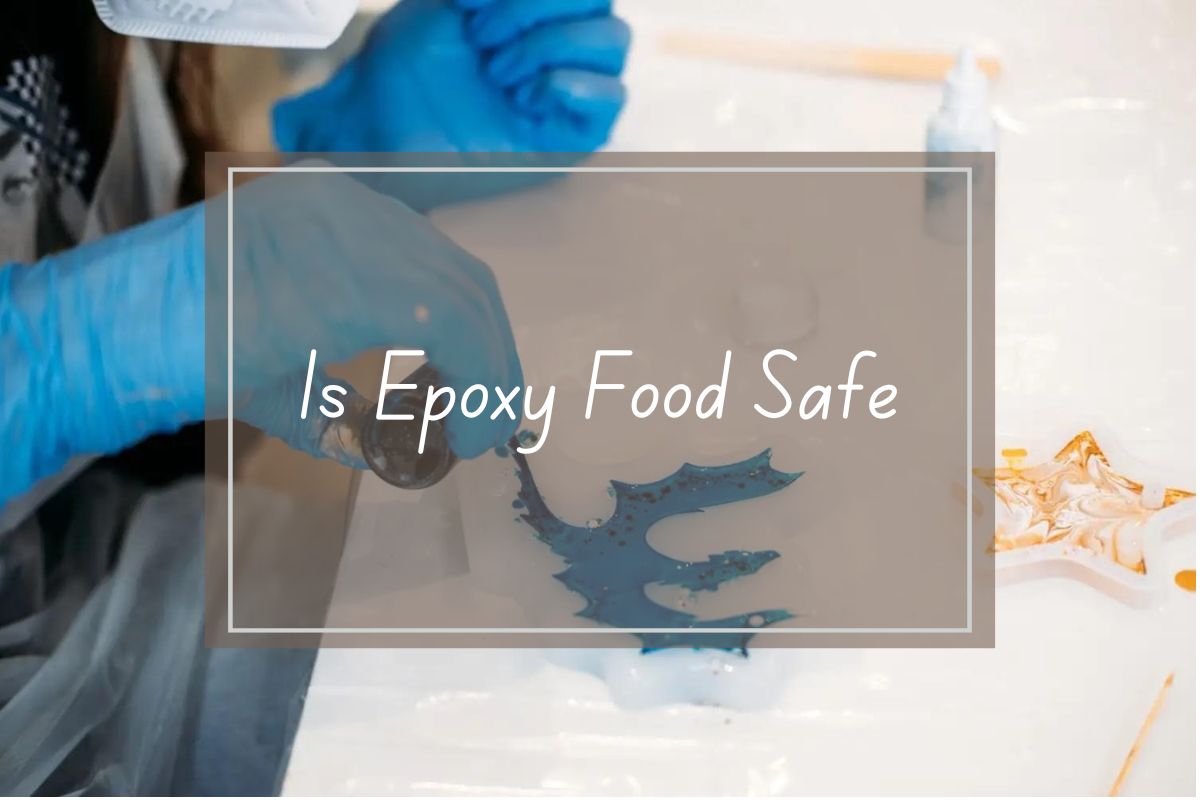
Wondering if your epoxy project is safe for food? It’s a common question if you’re making cutting boards, countertops, or food containers. Many crafters worry about chemicals leaching into their food from epoxy surfaces.
Epoxy is generally food safe once it has fully cured. This curing process takes longer than you might think – much longer than when the surface feels hard to the touch. Properly mixed and completely cured epoxy becomes an inert plastic that won’t release harmful substances when in contact with food.
For your projects, make sure you’re using epoxy specifically marketed as food-safe and follow the mixing instructions exactly. Incorrect ratios can prevent proper curing and compromise safety. Remember that food safety also depends on creating a smooth, non-porous surface that won’t trap bacteria or food particles.
Understanding Epoxy Resins
Epoxy resin is a type of synthetic material that starts as a liquid and hardens into a solid. You might have seen it used to create shiny countertops, river tables, or artistic crafts.
Epoxy consists of two main parts: the resin and the hardener. When you mix these two components together, a chemical reaction starts. This reaction is what causes the liquid to transform into a solid.
The hardening process doesn’t happen instantly. Most epoxy systems have a curing time that ranges from 24 hours to several days. During this time, the mixture gradually becomes more solid.
You should know that not all epoxy resins are created equal. Some are made specifically for craft projects, while others are designed for industrial applications.
For food safety, the key is complete curing. An epoxy resin that hasn’t fully cured might release chemicals into food that touches it.
When properly cured, many epoxy resins create a non-porous, smooth surface. This makes them resistant to bacteria growth and easy to clean – important factors for food safety.
Temperature affects how quickly and completely your epoxy will cure. If you’re working with epoxy, make sure to follow the manufacturer’s instructions about mixing ratios and curing conditions.
Look for epoxy products that specifically mention being “food safe” or “FDA approved” for applications where food contact is expected.

Safety Regulations for Epoxy in Food Contact
When using epoxy near food, specific regulations exist to protect your health. Different regions have their own standards that manufacturers must follow to ensure products are safe for your kitchen or dining table.
FDA Compliance and Guidelines
In the United States, the Food and Drug Administration (FDA) regulates epoxy through Title 21 CFR 175.300. This regulation covers “resinous and polymeric coatings” that come into contact with food.
For epoxy to be considered food safe under FDA guidelines, it must:
- Be properly cured according to manufacturer instructions
- Not transfer harmful substances into food
- Pass testing for chemical migration limits
- Be labeled as “food grade” if intended for direct food contact
The FDA tests how much chemical substance might move from the epoxy into your food. Even FDA-approved epoxies are typically recommended for incidental contact rather than continuous food storage.
EU Regulations and Standards
The European Union has strict regulations through EU Regulation 10/2011 for plastic materials in food contact applications, which includes epoxy resins.
EU standards focus on:
- Overall migration limits of substances into food
- Specific migration limits for individual chemicals
- A positive list of approved substances for food contact
- Requirements for documentation and compliance declarations
European regulations are often considered more stringent than U.S. standards. Manufacturers must provide a Declaration of Compliance that confirms their epoxy meets all EU requirements.
Testing involves exposing the epoxy to food simulants that mimic acidic, alcoholic, fatty, and aqueous foods to ensure safety under various conditions.
Characteristics of Food Safe Epoxy
Food safe epoxy products have special features that make them suitable for surfaces that touch food. These epoxies meet strict safety standards while offering excellent protection.
Low Odor and Non-Toxic Formulation
Food safe epoxy typically has a low odor formula that makes it more pleasant to use in kitchen settings. Unlike regular epoxies that can release strong fumes, food grade versions contain fewer volatile organic compounds (VOCs). This makes them safer to work with in enclosed spaces.
When shopping for food safe epoxy, look for products that specifically mention “low odor” on their packaging. These formulations shouldn’t cause headaches or respiratory issues during application.
The non-toxic nature of food safe epoxy comes from its specially selected ingredients that meet FDA guidelines (21 CFR 175.300). After fully curing, these epoxies don’t release harmful chemicals that could migrate into food or drinks.
Heat Resistance and Durability
A major benefit of food safe epoxy is its excellent heat resistance. Quality food grade epoxies can typically withstand temperatures between 120°F to 500°F, depending on the specific product. This means your countertops or serving trays won’t be damaged by hot dishes.
You’ll find that properly cured food safe epoxy creates an extremely durable surface. It resists scratches, stains, and impacts that would damage other finishes.
Most food safe epoxies are also water-resistant and don’t absorb liquids. This prevents bacteria growth and makes cleaning much easier. You can wipe down epoxy surfaces with regular cleaning products without worrying about damage.
The durability of food safe epoxy makes it a long-lasting solution for kitchen countertops, cutting boards, and serving pieces.
Application of Epoxy in Kitchenware
Epoxy has become a popular choice for kitchen surfaces and items due to its durability and attractive finish. When properly cured, food-safe epoxy can protect your kitchen items while maintaining their beauty.
Epoxy for Countertops and Tables
Epoxy coating creates stunning, durable surfaces for kitchen countertops and tables. You can pour it over existing surfaces like wood, concrete, or laminate to create a waterproof, stain-resistant finish that lasts for years.
Before applying epoxy to countertops, make sure you choose a product labeled as food-safe or food-grade. These formulations are specifically designed to be non-toxic once fully cured.
Remember that proper curing is essential! Most epoxy needs at least 24-72 hours to set, but full curing can take up to 30 days. During this time, avoid placing food directly on the surface.
To maintain your epoxy countertops, clean them with mild soap and water. Avoid harsh chemicals that might damage the finish.
Sealing Wooden Utensils and Boards
Food-safe epoxy can protect your wooden kitchen tools from moisture, stains, and bacteria. You can use it to seal cutting boards, wooden spoons, and serving utensils.
For wooden items, apply a thin coat of food-grade epoxy to create a protective barrier. This prevents liquids from soaking into the wood, which can harbor bacteria.
When sealing cutting boards, make sure to cover all sides and edges. Allow the epoxy to cure completely according to the manufacturer’s instructions before using with food.
Wooden items sealed with epoxy are easier to clean and maintain. They won’t absorb odors or stains from foods like garlic, onions, or berries.
Always hand wash your epoxy-sealed wooden items with mild soap rather than putting them in the dishwasher.
Epoxy Use in Storage Containers
Epoxy plays a vital role in making storage containers safe for food and liquids. It creates a barrier between contents and container materials, preventing contamination and leaching.
Coating Metal and Concrete Tanks
Metal tanks often need protection from corrosion and rust that could contaminate stored contents. Epoxy coatings provide this protection by creating a smooth, non-porous surface that’s easier to clean.
When you’re considering epoxy for metal tanks, look for FDA-approved formulations specifically designed for food contact. These special epoxies create a barrier that prevents metal ions from leaching into food or liquids.
For concrete tanks, epoxy serves two important purposes. First, it seals the naturally porous concrete surface. Second, it creates a protective layer that stops chemicals in the concrete from migrating into stored contents.
Remember that proper application is crucial! Your epoxy coating must fully cure before use. Incomplete curing can lead to chemicals leaching into your stored food or liquids.
Epoxy Lining for Pipes and Vessels
Epoxy linings for pipes and vessels help maintain water quality and extend equipment life. When you choose epoxy for these applications, you’re creating a smooth interior surface that prevents buildup and contamination.
In water systems, epoxy linings prevent metal pipes from corroding and leaching metals into drinking water. This is especially important in older plumbing systems that might contain lead or copper.
Food processing equipment often uses epoxy-lined vessels to maintain food safety. The smooth surface prevents bacteria from finding hiding spots and makes cleaning more effective.
When selecting epoxy for pipes, make sure it’s rated for your specific use. Different formulations exist for hot water, cold water, and various food applications.
Always verify that the epoxy has fully cured before using lined pipes or vessels. Proper ventilation during curing is essential too!
Max CLR Epoxy: A Specific Case Study
Max CLR Grade Epoxy Resin System is worth looking at if you’re concerned about food safety with epoxy products. It’s designed to be FDA-compliant, making it suitable for surfaces that may come into contact with food.
According to search results, Max CLR remains food safe under normal conditions. However, you should note that it can lose its food-safe properties if overheated.
The manufacturer conducts leach studies and laboratory tests to validate their safety claims. But remember, you’re essentially trusting their word on these safety standards.
When working with Max CLR epoxy, proper mixing technique is crucial. This helps:
- Eliminate tacky or wet spots
- Ensure 100% curing of the resin
- Maintain the food-safe properties
If you decide to use Max CLR, follow all application instructions carefully. Improper application might affect both the durability and safety of the finished product.
Cleaning up after working with Max CLR should be done carefully. Avoid using solvents unless you’re following specific safety guidelines for that particular solvent.
The Curing Process and Food Safety
The curing process is super important when using epoxy with items that will touch food. When epoxy fully cures, it becomes inert, which means it won’t leach chemicals into your food or drinks.
Most epoxies need time to cure completely before they’re safe for food contact. This curing time varies by product, but it’s usually longer than you might think!
What happens during curing:
- Epoxy transforms from liquid to solid
- Chemical reactions complete
- Harmful compounds become locked in the hardened material
You’ll know your epoxy is fully cured when it’s completely hardened and doesn’t feel tacky or have any odor. Always follow the manufacturer’s instructions about curing time – it might be days or even weeks!
Food safe epoxy must be:
- Specifically labeled as “food grade” or “food safe”
- Mixed exactly according to directions
- Allowed to cure completely (don’t rush this step!)
Even if your epoxy claims to be “food safe,” it’s best to avoid direct food contact when possible. For example, if you’re making a cup, consider using epoxy only on the outside.
Temperature affects curing time too. Warmer environments speed up curing, while cooler temps slow it down. But don’t try to rush the process with excessive heat!

Potential Risks and Contaminants
When using epoxy resin around food, you should be aware of certain hazards that could affect your health. Understanding these risks helps you make safer choices for your projects.
Identifying and Avoiding Lead
Lead contamination is a serious concern with some lower-quality epoxy products. This heavy metal can cause health problems if it leaches into food. To protect yourself and others:
- Always check product labels for “lead-free” certification
- Research the manufacturer’s testing procedures
- Avoid bargain epoxies from unknown sources with limited safety information
- Look for products that specifically mention compliance with FDA regulations
Even tiny amounts of lead can be harmful, especially to children and pregnant women. Some imported or artistic epoxy products might contain lead as a stabilizer or colorant. When in doubt, contact the manufacturer directly to ask about lead testing.
Preventing Chemical Leach
Even food-safe epoxy can release harmful chemicals if not properly cured or if damaged.
To minimize chemical leaching:
- Follow mixing instructions exactly as written
- Allow the full recommended cure time before food contact
- Avoid using harsh abrasives that might damage the surface
- Keep epoxy away from high heat which can break down the material
Most issues happen when epoxy hasn’t fully hardened. During this time, unreacted chemicals can transfer to food. A properly cured epoxy forms a stable barrier that won’t contaminate food items.
Watch for signs of damage like scratches, yellowing, or a tacky feel – these indicate the protective barrier may be compromised and should be replaced.
Maintaining and Repairing Epoxy Surfaces
Keeping your epoxy surfaces in top condition requires regular maintenance and knowing how to handle repairs when needed. Proper care ensures your food-safe surfaces stay beautiful and functional for years to come.
Fixing Cracks with Epoxy Glue
When small cracks appear in your epoxy surface, you can easily repair them with food-safe epoxy glue. First, clean the damaged area thoroughly with mild soap and water, then dry completely.
Sand the cracked area lightly with fine-grit sandpaper to create a better bonding surface. Wipe away any dust with a clean cloth.
Mix your food-safe epoxy glue according to the manufacturer’s instructions. Apply it carefully to the crack using a small applicator tool or toothpick for precision.
Let the repair cure fully – this typically takes 24-72 hours depending on the product. Once cured, sand the area smooth and polish if needed to match the surrounding surface.
Best Practices for Longevity
Daily cleaning with mild soap and water is all you need to maintain your epoxy surfaces. Avoid harsh chemicals and abrasive scrubbers that might damage the finish.
Use cutting boards rather than cutting directly on epoxy surfaces. While epoxy is durable, it can scratch over time, creating places where bacteria might hide.
Protect your epoxy from extreme heat by always using trivets or hot pads. Direct contact with hot pots and pans can damage even fully-cured epoxy.
Apply a food-safe mineral oil occasionally to maintain shine on your epoxy surfaces. This simple step helps prevent drying and cracking in environments with fluctuating humidity.
Avoid prolonged exposure to direct sunlight, as UV rays can cause yellowing over time. Consider UV-resistant epoxy for surfaces in sunny areas.
DIY Tips for Using Epoxy Safely
When working with epoxy for your projects, safety should be your top priority. Always work in a well-ventilated area to avoid breathing in harmful fumes. Open windows or use fans to keep fresh air flowing through your workspace.
Protect yourself by wearing nitrile gloves, safety glasses, and long sleeves. This prevents epoxy from touching your skin, which can cause irritation or allergic reactions in some people.
Read and follow all manufacturer instructions carefully. Different epoxy brands have specific mixing ratios and curing times that affect both safety and results.
Temperature matters! Most epoxies work best between 65-75°F (18-24°C). Too cold and it won’t cure properly; too hot and it might cure too quickly or release more fumes.
When using epoxy paint specifically, check if it’s labeled as food-safe if your project will touch food. Many epoxy paints are not food-safe and should only be used for decorative purposes.
Allow for proper curing time before using your finished project. Just because epoxy feels dry doesn’t mean it’s fully cured. Most food-safe epoxies need 1-2 weeks to fully cure before food contact is safe.
Keep these supplies handy for clean-up:
- Paper towels
- Rubbing alcohol
- Acetone (for tools only)
- Soap and warm water (for skin)
Mix only what you need for your immediate project. Unmixed epoxy has a longer shelf life than mixed batches.
Final Thoughts on Epoxy and Food Safety
When working with epoxy near food, it’s important to understand what “food safe” really means. Many products claim to be food safe, but this term can be misleading.
Properly cured, food-grade epoxy is generally safe for brief contact with food. However, no epoxy is truly meant for direct, prolonged food contact or consumption.
FDA-approved epoxies exist, but this approval doesn’t mean they’re completely food safe in all situations. It simply means they meet certain regulatory standards.
For your kitchen projects, like countertops or serving boards, choose epoxy specifically labeled as food-grade. Always follow the manufacturer’s curing instructions carefully.
Remember that even with food-grade epoxy, it’s best to use cutting boards and avoid direct food preparation on epoxy surfaces. This adds an extra layer of protection.
The safety of your epoxy projects also depends on proper application. Make sure your workspace is well-ventilated and you’re wearing appropriate protective gear when working with liquid epoxy.
With the right precautions and proper selection of materials, you can enjoy beautiful epoxy creations that are safe to use around food.