
Looking to add color to your crafts? You might wonder if pigment powder and mica powder are interchangeable. While they both add color to projects, they work differently.
Pigment powder and mica powder are not the same thing. Pigment powder feels chalkier and creates a matte finish in your projects. Mica powder, on the other hand, contains shiny mineral particles that add both color and shimmer to your creations.
Understanding the difference helps you choose the right product for your crafts. If you want a flat, solid color, pigment powder works best. For projects where you need sparkle and shine, mica powder is your go-to option. Many crafters keep both on hand for different effects in their polymer clay, resin, soap, or other creative pursuits.
Understanding Pigments and Micas
Pigments and micas are common colorants used in crafting, but they have distinct properties that make them suitable for different applications. Knowing the differences can help you choose the right product for your project.
Nature of Pigments
Pigment powders are finely ground colored substances that provide opacity and color. Unlike mica, pigments typically have a matte finish with no natural shimmer. They’re often synthetic materials created to produce specific colors.
When you work with pigment powders, you’ll notice they feel chalkier to the touch compared to mica powders. These colorants are highly concentrated, so a little goes a long way in your projects!
Pigments can be either organic or inorganic. Many artificial pigments are created to achieve vibrant hues that might not occur naturally. They’re particularly useful when you want bold, flat color without any sparkle or shine.
Defining Mica Powders
Mica powder comes from a natural stone mineral that’s been ground into a fine powder. What makes mica special is its natural shimmer and reflective quality. When you use mica powder in your crafts, you’ll get both color and shine!
Most commercial mica powders aren’t purely natural, though. They’re typically natural mica flakes coated with pigments or FD&C dyes to create specific colors while maintaining that characteristic sparkle.
If you’re comparing colorants, it helps to understand the difference between pigment and dye.
Mica powders feel smoother and more silky compared to regular pigments. They’re perfect when you want to add some shimmer to your projects. You can find them in various colors ranging from subtle earth tones to bold metallic finishes.
The reflective quality of mica makes it popular for projects where you want dimension and light-catching properties.
Visual Traits and Colors
Mica and pigment powders have distinct visual properties that create different effects in your crafting projects. The way they interact with light and display color can help you choose the right product for your specific needs.
Shimmer and Matte Finishes
Mica powders give your projects a beautiful shimmer and sparkle. They naturally reflect light, creating a pearlescent or metallic finish that catches the eye. When you use mica powders, you’ll notice they have a translucent quality that allows light to bounce off surfaces in interesting ways.
Pigment powders, on the other hand, provide a matte appearance. They feel chalkier to the touch and give solid, opaque color without the shine. If you’re looking for bold, flat colors without reflectivity, pigment powders are your go-to option.
The intensity of colors also differs between these products. Pigment powders typically offer stronger, more concentrated color payoff, while mica powders might need multiple layers to achieve similar color depth.
Interference Pigments and Their Effects
Some mica powders contain special interference pigments that create color-shifting effects. When you look at these from different angles, you’ll see colors change dramatically – like the shimmery effect on butterfly wings or soap bubbles.
These interference pigments work by reflecting certain wavelengths of light while allowing others to pass through. This creates fascinating effects in your resin art, polymer clay, or cosmetic formulations.
You can find interference mica powders in many varieties: blue-violet shifts, gold-green shifts, and red-blue shifts are popular options. These create depth and dimension that standard pigments can’t achieve.
For the most striking projects, try combining matte pigments as a base with interference mica powders as accents. This gives you both color intensity and eye-catching shimmer effects.
Applications in Art and Cosmetics
Both pigment powders and mica powders have unique roles in creative and beauty applications. Their different properties make them suitable for specific uses where either vibrant color or shimmer is desired.
Pigment Powders in Painting and DIY
When you’re looking for intense, reliable color in your artwork, pigment powders are your go-to option. Artists love pigment powders for their strong color payoff and matte finish. Traditional pigments like ultramarine blue, cadmium red, and titanium white have been staples in painting for centuries.
In DIY projects, you can mix pigment powders with various mediums like resin, clay, or soap. They work wonderfully with polymer clay because they won’t fade during baking.
Pigment powders are more color-stable than mica powders, making them perfect for projects that will be exposed to sunlight. When you’re creating something that needs a solid, non-reflective color, pigments provide that reliable matte finish you’re looking for.
Mica Powders in Makeup and Beauty
Mica powders shine (literally!) in the cosmetics world. You’ll find them in many of your favorite shimmery products like eye shadows, highlighters, and lipsticks. The natural light-reflecting properties of mica create that gorgeous glow on your skin.
Makeup brands often use mica in products that need dimension and sparkle. When you apply a shimmery eyeshadow, you’re likely using mica-based cosmetics.
In DIY beauty, you can create your own shimmer lotions or bath bombs using mica powders. They’re generally considered safe for skin contact when used properly. Many natural makeup brands highlight their use of mica over synthetic alternatives.
Unlike pigment powders, mica provides a pearlescent finish that catches light beautifully. This makes them perfect for adding a touch of magic to your beauty routine or creative projects.
Safety and Environmental Aspects
Both mica powder and pigment powder have different safety considerations you should be aware of. Let’s look at what you need to know when working with these materials.
Mica powder is generally considered non-toxic for consumer use in crafts and cosmetics. However, you should still handle it with care. The fine particles can be harmful if inhaled regularly or in large amounts.
When working with mica powder, you might want to wear a mask to prevent breathing in the fine dust particles. This is especially important if you use it frequently.
For pigment powders, safety varies depending on the specific type. Some synthetic pigments may contain chemicals that require careful handling.
Environmental considerations:
- Natural mica mining has raised ethical concerns about child labor in some countries
- Synthetic mica may be more environmentally friendly as it doesn’t involve mining
- Some pigment powders may contain ingredients that aren’t eco-friendly
Safety tips when using either powder:
- Work in well-ventilated areas
- Wear a mask when handling large amounts
- Keep away from children
- Wash hands after use
- Store properly in sealed containers
You should always check product labels for specific safety information about the particular powder you’re using. Different brands may have different formulations and safety requirements.
Mixing and Formulation Techniques
When working with mica and pigment powders, the right mixing techniques can make a huge difference in your results. Proper methods ensure even color distribution and prevent clumping or streaking in your projects.
Creating Custom Colors and Textures
You can create endless custom colors by mixing different mica and pigment powders together. Start with a small amount of your base color, then gradually add tiny amounts of other colors until you achieve your desired shade. Keep notes on your formulas so you can recreate successful combinations!
For paints, mix your powders with a suitable medium like acrylic binder or gum arabic. Add the powder gradually while stirring to prevent clumps. A mini whisk works great for this!
To create interesting textures, try these combinations:
- Mix fine and chunky mica (like phlogopite) for varied shimmer
- Blend matte pigments with pearl micas for contrast
- Layer transparent and opaque powders for depth
Remember that mica powders offer shimmer while pure pigments provide strong, matte color. Using both gives you more creative options.
Working with Resins and Glycerin
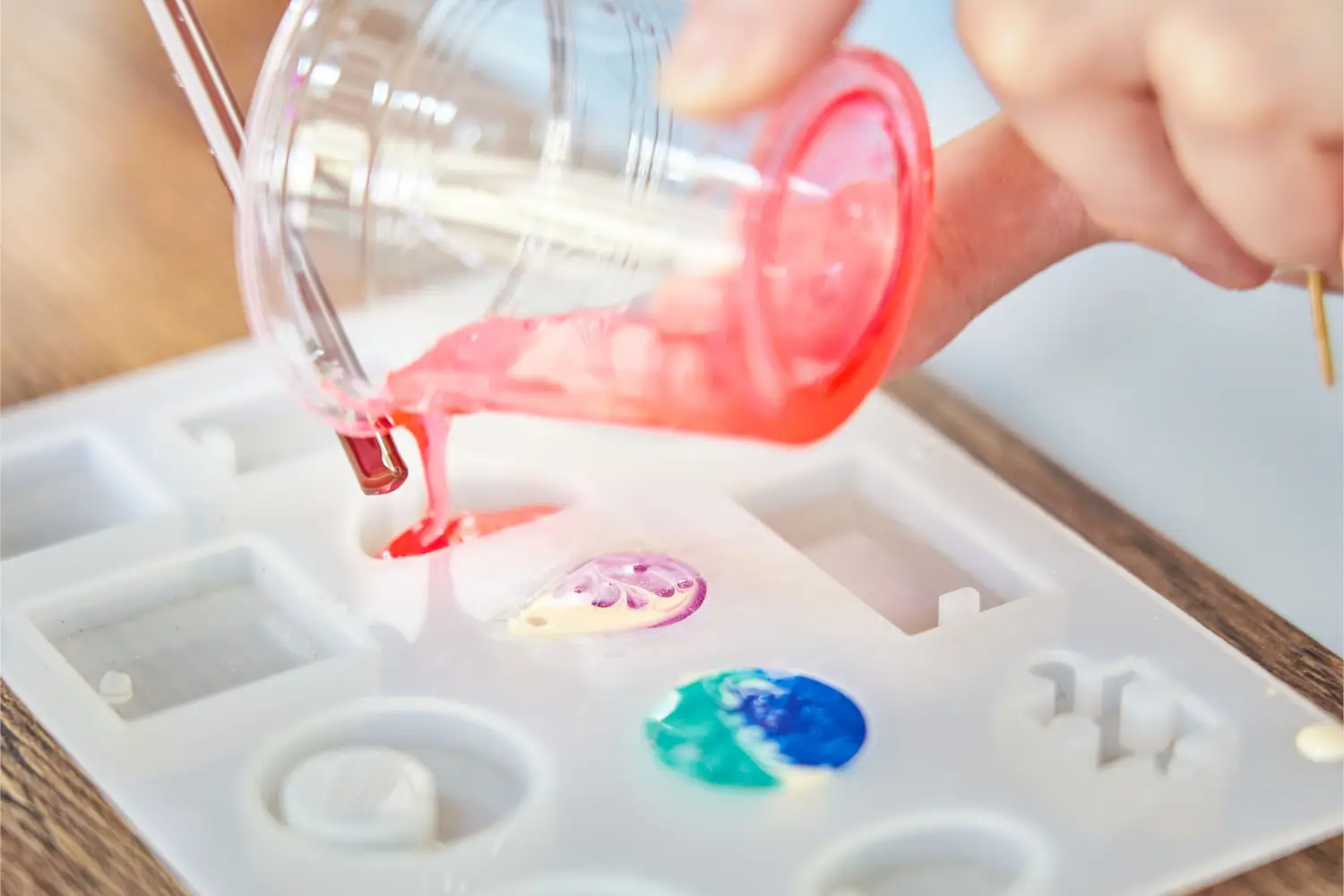
When adding colorants to resin, disperse your powder in a small amount of the resin first. This helps prevent clumping and air bubbles. For epoxy resin projects, use no more than 5% colorant by volume to avoid affecting the curing process.
Stir gently but thoroughly for about 2-3 minutes. Rushing this step often leads to uneven color distribution.
For glycerin-based products like soaps:
- Pre-mix your powders with a small amount of glycerin
- Create a smooth paste
- Then blend into your main formula
Temperature matters! Warmer glycerin accepts powders more readily than cold. Aim for about 100-120°F for best results when making soaps or other glycerin products.
You’ll find that mica powders disperse more easily in oil-based mediums, while some pigments work better in water-based formulas. Test small batches before committing to large projects.