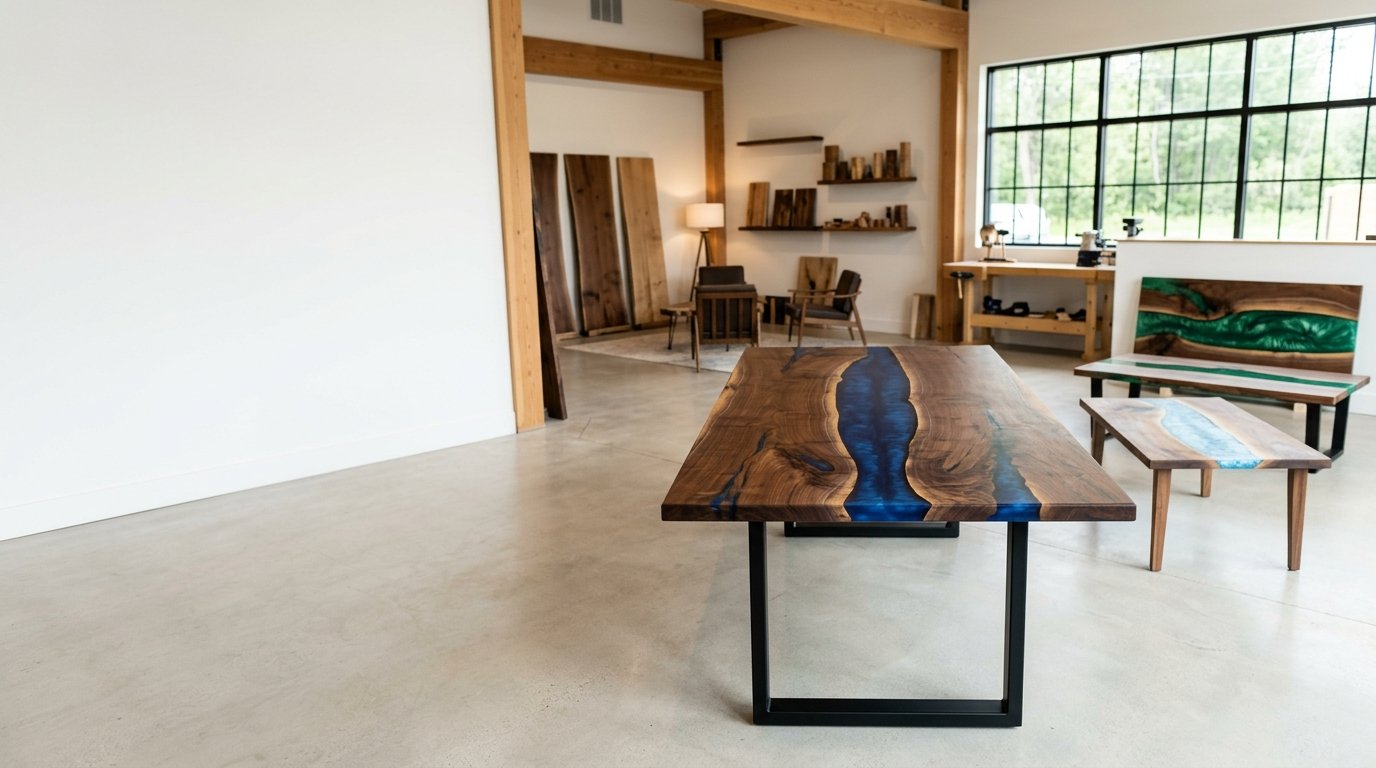
Deep pour epoxy tables stand out because they use depth as part of the design, not just as a clear coating. The most unique examples combine dramatic voids, embedded objects, layered pigments, lighting, unusual wood slabs, or sculptural layouts. Our top seven picks are: ocean trench, glowing geode, preserved forest floor, black walnut river with floating islands, topographic map, industrial gear-and-metal, and minimalist clear void slab tables. Each one can be beautiful, but the best choice depends on your space, skill level, budget, and tolerance for technical risk.
How We Chose These Deep Pour Epoxy Tables
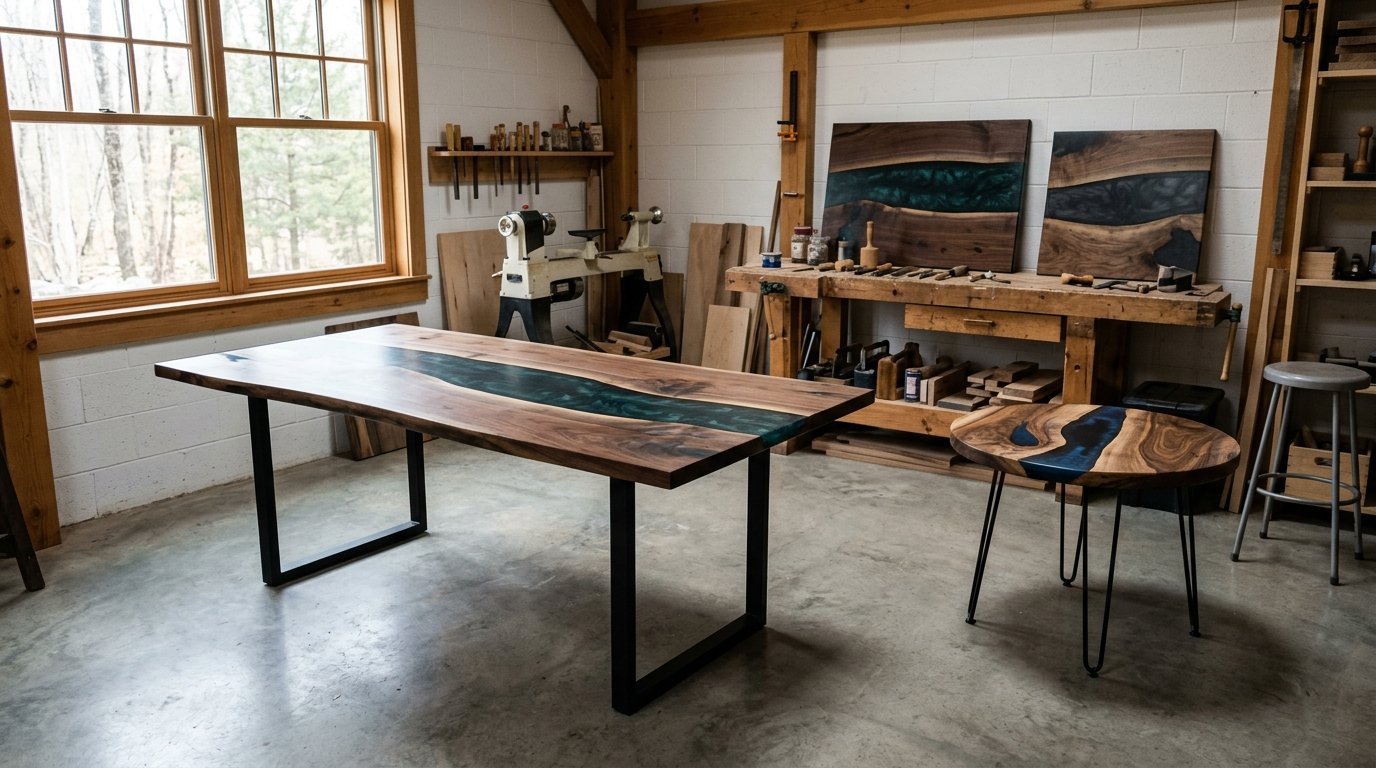
We ranked these deep pour epoxy table ideas by four practical criteria: visual originality, realistic build potential, material compatibility, and long-term usability. A table had to feel more distinctive than a standard river table, but it also needed a clear reason for working as furniture.
Depth mattered, too. Deep pour epoxy is most impressive when it creates dimension: water-like trenches, floating objects, layered landscapes, or suspended negative space. We also considered whether the design gives DIY makers room to personalize it without needing a full professional shop.
Finally, we weighed tradeoffs. Some tables are visually spectacular but harder to seal, level, polish, or protect from heat and UV exposure. The best ideas here are not equally easy; they are ranked for uniqueness, with practical warnings included.
1. Ocean Trench Deep Pour Epoxy Table
The ocean trench table is our top pick because it uses deep pour epoxy exactly where it shines: creating the illusion of depth. A live-edge slab or two opposing wood pieces become the “shoreline,” while layered blue, teal, and near-black resin form a dramatic underwater canyon.
What makes this design work is controlled transparency. The deepest center can be darker, while the edges stay lighter and more translucent. White pigment, mica, or alcohol ink can suggest foam, currents, or sandbars.
Best for: statement dining tables, coastal interiors, and makers who want maximum visual impact.
Tradeoff: it is easy to overdo the pigment. Too much color turns the pour cloudy and hides the depth that makes the design special.
2. Glowing Geode Deep Pour Epoxy Table
A glowing geode table turns the tabletop into a giant crystal cross-section. Instead of a river, the epoxy becomes a jewel-toned cavity filled with metallic pigments, crushed glass, quartz points, mica flakes, or faux crystals. Optional LED lighting under a translucent section makes the center appear lit from within.
This idea is best when the colors are intentional: amethyst purple, emerald green, smoky gray, or amber with gold veining. The surrounding wood should be calmer so the geode remains the focus.
Best for: bold accent tables, bars, entry tables, and glam interiors.
Tradeoff: embedded crystals and glass can complicate sanding and finishing. Keep sharp inclusions below the final surface or plan for a clear topcoat.
3. Preserved Forest Floor Deep Pour Table
A preserved forest floor table feels like a slice of woodland sealed in time. Moss, small branches, bark, stones, seed pods, and dried botanicals can be arranged inside a deep clear pour to create a miniature landscape under glass-like resin.
The key word is “dried.” Fresh organic material can release moisture, discolor, rot, or create bubbles. Stabilizing and sealing each natural element before the main pour helps prevent cloudiness and decay. Use UV-resistant epoxy if the table will sit near sunlight.
Best for: nature lovers, cabin spaces, rustic rooms, and display coffee tables.
Tradeoff: this is one of the riskiest concepts for beginners. Organic materials are unpredictable, so test everything in a small mold before committing to a full tabletop.
4. Black Walnut River Table with Floating Islands
The black walnut river table is a classic, but the floating-island version gives it a more unique look. Instead of one continuous blue or clear river, small offcuts, burl pieces, or shaped wood “islands” appear suspended inside the epoxy channel.
Walnut works especially well because its dark grain contrasts with clear, smoky, blue, or green resin. The islands can look like stepping stones, aerial landforms, or fragments breaking away from the main slab.
Best for: makers who like traditional river tables but want something less common.
Tradeoff: every floating piece must be sealed and anchored. If pieces shift during the pour, the layout can look accidental rather than designed.
5. Topographic Map Deep Pour Epoxy Table
A topographic map table is one of the best personalized deep pour epoxy ideas. It can represent a favorite lake, mountain range, coastline, hometown, or hiking route. The design usually uses layered wood, CNC-cut contours, tinted epoxy, or painted depth zones to mimic elevation and water depth.
This table works because it combines craft with meaning. A lake house table can show the actual lake basin. A mountain cabin table can follow ridge lines and valleys.
Best for: custom gifts, vacation homes, map lovers, and meaningful heirloom projects.
Tradeoff: accuracy takes planning. You may need digital map files, templates, or CNC help. Without clean contour lines, the concept can become visually confusing.
6. Industrial Gear and Metal Deep Pour Epoxy Table
For a non-nature option, an industrial deep pour table can suspend gears, chain, bolts, bearings, machined parts, or patinated metal inside clear or smoke-tinted epoxy. The result feels mechanical, masculine, and sculptural.
The strongest versions use restraint. A few well-placed metal parts look intentional; a crowded layout can feel like a junk drawer. Dark wood, black epoxy accents, and steel legs complete the look.
Best for: workshops, offices, game rooms, and industrial interiors.
Tradeoff: metal adds weight and may trap bubbles. Clean and degrease every part before embedding it, and avoid sharp pieces near the finished surface.
7. Minimalist Clear Void Slab Table
The minimalist clear void slab table is the quietest idea on this list, but technically it can be one of the most impressive. Instead of bright color or objects, the design highlights a perfectly clear pour between dramatic slab edges, knots, cracks, or voids.
The uniqueness comes from restraint. The epoxy almost disappears, making the wood appear to float around empty space. This works beautifully with highly figured slabs, especially walnut, maple burl, olive wood, or elm.
Best for: modern interiors, luxury desks, and anyone who prefers subtle craftsmanship.
Tradeoff: clear epoxy shows everything: bubbles, dust, sanding marks, scratches, and uneven polishing. It demands cleaner prep than pigmented designs.
How to Choose the Best Deep Pour Epoxy Table Idea for Your Space
Choose by matching the design to the room first, then your skill level. For a dramatic centerpiece, pick the ocean trench or glowing geode. For a calmer organic look, choose the forest floor, walnut islands, or minimalist clear void. For personalization, the topographic map is the strongest option. For a bold office or game room, the industrial gear table fits best.
Beginners should start with a smaller coffee table or side table before attempting a dining table. If you want fewer technical surprises, avoid fresh organic materials, heavy metal parts, and perfectly clear pours on your first project. Pigmented rivers are usually more forgiving than crystal-clear designs.
Deep Pour Epoxy Tradeoffs to Consider Before You Start
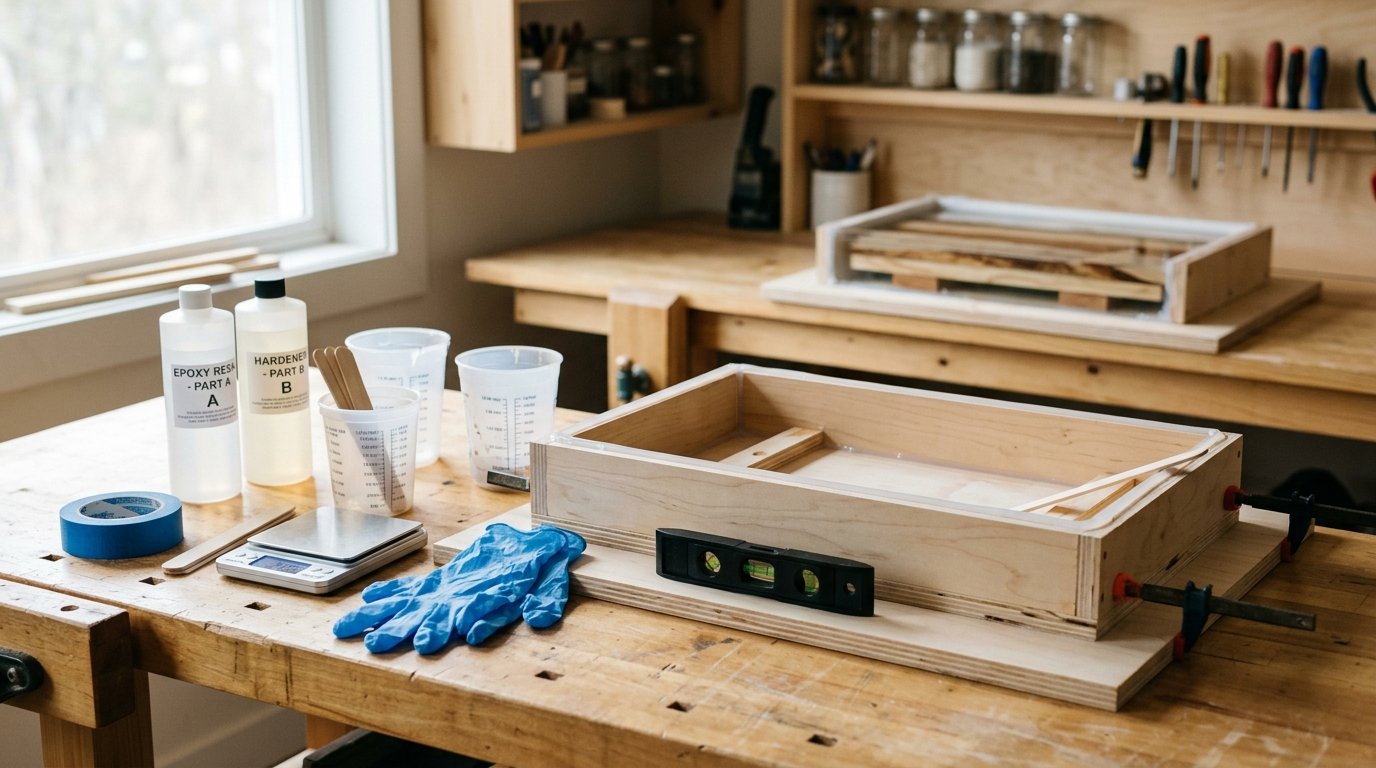
Deep pour epoxy is slower and more demanding than a thin flood coat. You need the right resin formula, a sealed mold, level work surface, accurate mixing, and patience between pours if your design requires layers. Pouring too thick with the wrong epoxy can cause overheating, cracking, yellowing, or bubbles.
Budget is another factor. Large tables require a lot of resin, and quality deep pour epoxy is not cheap. Embedded materials, slab wood, pigments, polishing supplies, and finishing tools add up quickly.
Also consider use. Dining tables need durable topcoats and heat protection. Decorative tables can tolerate more fragile design choices.
Final Pick: the Most Unique Deep Pour Epoxy Table Overall
The ocean trench deep pour epoxy table is the best overall pick because it uses depth, color, transparency, and wood shape in one unforgettable design. It is dramatic without needing too many embedded materials, and it can be adapted for coastal, modern, or rustic spaces.
For beginners, try the concept on a smaller table first. For experienced makers, a full dining-size ocean trench table can be a true showpiece.
FAQ
What Should a Beginner Know First About the 7 Most Unique Deep Pour Epoxy Tables We Ve Ever Seen?
Start small. Deep pour epoxy tables require careful measuring, sealing, mixing, and curing. A side table or sample panel teaches you how pigments, bubbles, and embedded materials behave before you risk expensive slab wood and gallons of resin.
What Matters Most When Evaluating the 7 Most Unique Deep Pour Epoxy Tables We Ve Ever Seen?
Look for a strong design concept, good material compatibility, and practical usability. A unique table should not only photograph well; it should also cure properly, sand cleanly, hold up to use, and fit the room where it will live.
What Mistakes Should Readers Avoid with the 7 Most Unique Deep Pour Epoxy Tables We Ve Ever Seen?
Avoid using wet organic materials, pouring too thick with the wrong resin, skipping mold sealing, or adding so much pigment that the depth disappears. Also avoid overcrowding the design. The most memorable tables usually have one clear focal idea.
What Is the Next Logical Step After Learning About the 7 Most Unique Deep Pour Epoxy Tables We Ve Ever Seen?
Choose one concept, sketch the layout, price the resin and slab materials, then make a small test pour. Testing helps you confirm color, clarity, bubbles, cure behavior, and embedded materials before building the full deep pour epoxy table.