If you are coloring epoxy resin, the practical difference between powder pigments and liquid pigments is control versus convenience. Powder pigments, including mica powders, are dry colorants that sit in the resin and often add shimmer, pearlescence, opacity, or special effects. Liquid pigments are concentrated colorants already suspended in a liquid base, so they blend quickly and are easier to measure by drops.
Use powder pigments when you want metallic swirls, cloudy effects, strong opacity, or decorative depth. Use liquid pigments when you want smooth, even color with less mixing effort. Neither is automatically “better.” The best choice depends on your project size, finish, cure reliability, and how repeatable you need the color to be.
Quick Verdict: Which Pigment Should You Use?
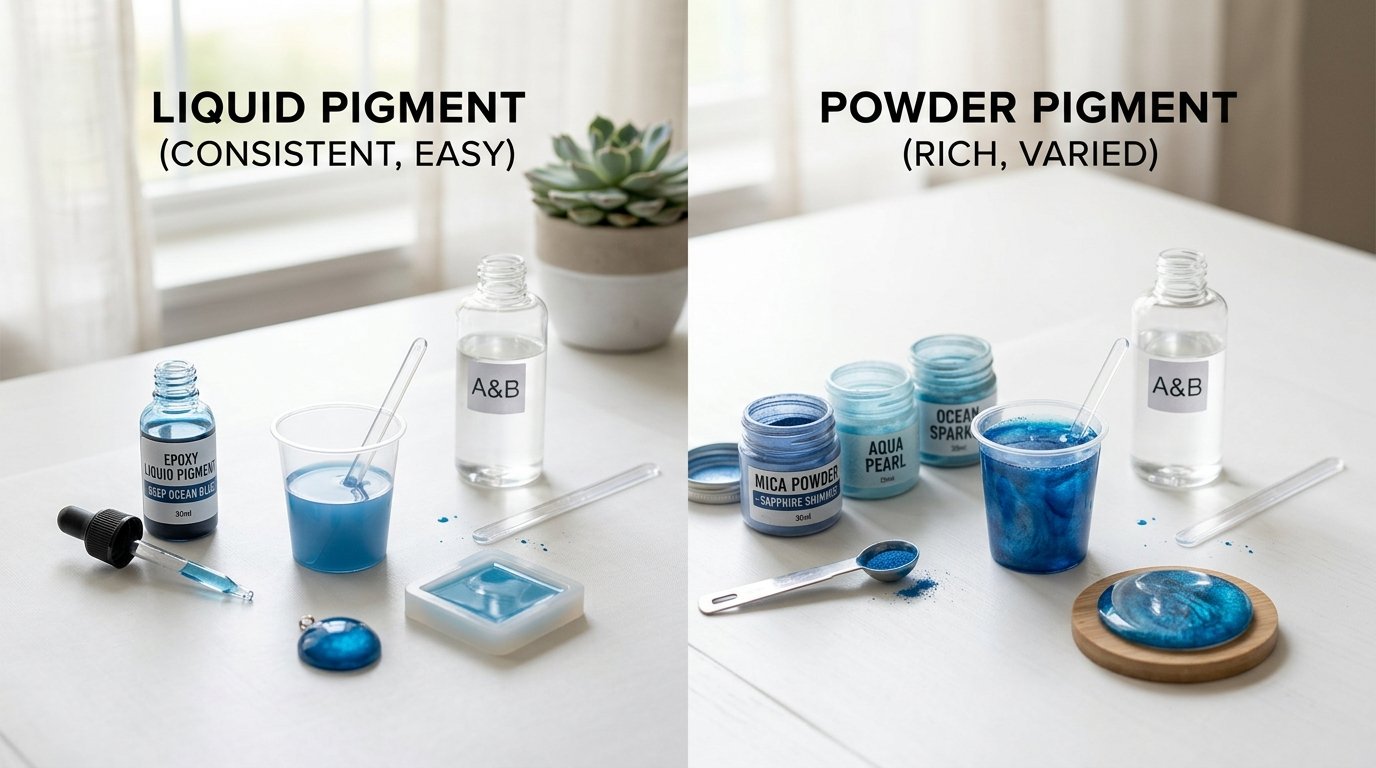
For most beginners, liquid pigments are easier because you can add them drop by drop and mix them into resin quickly. They are ideal for simple solid colors, tinted resin, small jewelry pours, and projects where consistency matters.
Powder pigments are better when the finished look matters more than speed. Choose them for shimmer, mica movement, opaque color, metallic effects, geode art, ocean waves, petri-style accents, and decorative casting.
The safest answer: use liquid pigment for clean, predictable color, and powder pigment for texture, depth, and visual effects. Keep both on hand if you make different styles of resin projects.
Powder Pigments Vs Liquid Pigments: At-a-glance Comparison
| Criteria | Powder Pigments | Liquid Pigments | Best Choice |
|---|---|---|---|
| Ease of mixing | Needs thorough stirring | Blends quickly | Liquid |
| Color control | Measured by scoop or weight | Measured by drops | Liquid |
| Shimmer/effects | Excellent | Limited | Powder |
| Solid color | Good, but may need more mixing | Excellent | Liquid |
| Cure risk | Low if used lightly | Higher if overused | Powder |
| Repeatability | Good with a scale | Good with drop counts | Tie |
| Best for | Mica effects, opacity, depth | Even tints, beginner projects | Depends on finish |
What Powder Pigments Are Best for
Powder pigments are best when you want the pigment to be part of the visual design, not just the color. Mica powder, metallic powder, chameleon powder, glow powder, and opaque mineral pigments can create movement, shimmer, depth, and layered effects that liquid colorants usually cannot match.
In resin, powders are especially useful for coasters, trays, geodes, river tables, cabochons, charms, and molds where the color can swirl or settle beautifully. They can also be brushed into silicone molds before pouring resin to highlight raised details.
Compared with liquid pigments, powders take more mixing, but they reward you with more dramatic finishes.
What Liquid Pigments Are Best for
Liquid pigments are best when you want resin to become one smooth, even color. They are convenient for beginners because you can add one drop at a time, stir, check the shade, and adjust. This makes them useful for jewelry, keychains, dice, small molds, lettering, and projects where you want consistent color across multiple cavities.
Compared with powders, liquid pigments are usually faster and cleaner to use. There is no dust, no clumping, and less scraping around the cup. However, they rarely create the same shimmer or dimensional effect as mica powder unless they are specifically made as metallic or pearlescent liquid pigments.
Mixing and Ease of Use
Liquid pigments win on ease of use. Add a drop, stir slowly, and the color usually disperses with little effort. This makes them forgiving for small batches and quick projects. They are also easier to adjust gradually because you can add tiny amounts without opening jars or handling dust.
Powder pigments need more patience. If you dump powder into resin too quickly, it can form dry pockets or specks. The best method is to add a small amount, press it against the side of the mixing cup, and stir until fully wet. Some crafters pre-mix powder with a little Part A resin before combining the resin and hardener.
For speed, choose liquid. For effects, accept the extra mixing time and choose powder.
Color Strength, Opacity, and Finish
Powder pigments often give stronger opacity and more visual texture. Mica powders add shimmer, satin glow, or metallic movement. Opaque powders can make resin look creamy, stone-like, or solid. Because the particles reflect light, powder pigments can make a project look more dimensional.
Liquid pigments are better for transparent, translucent, or evenly saturated color. Alcohol inks, resin dyes, and liquid resin pigments can produce jewel tones, soft tints, or bold solid colors depending on the product. They usually create a smoother finish with less visible particle movement.
If you want sparkle, pearl, metal, or smoky swirls, powder is usually better. If you want glassy transparent color or a clean flat shade, liquid is usually better.
Cure Reliability and Resin Ratio
Powder pigments usually have less impact on cure because they do not add extra liquid to the resin. Used in reasonable amounts, they are unlikely to throw off the resin-to-hardener ratio. The main risk is adding too much powder, which can make resin thick, gritty, clumpy, or weak.
Liquid pigments can be reliable too, but overuse is riskier. Because they add liquid, too much can interfere with curing, especially if the colorant is not designed for epoxy resin. Heavy amounts of alcohol ink, acrylic paint, or low-quality dye may leave resin soft, sticky, flexible, or cloudy.
For cure safety, use resin-compatible pigments and keep colorant amounts low.
Control, Measuring, and Repeatability
Liquid pigments are easy to repeat by counting drops, especially in small batches: for example, three drops blue and one drop black per ounce of mixed resin. That makes them convenient for matching multiple pours.
Powder pigments are repeatable if you measure by weight or use the same micro-scoop each time. Guessing “a little scoop” is less reliable because powder can pack differently. For professional-looking sets, write down the resin amount, pigment amount, brand, and mixing order.
Liquid is simpler for casual repeatability. Powder is just as controlled if you measure carefully.
Choose Powder Pigments If…
Choose powder pigments if you want shimmer, pearl, metallic effects, color-shifting finishes, smoky movement, opaque resin, or decorative swirls. They are the better choice for statement pieces where the pigment’s texture and light reflection are part of the design.
Powders are also a smart choice when you want to avoid adding extra liquid to your resin. Use them carefully, mix thoroughly, and start with less than you think you need.
Choose Liquid Pigments If…
Choose liquid pigments if you want easy measuring, fast mixing, smooth color, transparent tints, or repeatable shades. They are especially helpful for beginners and for projects with many small cavities, where drop-by-drop control is convenient.
Liquid pigments are also better when you want a clean, even color without shimmer or visible particles. Just avoid adding too much, and use colorants made for epoxy resin whenever possible.
Can You Use Powder and Liquid Pigments Together?
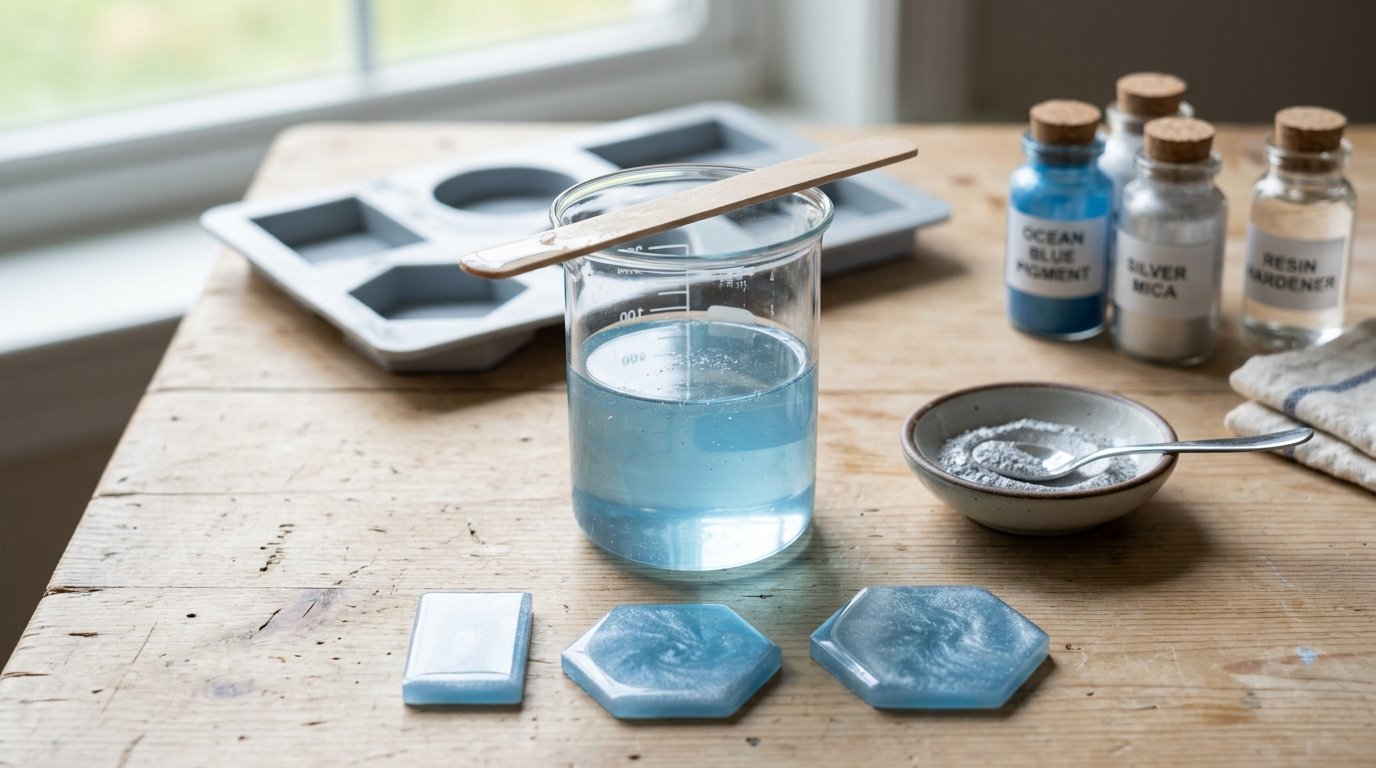
Yes, you can use powder and liquid pigments together in resin. This is a great way to combine an even base color with shimmer or special effects. For example, you might tint resin blue with liquid dye, then add a small amount of silver mica for movement.
The key is moderation. Too much total pigment can affect clarity, texture, or cure. Add color slowly, mix well, and test new combinations in a small batch before using them in an important project.
Final Verdict
The difference between powder pigments and liquid pigments comes down to finish and handling. Liquid pigments are easier, smoother, and more beginner-friendly. Powder pigments create richer effects, stronger opacity, shimmer, and more artistic movement.
If you want predictable color, choose liquid pigment. If you want dramatic visual effects, choose powder pigment. For the most flexibility in resin crafting, use both: liquid for the base color and powder for depth, shimmer, and accents.
FAQ
Are Powder Pigments or Liquid Pigments Better for Beginners?
Liquid pigments are usually better for beginners because they are easier to measure and mix. You can add color drop by drop, which helps prevent over-coloring. Powder pigments are still beginner-friendly, but they require more careful stirring to avoid clumps, specks, or uneven color.
Do Powder Pigments Make Resin Cloudy?
Powder pigments can make resin cloudy if you use enough to reduce transparency. That is not always a problem; many powders are meant to create opaque, pearly, or metallic finishes. If you want clear tinted resin, use a small amount of powder or choose a transparent liquid dye instead.
Can Liquid Pigment Stop Resin from Curing?
Yes, liquid pigment can affect curing if you use too much or use a colorant that is not compatible with epoxy resin. Excess liquid can interfere with the resin’s chemistry. Use concentrated resin-safe pigments, add color sparingly, and follow the pigment manufacturer’s recommended maximum amount.
Which Pigment Gives the Strongest Color in Resin?
For opaque, bold color, powder pigments often look stronger because they contain visible particles that block and reflect light. For transparent jewel-tone color, liquid resin dyes are usually stronger and cleaner. The strongest option depends on whether you want opaque coverage or transparent saturation.
Can I Mix Mica Powder with Liquid Resin Dye?
Yes. Mica powder and liquid resin dye can be mixed together in epoxy resin. The dye can create the base color, while the mica adds shimmer, pearl, or metallic movement. Add both in small amounts, mix thoroughly, and test first if cure time or clarity is important.