
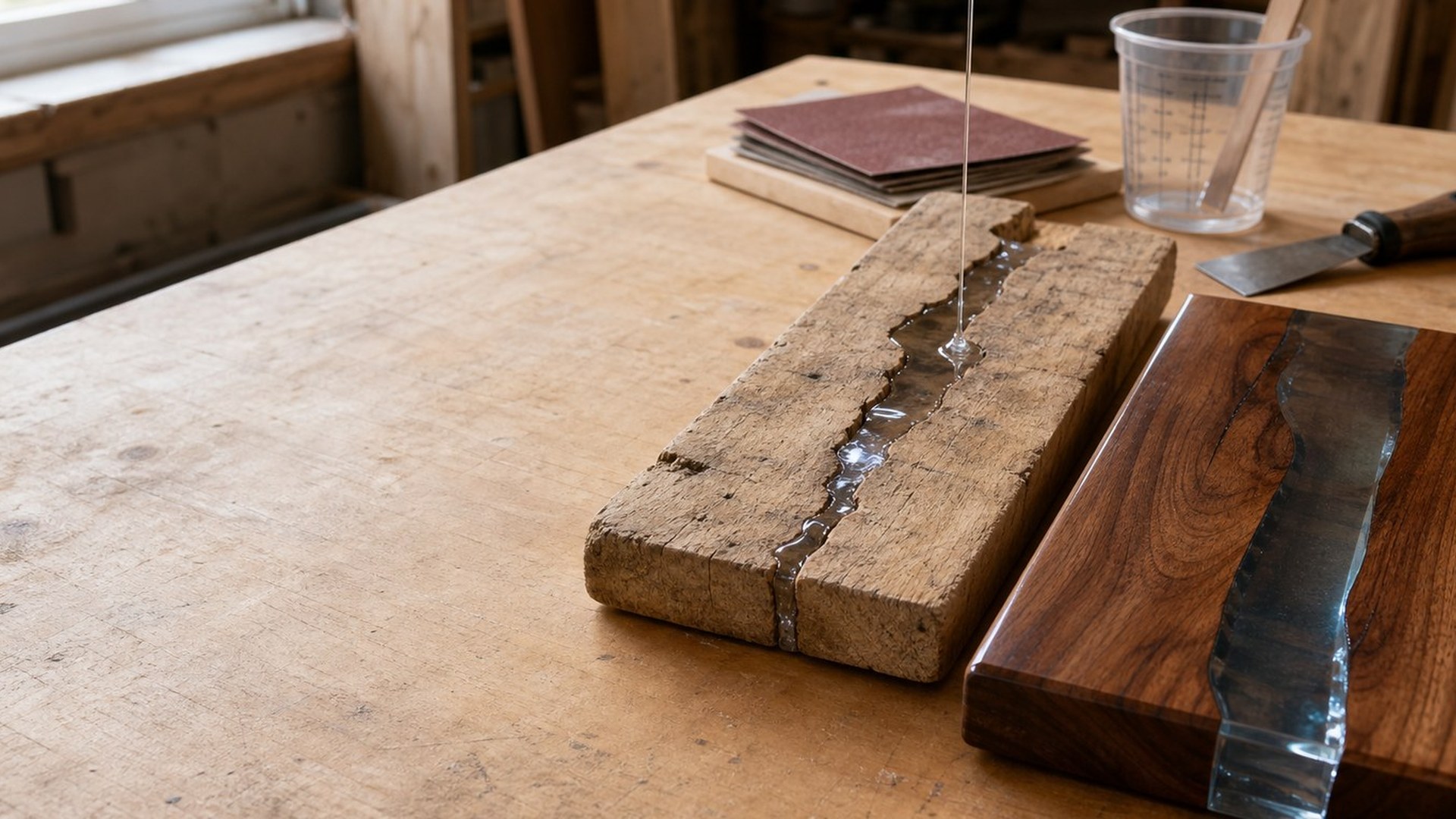
Epoxy is a two-part resin system that can soak slightly into wood, bond to the surface, then cure into a hard plastic-like layer. In practical terms, epoxy can seal pores, fill cracks, create a clear or colored coating, bond pieces together, and add surface durability. It does not magically turn weak wood into perfect wood, and it does not behave like ordinary paint, stain, or wood glue.
What epoxy does to wood depends on the wood species, moisture level, surface prep, epoxy type, mix ratio, temperature, and project design. Used well, it can protect and enhance wood. Used poorly, it may bubble, peel, stay soft, yellow, or trap moisture.
The Simple Definition: Epoxy on Wood Is a Cured Protective and Structural Resin Layer
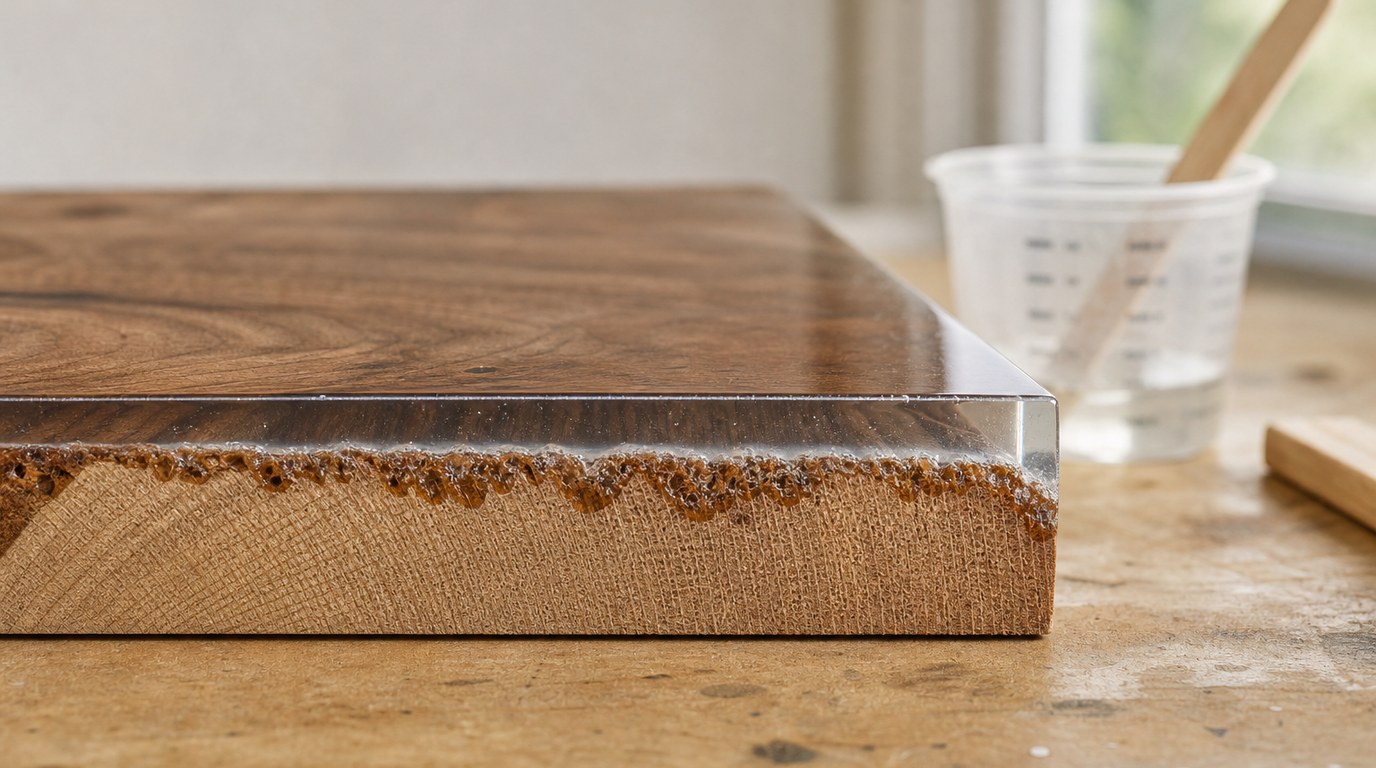
Epoxy on wood is best understood as a cured resin layer that both adheres to the surface and, to a limited degree, penetrates open pores and fibers. Once the resin and hardener are mixed, the liquid gradually changes into a solid material.
That makes epoxy different from paint, which mainly adds color and a thin surface film. It is different from varnish, which is usually a thinner protective finish. It is different from standard wood glue, which is designed mainly for joining tight-fitting wood surfaces. It is also different from polyester resin, which often has different adhesion, odor, shrinkage, and curing behavior.
So, what does epoxy do to wood exactly? It creates a bonded, cured resin barrier or fill that can protect, strengthen, level, decorate, or join wood depending on how it is used.
What Happens When Epoxy Touches Wood Fibers
Wood is porous. It has grain, small voids, end-grain channels, cracks, knots, and sometimes soft or punky areas. When liquid epoxy touches prepared wood, some of it wets the surface and may sink into those open spaces. End grain usually absorbs more than face grain.
As epoxy cures, it hardens around and within the top layer of fibers. This can create a stronger bond than a coating that only sits loosely on top. However, penetration is not unlimited. Epoxy does not travel deeply through dense, dry hardwood like water through a sponge.
If the wood is dusty, oily, too wet, or previously finished, epoxy may not bond well. In those cases, it may cure as a separate layer that can lift, chip, or peel instead of becoming well attached to the wood.
The Main Things Epoxy Can Do for Wood
Epoxy can do several useful things in wood and resin craft projects.
First, it can seal. A thin coat of epoxy can close surface pores and reduce how much moisture or finish enters the wood later. This is why seal coats are often used before a deep pour or flood coat.
Second, it can fill. Epoxy can occupy cracks, knots, checks, wormholes, gaps, and carved recesses. It can be clear, tinted, metallic, opaque, or mixed with decorative additives.
Third, it can coat. A poured or brushed epoxy layer can create a glossy, durable surface on tables, trays, coasters, counters, and art panels.
Fourth, it can bond. Epoxy can join wood to wood or wood to other materials when the joint is designed properly.
Fifth, it can stabilize small damaged areas. In some cases, low-viscosity epoxy can firm up soft fibers, although badly rotten or structurally unsafe wood may still need replacement.
What Epoxy Does Not Do to Wood
Epoxy is useful, but it is not magic. It does not make every piece of wood waterproof forever. A complete, well-bonded coating can be highly water-resistant, but scratches, exposed edges, movement, UV exposure, and poor prep can reduce protection.
Epoxy does not stop all wood movement. Wood can still expand and contract with humidity, especially if only one face is coated or if edges are left exposed.
It also does not fix every structural problem. Filling a crack with epoxy may improve appearance and help hold loose areas, but it does not automatically make a split board as strong as new lumber.
Epoxy does not replace good surface preparation. Sanding, cleaning, drying, sealing, and correct mixing still matter.
How Epoxy Changes the Appearance of Wood
Epoxy usually makes wood look darker, richer, and more saturated, similar to the way wood looks when it is wet. Grain patterns may appear deeper and more dramatic. Curly, spalted, burl, and figured woods can look especially bold under clear epoxy.
Clear epoxy can create depth and gloss, while tinted epoxy adds color contrast. Black epoxy in walnut cracks, blue epoxy in a river table, or pearlescent resin in a tray can turn natural defects into design features.
The final look is not always perfectly clear forever. Some epoxies may yellow over time, especially with sunlight exposure. Bubbles, dust, sanding marks, and uneven sealing can also affect clarity.
How Epoxy Affects Strength and Durability
Epoxy can improve surface durability by adding a hard, protective layer that resists many everyday scratches, stains, and spills better than bare wood. It can also reinforce small cracks, loose knots, or voids by locking surrounding fibers together.
Still, strength claims need caution. Epoxy is strong in many uses, but the whole project is only as reliable as the wood, joint design, surface preparation, and cured bond. A thick river pour can look solid while still being vulnerable if the slab was wet, oily, unstable, or poorly supported.
Epoxy also has limits under heat, UV light, impact, and heavy abrasion. It can dent, scratch, soften, yellow, or delaminate depending on conditions and formulation.
Common Examples: What Epoxy Is Doing in Real Wood Projects
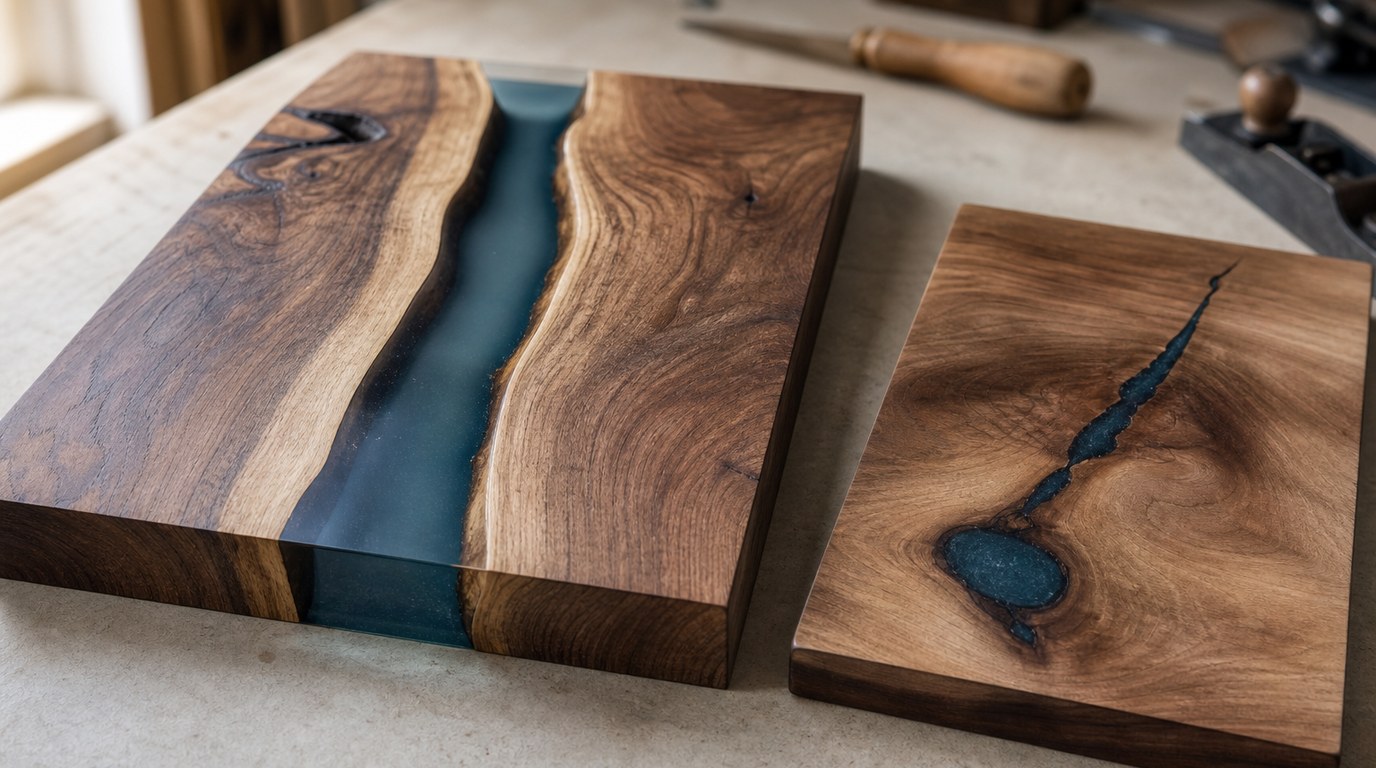
In a river table, epoxy fills the open space between two wood slabs and becomes part of the visible structure and design. It is not just decoration; it must bond well and cure properly.
In crack repair, epoxy fills a split or knot void so debris and moisture are less likely to collect there. It may also reduce further chipping.
In coasters and trays, epoxy often acts as a glossy protective topcoat over wood, pigment, photos, shells, or dried flowers.
In embedded wood resin art, epoxy surrounds small pieces of wood and holds them in a clear or colored block. Here, sealing the wood first helps prevent bubbles from escaping into the pour.
What Affects the Final Result
The result depends on several controllable factors. Wood moisture is one of the biggest. Damp wood can interfere with adhesion and may cause cloudiness, bubbles, or bonding problems.
Surface preparation also matters. Sanding too smooth can sometimes reduce mechanical grip, while leaving dust, wax, oil, or old finish can prevent bonding. Clean, dry, lightly sanded wood is usually a better starting point.
Epoxy choice matters too. Coating epoxies, casting epoxies, penetrating epoxies, and adhesives are made for different thicknesses and uses. Mix ratio, temperature, humidity, pour depth, and cure time all affect the outcome.
Wood type also plays a role. Dense oily woods, open-grain woods, end grain, softwood, and spalted wood can behave differently.
Practical Takeaway Before Using Epoxy on Wood
Before using epoxy on wood, decide what job you want it to do: seal, fill, coat, bond, stabilize, or decorate. Then prepare the wood for that job. Dry it, sand it, clean it, seal porous areas if needed, and choose an epoxy suited to the pour depth or coating thickness.
Epoxy works best when treated as a material with limits, not as a shortcut around good woodworking.
FAQ
What Should a Beginner Know First About What Does Epoxy Do to Wood Exactly?
A beginner should know that epoxy cures into a hard resin that can bond to wood, seal pores, fill gaps, and create a protective or decorative layer. The result depends heavily on preparation, correct mixing, and using the right epoxy for the project.
What Matters Most When Evaluating What Does Epoxy Do to Wood Exactly?
The most important factors are adhesion, penetration, curing, and project conditions. Dry, clean, sanded wood usually gives epoxy a better chance to bond. Moisture, dust, oil, incorrect mix ratios, and unsuitable pour depth are common reasons epoxy performs poorly.
What Mistakes Should Readers Avoid with What Does Epoxy Do to Wood Exactly?
Avoid assuming epoxy fixes everything. Do not pour over wet, dirty, oily, or unstable wood. Do not skip a seal coat on porous wood when bubbles would be a problem. Also avoid using coating epoxy for deep pours unless the product allows it.
What Is the Next Logical Step After Learning About What Does Epoxy Do to Wood Exactly?
The next step is to match the epoxy method to your project. For a tabletop, learn coating and flood-coat basics. For cracks, learn filling and tinting. For river tables or deep molds, study casting depth, sealing, bubble control, and cure time.