Experiencing epoxy separation on a tumbler can be frustrating, especially when you’ve put time and effort into creating a customized item. The most common cause of epoxy separation is contamination, which can happen in various ways, including dust particles, wax, and oil from your fingers. Knowing the factors involved in epoxy separation not only helps you troubleshoot the issue but can also help prevent it from happening in the first place.
In addition to contamination, other factors can contribute to epoxy separation on a tumbler, such as improper mixing, incorrect ratios of resin and hardener, and applying the epoxy over an unsuitable surface. Understanding these factors is crucial for obtaining a smooth, even layer of epoxy on your tumbler and ensuring a successful outcome for your project.
Throughout this article, we’ll discuss these potential causes of epoxy separation, how to identify and fix the problem, and some preventative measures you can take to avoid encountering this issue in the future. By employing the right techniques and paying attention to detail, you can achieve a polished and professional-looking finish on your epoxy tumbler projects.
Understanding Epoxy Separation on Tumblers
How Epoxy Works
Epoxy is a two-component adhesive system consisting of resin and hardener. When mixed in the correct proportions, they undergo a chemical reaction that results in a strong, durable, and clear bond. This bond is ideal for coating and decorating tumblers, as it provides a smooth, glossy finish that can protect and showcase the design beneath.
Signs of Epoxy Separation
Epoxy separation on tumblers can manifest in a few different ways:
- Ripples: Uneven areas that appear wavy or rippled are a common sign of separation.
- Fish eyes: Small, round indents in the epoxy resemble the eyes of a fish and can result from substrate contamination.
- Pin holes: Tiny holes in the surface of the epoxy are another indication of separation and can be caused by contaminants or trapped air bubbles.
To properly address epoxy separation, it is important to understand the underlying causes. In many cases, separation occurs due to improper mixing of the resin and hardener, contaminants on the tumbler’s surface, or using oils or other substances that interfere with the curing process.
Common Causes of Epoxy Separation
Improper Mixing Ratios
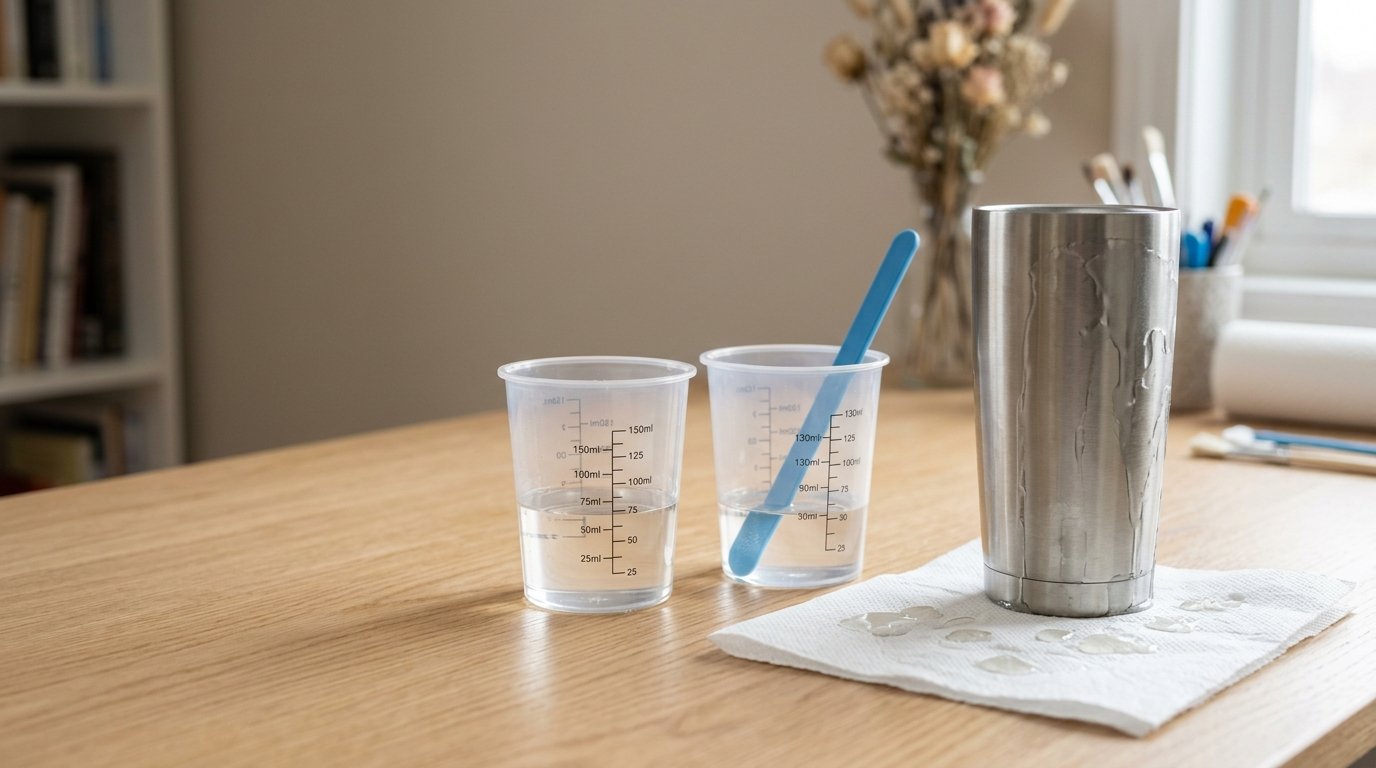
Using incorrect mixing ratios often leads to uneven epoxy resin. Ideally, you should adhere to the manufacturer’s recommended ratios for the hardener and resin. Inaccurate ratios can cause sticky spots in the cured resin and lead to separation on your tumbler (Resin Expert).
Inadequate Mixing
Even if you use the correct ratios, failing to mix them thoroughly can also result in epoxy separation. Ensure that you spend adequate time mixing the hardener and resin to create a consistent mixture. Inadequate mixing can cause incomplete curing or uneven application, leading to separation issues.
Contaminated Surfaces
Contamination is one of the most common causes of epoxy separation on tumblers. Surface contaminants, such as dust, oils, or fingerprints, can disrupt the surface tension of the epoxy, causing it to separate. It is crucial to clean your tumbler thoroughly to prevent separation and achieve a smooth finish.
Temperature and Humidity Factors
Temperature and humidity can also impact the curing process and final results when working with epoxy. High temperatures and humidity levels might cause bubbles or unnecessary thinning of the mixture, leading to separation over time. Conversely, low temperatures might result in an overly thick mixture, making it difficult to apply smoothly. Always consult the manufacturer’s guidelines for the ideal working conditions, and make necessary adjustments to maintain the required temperature and humidity levels.
Preventing Epoxy Separation
Preparing the Tumbler Surface
One of the main reasons epoxy separates on a tumbler is due to a contaminated or improperly prepared surface. To prevent separation, it’s essential to start with a clean, dry, and properly sanded tumbler. Begin by washing the tumbler with warm, soapy water, rinsing thoroughly, and drying with a lint-free cloth. Once dry, sand the surface with fine-grit sandpaper to create a rough surface for better adhesion of the epoxy resin. Wipe away any dust or debris with a dry cloth or rubbing alcohol on a lint-free cloth.
Proper Mixing Techniques
Mixing epoxy resin and hardener accurately and thoroughly is crucial for a successful project. Follow the manufacturer’s instructions for the recommended mixing ratio and mix in a clean, dry container for the specified time. Scrape the sides and bottom of the container to ensure all components are mixed. Doing this will help in preventing epoxy separation on your tumbler.
Environmental Control
The environment in which you work can also impact the success of your epoxy tumbler project. Factors such as temperature, humidity, and dust can lead to epoxy separation. Maintain a temperature between 70-75°F (21-24°C), as this is ideal for most epoxy resins. Ensure the humidity is below 50% to prevent moisture from affecting the curing process. Lastly, keep your workspace clean and free from dust to minimize surface contamination.
Fixing Epoxy Separation Issues
Removing and Reapplying Epoxy
Epoxy separation on a tumbler may be due to several causes, such as contamination, uneven hardening, or improper mixing. To resolve the issue, follow these steps:
- Remove the separated epoxy by gently sanding the affected area with fine-grained wet sandpaper.
- Clean the surface thoroughly to remove contaminants, sanding dust, and debris.
- Ensure proper mixing of the resin and hardener before reapplying epoxy.
- Apply a thin layer of epoxy to the tumbler and allow it to dry completely.
Make sure your workspace is clean and free of contaminants to prevent future separation issues.
Touching Up Small Areas
If the epoxy separation is only affecting a small area, you can fix it without removing and reapplying the entire coating:
- Sand the uneven or tacky spots lightly with fine-grained wet sandpaper.
- Wipe the surface clean to remove any sanding dust and debris.
- Apply a thin layer of epoxy to the affected area and allow it to dry completely.
Monitor the drying process closely and ensure the epoxy cures fully to prevent further separation issues.
Conclusion
In summary, epoxy separation on tumblers can occur due to several factors such as improper mixing, inadequate curing time, and environmental conditions. To prevent this issue, ensure that the resin components are mixed thoroughly and according to the manufacturer’s instructions. Also, give ample time for the epoxy to cure and provide a controlled environment during the process.
When addressing epoxy separation in already completed projects, fixing the issue may involve sanding down the affected area and reapplying a new layer of epoxy. Always follow best practices and guidelines for working with epoxy resin to achieve optimal results in your tumbler creations.
By practicing proper epoxy handling and application techniques, you can avoid common issues like separation and achieve a high-quality, long-lasting tumbler design that you can be proud of.