If your epoxy resin is hot and smoking, it is likely overheating from an excessive exothermic reaction. Epoxy naturally creates heat as it cures, but smoke, strong fumes, bubbling, rapid thickening, cracking, or a melting mixing cup mean the heat is building faster than it can escape.
Move the resin away from people, pets, and flammable materials if you can do so safely. Increase ventilation, put on gloves and eye protection, and let the resin cool in a safe place. Do not hold the cup, breathe the fumes, add water, or try to pour a smoking batch into your project.
Once resin has reached this stage, it is usually not salvageable. The priority is safety, then figuring out what caused the overheating.
What to Do Right Now If Your Epoxy Resin Is Smoking
If the resin is actively smoking, treat it as a safety problem, not a project problem.
- Stop working with it immediately. Do not keep stirring, pouring, or scraping the container.
- Ventilate the area. Open windows and doors if you can do so safely. Avoid leaning over the resin.
- Move it only if safe. If the container is stable and you can move it without touching hot resin, place it on a nonflammable surface such as concrete, tile, or a metal tray.
- Keep it away from combustibles. Move paper towels, cardboard, alcohol inks, solvents, wood dust, and plastic packaging away.
- Do not cap or seal it. Trapping heat can make pressure and fumes worse.
- Let it cool completely. Wait until the reaction has finished before handling or disposal.
If you feel dizzy, short of breath, or irritated, leave the area and get fresh air.
Why Epoxy Resin Gets Hot as It Cures
Epoxy resin cures through a chemical reaction between resin and hardener. That reaction releases heat. This is called an exothermic reaction, and a little warmth is normal.
The problem starts when heat cannot escape. A thick mass of mixed resin in a cup holds heat much better than a thin layer spread across a surface. As the resin warms, the reaction speeds up. As the reaction speeds up, it creates even more heat. This feedback loop can make resin suddenly thicken, bubble, smoke, crack, or melt a plastic cup.
Think of it like compost, bread dough, or a pile of damp leaves: a small amount may stay mild, but a large mass can trap heat in the center. With epoxy, batch size, depth, room temperature, and product type all affect how hot it gets.
When Warm Epoxy Is Normal and When It Is Unsafe
Warm epoxy is not automatically a failure. Many resins feel mildly warm during curing, especially in a cup. The warning signs are rapid temperature rise, fumes, smoke, bubbling that is not from mixing, or containers softening.
| What you notice | Usually means | What to do |
|---|---|---|
| Slight warmth | Normal curing | Continue as directed |
| Cup feels hot but no smoke | Reaction is accelerating | Spread resin thinly if still workable and safe |
| Bubbling, steaming, sharp odor | Overheating | Stop handling and ventilate |
| Smoke, melting cup, cracking resin | Unsafe exotherm | Move away, isolate, let cool |
When in doubt, stop and let the resin cure safely away from people and flammable materials.
The Most Common Reasons Epoxy Resin Gets Hot and Smokes
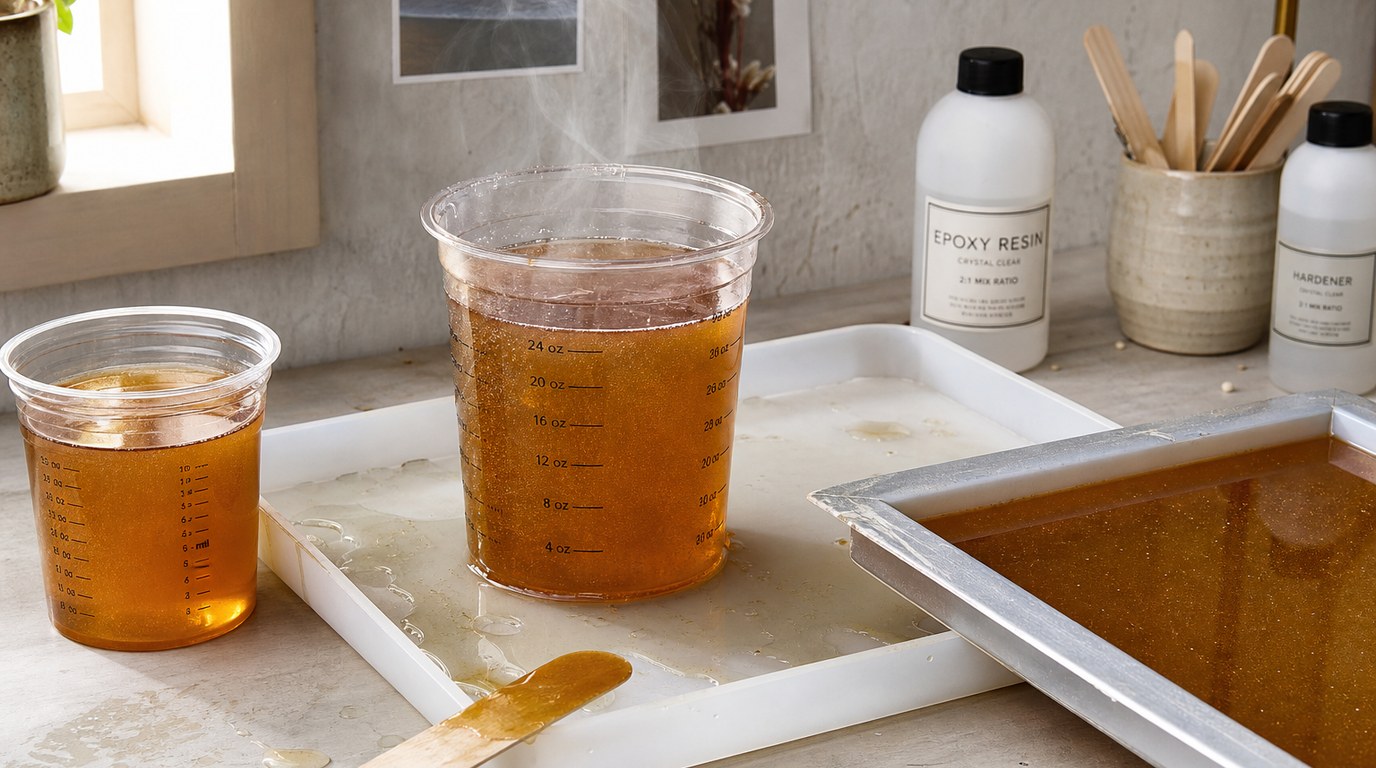
The most common cause is mixing too much resin at once. A large volume in a mixing cup creates a deep mass that traps heat. Even resin meant for coating can overheat if mixed in a big batch and left sitting.
Another cause is pouring too thick for the product. Coating resin, doming resin, casting resin, and deep-pour resin are formulated differently. A resin designed for a thin tabletop coat may overheat in a deep mold.
That is why it helps to choose the right epoxy for the pour depth before mixing, especially when a mold is deeper than a surface coat.
Warm conditions also matter. A hot room, warm bottles, direct sunlight, or a heated work surface can shorten pot life and push the reaction faster than expected.
Wrong measuring or mixing ratios can create trouble too. Too much hardener does not make epoxy cure “better” or faster in a controlled way. It can cause excess heat, soft spots, brittleness, or incomplete curing.
Additives may contribute. Large amounts of pigment, powders, alcohol inks, or embedded materials can affect heat buildup. Some molds and insulated containers also hold heat, especially silicone molds with thick walls.
Finally, leaving mixed resin in the cup too long can trigger overheating. Resin has more working time when spread out than when sitting in a concentrated mass.
Can You Save a Batch of Resin That Has Started Smoking?
Usually, no. Once epoxy is smoking, bubbling aggressively, or melting its container, the cure reaction is out of control. Trying to save it can expose you to heat, fumes, and splashes.
Do not pour smoking resin into a mold or onto artwork. It may crack, discolor, shrink, melt the mold, or cure with bubbles and weak spots. Let it cool completely, then dispose of it according to the resin manufacturer’s instructions and your local waste rules.
How to Prevent Epoxy Resin from Overheating Next Time
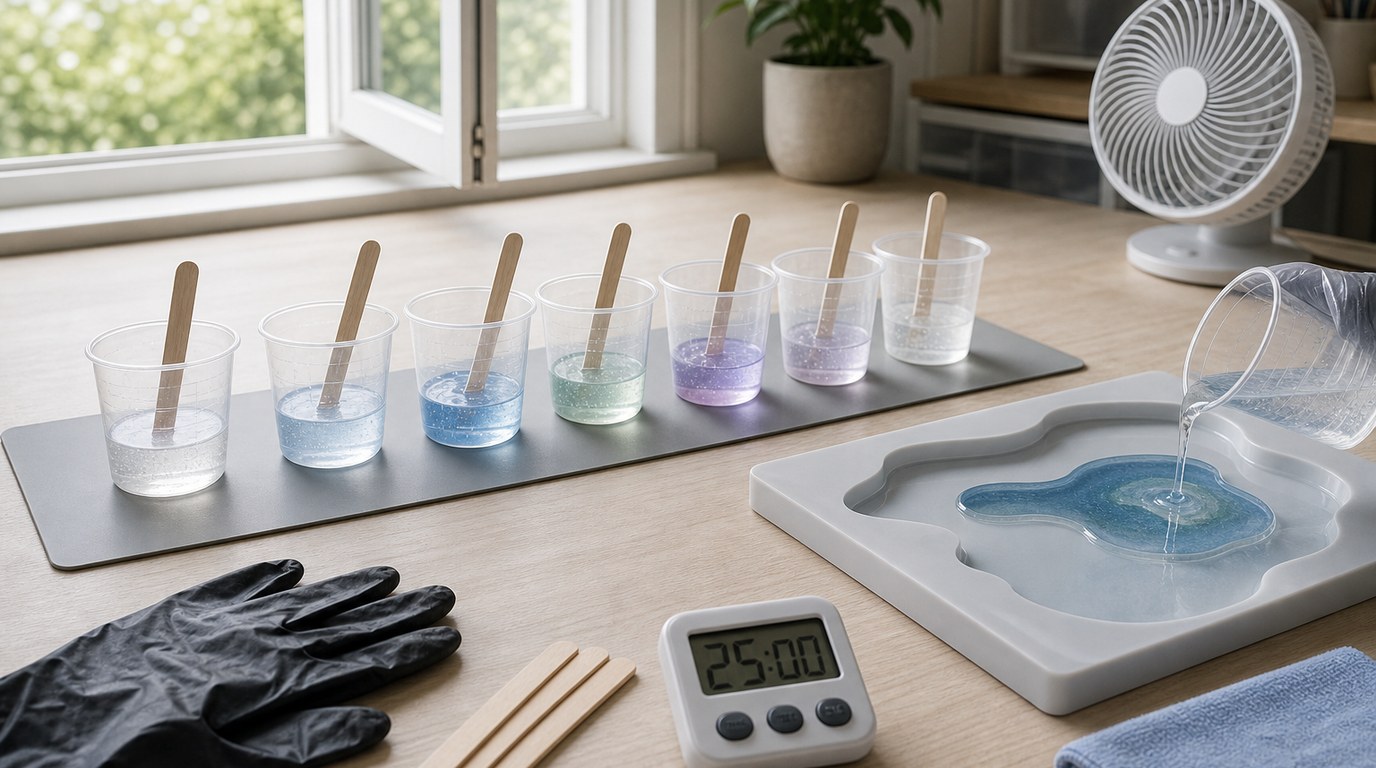
Start by reading the product directions for maximum pour depth, maximum batch size, and working time. These limits matter more than general resin advice.
Mix smaller batches. If a project needs a lot of resin, make several pours instead of one large pour. For coatings, pour soon after mixing and spread the resin across the surface rather than letting it sit in the cup.
Match the resin to the job. Use coating resin for thin surface layers, and use deep-pour or casting resin when filling deep molds. Do not assume all epoxies behave the same.
Control temperature. Work in the recommended room-temperature range, keep bottles out of direct sun, and avoid warming resin unless the manufacturer says to do so. Warm resin flows better, but it also cures faster.
Measure accurately by volume or weight as instructed. Scrape the sides and bottom of the mixing cup while mixing, but do not add extra hardener to speed curing.
Plan before mixing. Have molds, pigments, tools, and protective gear ready. The less time resin sits in a deep cup, the lower the chance of runaway heat.
What Not to Do When Resin Starts Getting Too Hot
Avoid these common panic reactions:
- Do not hold the cup to “check” how hot it is.
- Do not breathe over smoking resin.
- Do not add water or ice directly to mixed epoxy.
- Do not seal it in a container.
- Do not pour it into a trash can while hot.
- Do not try to thin it with solvents.
- Do not keep using a melting plastic cup.
- Do not assume smoke is harmless steam.
Your safest choice is to isolate it, ventilate, and let the reaction finish.
Quick Troubleshooting Examples
A cup got hot five minutes after mixing.
Likely cause: too large a batch, warm resin, or fast-curing formula left in the cup.
A deep mold started smoking in the center.
Likely cause: the pour was deeper than the resin’s rated depth.
A tabletop coat smoked in the mixing bucket.
Likely cause: the resin sat too long before being poured and spread.
A silicone mold warped or melted.
Likely cause: excessive exotherm trapped by the mold and resin mass.
Resin foamed after adding pigment.
Likely cause: overheating, incompatible additive, or too much additive.
FAQ
What Should a Beginner Know First About Why Is My Epoxy Resin Hot and Smoking?
A little warmth is normal, but smoke is not. Smoking epoxy means the cure reaction has overheated. Stop working, ventilate, keep the resin away from people and flammable items, and let it cool. Do not try to rescue the batch while it is hot.
What Matters Most When Evaluating Why Is My Epoxy Resin Hot and Smoking?
Look at heat level, smoke or fumes, batch size, pour depth, and the resin’s instructions. The biggest question is whether heat is escaping safely. A thin layer may cure normally, while the same resin in a deep cup may overheat quickly.
What Mistakes Should Readers Avoid with Why Is My Epoxy Resin Hot and Smoking?
Avoid mixing oversized batches, pouring deeper than the product allows, working in excessive heat, guessing ratios, or adding extra hardener. During an overheating event, do not touch the cup, inhale fumes, add water, seal the container, or pour hot resin into the trash.
What Is the Next Logical Step After Learning About Why Is My Epoxy Resin Hot and Smoking?
Review the resin label for pour depth, pot life, temperature range, and batch limits. Then plan your next project with smaller batches, the correct resin type, accurate measuring, good ventilation, and a safe nonflammable cooling area in case a batch overheats again.